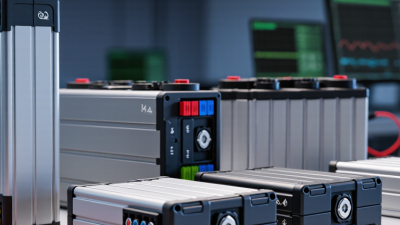
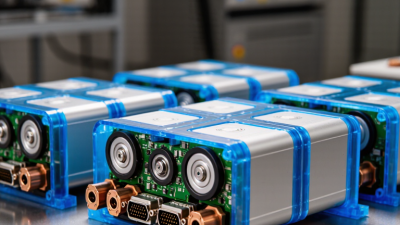
A 14.4v Lithium Ion Battery Pack is a rechargeable power source built for dependable, portable energy. Its 14.4-volt rating usually represents four lithium-ion cells connected in series. Each cell provides approximately 3.6 volts nominally. When fully charged, the pack may reach about 16.8 volts. That difference matters when selecting equipment, chargers, and protective electronics.
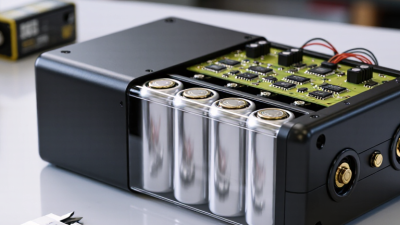
Battery researcher Professor Jeff Dahn has stated, “Batteries are complicated devices.” This short observation deserves attention. A battery pack is not merely a group of cells inside plastic. It includes a battery management system, wiring, connectors, insulation, and often temperature sensors. During practical inspection, an experienced technician checks cell balance, charge history, casing damage, connector temperature, and capacity under a controlled load. A pack that looks perfect may still deliver weak performance.
The capacity rating, measured in ampere-hours, indicates how long the pack may operate under specific conditions. It does not guarantee identical runtime in every device. Motor loads, cold temperatures, aging, and high current demand can reduce available energy. A 14.4v Lithium Ion Battery Pack for a cordless tool differs from one designed for cameras, medical equipment, or robotics. Their discharge rates and protection settings may be completely different.
Choosing the correct pack requires more than matching voltage. The charger must suit the chemistry and charging profile. The connector must fit securely. The management system must support the device’s current requirements. Even small details matter. Reliable battery selection involves specifications, testing, and honest attention to limitations. The label helps, but it never tells the whole story.
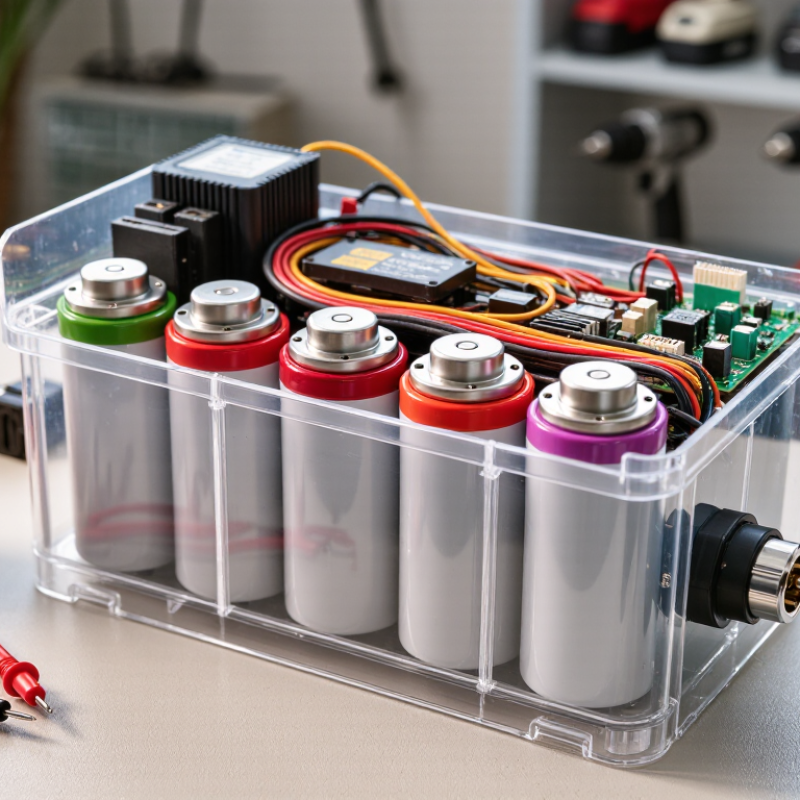
What Is a 14.4V Lithium Ion Battery Pack?
What a 14.4V Lithium-Ion Battery Pack Is
A 14.4V lithium-ion battery pack usually contains four cells connected in series. Each cell has a nominal voltage near 3.6V. The pack may reach 16.8V when fully charged, depending on its cell chemistry and charging limits. It is not 14.4 volts constantly. That number is a nominal rating, not a fixed output.
Capacity is measured in ampere-hours, or Ah. A 14.4V, 5Ah pack stores approximately 72Wh under nominal conditions. Real energy changes with temperature, discharge rate, cell age, and battery management settings. The label alone is incomplete. A protection circuit helps control overcharge, over-discharge, temperature, and current. For regulated products, IEC 62133-2 testing provides a recognized safety framework for portable lithium-ion batteries.
Industry demand explains why these packs receive careful engineering attention. The International Energy Agency reported that global electric vehicle battery demand exceeded 750GWh in 2023. BloombergNEF reported an average lithium-ion pack price of 115 dollars per kWh in 2024, after a 20% annual decline. These figures describe large-scale markets, but they also reflect wider improvements in cell manufacturing and pack design. Small differences matter. A cheaper pack may use less active material, weaker thermal control, or simpler protection. Comparing voltage alone can therefore produce the wrong conclusion. Temperature testing, cycle-life data, and verified capacity measurements deserve equal attention.
| Definition | A 14.4V lithium-ion battery pack is a rechargeable battery assembly designed to provide a nominal voltage of approximately 14.4 volts for portable electronics, tools, instruments, and other equipment. |
|---|---|
| Typical Cell Configuration | 4S, meaning four individual lithium-ion cells or cell groups connected in series. Series connection increases voltage while the ampere-hour capacity remains approximately the same as that of one parallel cell group. |
| Nominal Voltage | Approximately 14.4V to 14.8V, depending on the lithium-ion cell chemistry and the manufacturer’s rated voltage convention. |
| Maximum Charging Voltage | Typically 16.8V for a four-series pack using conventional 4.2V-per-cell lithium-ion cells. The exact charging voltage must match the specified cell chemistry and battery design. |
| Recommended Discharge Limit | Often approximately 12.0V for a four-series pack when the individual-cell cutoff is set near 3.0V. The actual cutoff should be controlled by the battery management system and the equipment requirements. |
| Battery Chemistry | Common chemistries include lithium nickel manganese cobalt oxide and other lithium-ion variants. Different chemistries can have different voltage ranges, energy density, safety characteristics, and cycle life. |
| Capacity | Specified in ampere-hours (Ah) or milliampere-hours (mAh). Typical capacity depends on the cell size and parallel arrangement; for example, a 4S2P pack has four series groups with two cells in parallel per group. |
| Energy Rating | Approximate energy is calculated as nominal voltage × capacity. For example, a 14.4V, 5Ah pack provides approximately 72Wh under nominal rating conditions. |
| Battery Management System | A properly designed pack normally includes protection against overcharge, over-discharge, overcurrent, short circuit, and excessive temperature. The system may also provide cell balancing. |
| Charging Method | Use a charger specifically designed for the pack’s voltage, chemistry, connector, and charging protocol. A conventional 4S lithium-ion pack generally uses a constant-current/constant-voltage charging profile ending at 16.8V. |
| Approximate Charge Time | Charge time depends on capacity, charger current, battery condition, and balancing requirements. A basic estimate is capacity in Ah ÷ charger current in A, with additional time normally required during the constant-voltage stage. |
| Discharge Performance | Output voltage gradually decreases as the pack discharges. Available runtime is affected by load current, temperature, battery age, discharge cutoff, and the pack’s rated capacity. |
| Temperature Considerations | Charging lithium-ion batteries below 0°C is generally not recommended unless the pack is specifically designed with low-temperature charging protection. High temperatures can accelerate aging and increase safety risks. |
| Safety Requirements | Do not short-circuit, puncture, crush, disassemble, or expose the pack to fire or excessive heat. Stop using the pack if it becomes swollen, damaged, unusually hot, or emits an unusual odor. |
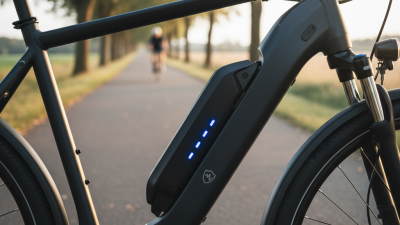
| Common Applications | Typical uses include cordless equipment, portable lighting, robotics, measurement instruments, backup systems, camera equipment, and other devices requiring a rechargeable mid-voltage power source. |
| Key Selection Criteria | Check nominal voltage, maximum charging voltage, capacity, continuous and peak discharge current, dimensions, connector polarity, protection features, operating temperature, and compatibility with the target device. |
| Important Note | The label “14.4V” identifies the nominal pack voltage, not a constant output voltage. Actual voltage varies with the state of charge, load, temperature, cell chemistry, and protection settings. |