Top Benefits of Using Lithium Bike Batteries for Electric Bicycles
The rise in popularity of electric bicycles has revolutionized the way we perceive commuting and recreational travel. Central to this evolution is the efficiency and performance of the energy sources that power these bicycles. Among various options, the Lithium Bike Battery has emerged as a leading choice for both amateur riders and cycling enthusiasts alike. Its lightweight construction, impressive energy density, and long lifespan make it an ideal solution for enhancing the overall riding experience.
As more cyclists transition to electric models, understanding the advantages of Lithium Bike Batteries becomes increasingly important. Not only do these batteries provide a longer range and faster charging times compared to traditional lead-acid batteries, but they also contribute to the overall sustainability of electric biking. With environmental concerns rising globally, choosing a Lithium Bike Battery may be a step towards reducing one's carbon footprint while enjoying the benefits of modern transportation.
In this exploration of the top benefits of utilizing Lithium Bike Batteries for electric bicycles, we will delve into their performance characteristics, economic advantages, and positive environmental impact. By comprehensively understanding these benefits, both new and experienced riders can make informed choices, ultimately enhancing their journey on two wheels.

Benefits of Lithium-Ion Technology in Electric Bicycle Batteries
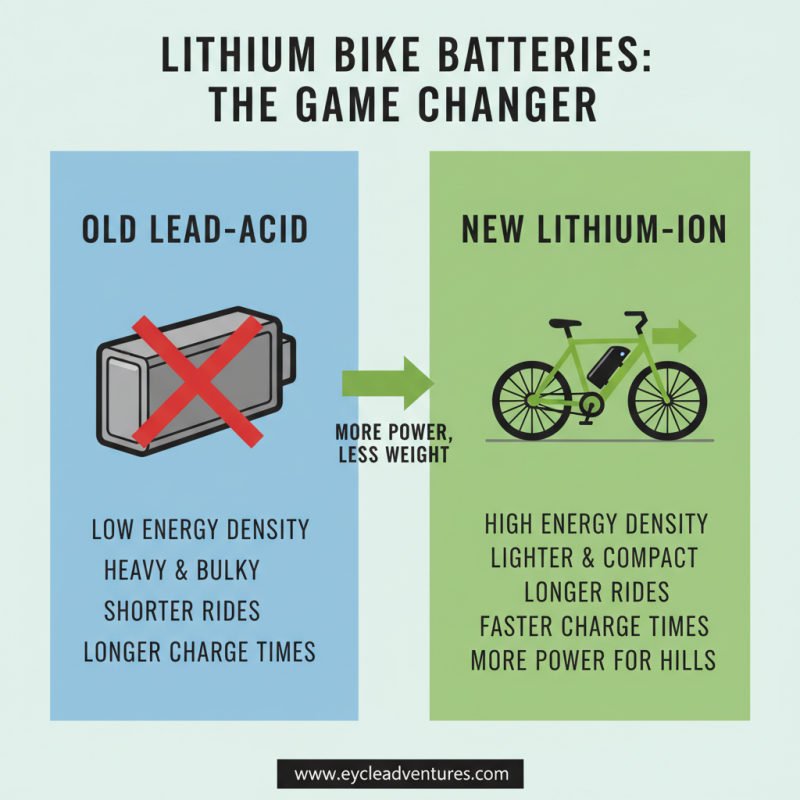
Lithium-ion technology has transformed the landscape of electric bicycle batteries, offering several compelling benefits that enhance the performance and usability of e-bikes. First and foremost, lithium batteries have a high energy density, which allows them to store more energy in a smaller, lighter package compared to traditional lead-acid batteries. This makes them an excellent choice for cyclists looking to reduce weight without sacrificing range, enabling longer rides and improved handling. Moreover, lithium batteries have a slower self-discharge rate, allowing them to retain their charge for a longer period, ideal for infrequent riders who may not use their e-bike daily.
Tips: When maintaining your lithium-ion battery, try to store it in a cool, dry place. Extreme temperatures can affect battery performance and longevity. Additionally, aim to charge your battery when it is around 20-30% depleted, as this can help prolong its life cycle.
Another significant advantage of lithium-ion technology is its rapid charging capability. Many lithium batteries can reach full charge in just a few hours, allowing riders to quickly power up between trips. This efficiency means less downtime and more opportunities to hit the road. Coupled with the minimal maintenance required compared to lead-acid batteries, this makes lithium-ion options highly appealing for everyday cyclists.
Tips: Regularly check your battery for any signs of damage or wear. Keeping an eye on the battery's condition can prevent unexpected issues and ensure a smooth ride.
Top Benefits of Using Lithium Bike Batteries for Electric Bicycles
| Benefit |
Description |
Impact |
| High Energy Density |
Lithium bike batteries offer a higher energy density compared to other battery types, allowing for longer rides on a single charge. |
Extended range for riders |
| Lightweight |
Lithium batteries are significantly lighter than lead-acid batteries, contributing to an overall lighter bike. |
Improved maneuverability and speed |
| Longer Lifespan |
Lithium batteries typically have a longer cycle life, which means they last longer than other battery technologies. |
Cost-effective over time |
| Faster Charging |
Lithium batteries can be charged faster compared to other batteries, minimizing downtime. |
Increased convenience for users |
| Low Self-Discharge Rate |
These batteries maintain their charge for longer periods when not in use, ensuring readiness for ride. |
Higher reliability |
Enhanced Energy Density: Power and Efficiency Explained
Lithium bike batteries have emerged as a game-changer in the realm of electric bicycles, primarily due to their enhanced energy density. Unlike traditional lead-acid batteries, lithium batteries store more energy in a smaller footprint, allowing cyclists to enjoy longer rides without compromising on weight or bulk. This increased energy density translates to more power available for longer distances, making it easier for riders to tackle steep inclines or extended journeys without the constant need for recharging.
Moreover, the efficiency of lithium batteries significantly contributes to the overall performance of electric bicycles. They possess a high charge and discharge rate, ensuring that energy is delivered to the electric motor swiftly and efficiently. This responsiveness not only enhances acceleration but also optimizes the use of power during rides, allowing cyclists to enjoy a smoother and more immersive experience. Additionally, the longevity and reliability of lithium batteries mean fewer replacements over time, translating to cost savings and reduced environmental impact, reinforcing their growing popularity among modern cyclists.
Longer Lifecycle: Comparison of Lithium Batteries and Traditional Options
When comparing lithium batteries to traditional options such as lead-acid batteries for electric bicycles, the longevity of the lifecycle is a key advantage that cannot be overlooked. Lithium batteries typically boast a lifespan of 2,000 to 5,000 charge cycles, significantly outlasting their lead-acid counterparts, which generally offer just 500 to 1,000 cycles. This means that riders can enjoy greater efficiency and a longer-lasting power source, leading to reduced costs in the long run as fewer replacements are needed.
In addition to a longer lifecycle, lithium batteries are also more susceptible to maintaining their performance over time. They experience less capacity degradation with repeated charging, meaning that users can rely on consistent energy output throughout the battery's life. This reliability translates into a more enjoyable and predictable riding experience, allowing cyclists to travel longer distances without the constant worry of battery failure. Ultimately, the comparison highlights that while traditional options may be cheaper upfront, the extended lifecycle and enhanced performance of lithium batteries make them a more sustainable choice for electric bicycle enthusiasts.
Weight Reduction: Impact on Performance and Handling for Cyclists
The weight reduction offered by lithium bike batteries significantly enhances the overall performance and handling of electric bicycles. These batteries are notably lighter compared to traditional lead-acid and nickel-based batteries, allowing cyclists to enjoy a more agile riding experience. With less weight on the bike, riders can handle turns and navigate obstacles with greater ease, leading to improved stability and control. Additionally, this reduced weight can extend the range of the bike, as less energy is required to propel a lighter load, making every pedal stroke more effective.
Tip: When selecting a lithium battery for your electric bicycle, consider the weight specifications. A well-balanced bike will not only feel easier to maneuver but also enhance your stamina on longer rides.
Moreover, the lightweight nature of lithium batteries contributes to less strain on the bike's frame and components, resulting in less wear and tear over time. This durability coupled with performance means that riders can engage in longer rides without the added fatigue that heavier batteries impose.
Tip: Regularly check the weight distribution on your bike. Ensuring that the battery is mounted in a position that maintains balance can further improve handling, making your rides safer and more enjoyable.
Faster Charging Times: Exploring Lithium Battery Charge Efficiency
One of the most significant advantages of lithium bike batteries for electric bicycles is their remarkable charge efficiency, leading to faster charging times compared to traditional lead-acid batteries. Lithium batteries can typically be charged to full capacity in just a few hours, allowing riders to spend less time waiting and more time riding. This quick turnaround ensures that electric bicycle users can easily recharge their batteries between rides, making them an ideal choice for commuters and recreational users alike.
Additionally, lithium batteries maintain a higher charge density, meaning they can store more energy in a smaller and lighter package. This not only enhances the performance of the electric bicycle but also reduces the overall weight, contributing to a more pleasant riding experience. With the ability to quickly regain charge, cyclists can tackle longer distances without the constant worry of running low on power. As the demand for efficient and sustainable transportation grows, the advantages of lithium battery technology continue to drive innovation in the electric bicycle market.