5 Best High And Low Temperature Lithium Batteries for Global Buyers?
In today's fast-paced world, the demand for reliable energy solutions is ever-increasing. High And Low Temperature Lithium Batteries have become essential for various applications. They are crucial for industries ranging from renewable energy to automotive. Their ability to perform well under extreme conditions makes them highly sought after.
Choosing the right lithium battery can be challenging. Factors like temperature resilience and energy capacity are vital. Customers must consider their specific needs when selecting a battery. Understanding these variables can lead to better decision-making. For instance, some products excel in harsh climates while others are more suited for moderate environments.
Battery technology is evolving rapidly. New materials and designs promise enhanced performance and efficiency. However, buyers should remain cautious. Not every product marketed as high or low-temperature compatible delivers on its promises. Evaluating the reliability of manufacturers and their claims is necessary for a successful investment. This article explores the five best options available, focusing on both high and low-temperature performance.

Overview of High and Low Temperature Lithium Batteries
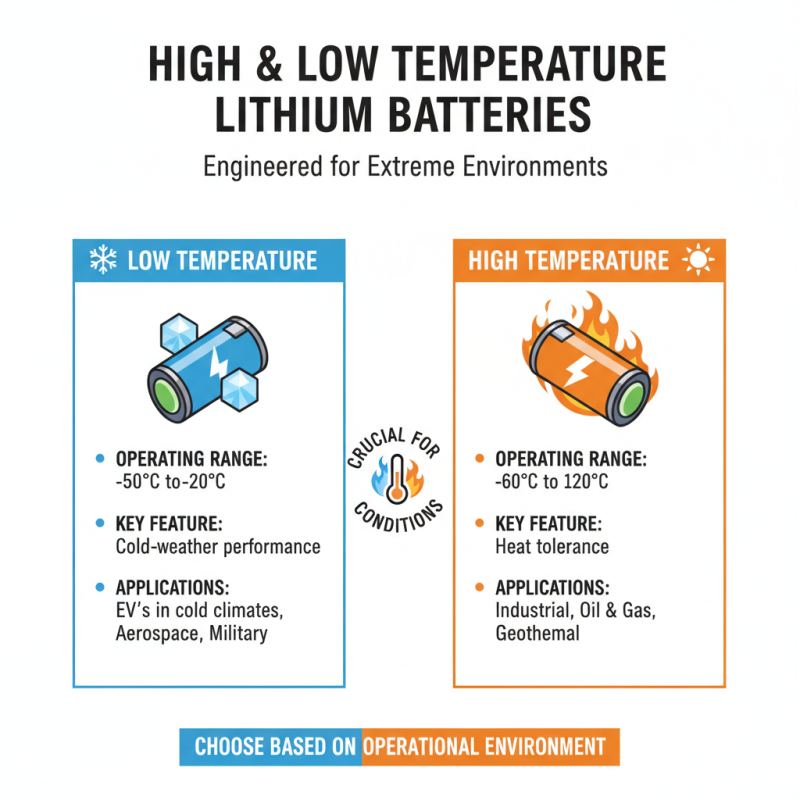
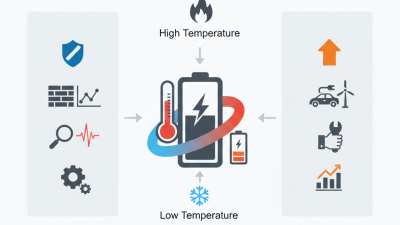
High and low temperature lithium batteries play a crucial role in various applications. These batteries are engineered to perform efficiently in extreme temperatures. Their ability to operate in harsh conditions sets them apart from standard batteries. Users need to choose specific types based on their operational environment.
In high-temperature applications, these batteries can last longer and maintain higher energy output. However, they might suffer from accelerated degradation. Low-temperature batteries, on the other hand, face challenges like reduced capacity. Users often report difficulties in performance when temperatures drop significantly. Monitoring temperature ranges is vital for maximizing battery life.
Different designs and chemistries exist for these batteries. Yet, there is still room for improvement in their longevity and reliability. Stakeholders need to invest in research and development to overcome current limitations. Adapting these technologies to various industries remains a challenge. With ongoing advancements, the future of lithium batteries looks promising, even amid existing hurdles.
Key Factors to Consider When Choosing Lithium Batteries
When selecting lithium batteries, key factors should guide your choice.
Temperature tolerance is crucial.
Batteries designed for high and low temperatures work best in extreme conditions. Consider the battery's capacity in these ranges to ensure reliability.
Battery cycle life is another critical aspect. A long cycle life means the battery lasts longer before its performance declines.
This is especially important for energy-intensive applications. Look for batteries that can handle frequent charging and discharging without
significant degradation.
Tips: Always check the battery's specifications. Look for detailed temperature ranges.
Pay attention to energy density. A higher density means more power in a smaller package.
Safety features should also be prioritized. Reliable batteries have built-in protections against overheating and short circuits.
Not all batteries are created equal, and user feedback can provide insights. Research common issues faced by users regarding specific models.
Top 5 High Temperature Lithium Batteries for Global Buyers
High-temperature lithium batteries are crucial for various industries, particularly in sectors like aerospace, automotive, and renewable energy. According to a recent market report, the global lithium battery market is projected to reach $93 billion by 2027. This immense growth underscores the importance of reliable battery technology. High-temperature batteries can operate efficiently in environments exceeding 60°C, offering advantages in areas where standard lithium batteries may fail.
Not all lithium batteries perform equally under stress. Some can degrade rapidly at elevated temperatures, leading to reduced cycle life and capacity. Research indicates a 20% decrease in performance for conventional lithium-ion batteries at elevated temperatures. Selecting the right high-temperature battery involves understanding its thermal stability and capacity retention. An ideal battery should maintain 80% of its capacity even after repeated exposure to high temperatures.
High-temperature environments pose unique challenges. Improved battery designs must accommodate these conditions. However, manufacturers should focus on safety and thermal management to avoid catastrophic failures. Innovations in electrolyte formulations and battery materials are essential. Continued research is needed to balance performance with reliability in high-temperature applications. Addressing these challenges will be vital as global demands for efficient energy solutions increase.
5 Best High And Low Temperature Lithium Batteries for Global Buyers
| Battery Type |
Operating Temperature Range (°C) |
Capacity (Ah) |
Average Lifespan (Cycles) |
Weight (kg) |
| High Temperature Lithium-Ion |
-20 to 60 |
50 |
2000 |
1.5 |
| Low Temperature Lithium-Ion |
-40 to 60 |
40 |
1500 |
1.2 |
| High Temperature Lithium Iron Phosphate |
-10 to 65 |
100 |
3000 |
2.5 |
| Low Temperature Lithium Polymer |
-30 to 55 |
30 |
1000 |
1.0 |
| High Temperature Lithium Manganese Oxide |
-20 to 70 |
60 |
1800 |
1.8 |
Top 5 Low Temperature Lithium Batteries for Global Buyers
Low temperature lithium batteries have become essential in various applications, particularly in cold environments. According to a recent industry report, these batteries maintain performance down to -40°C, making them ideal for use in electric vehicles and aerospace industries. As demand for reliable power solutions grows, understanding the available battery options is crucial for global buyers.
One notable option is the lithium iron phosphate (LiFePO4) battery. This type shows impressive thermal stability and can endure low temperatures without significant degradation. However, not all batteries can perform equally. Some may exhibit a drop in capacity when exposed to extreme cold. Buyers must assess performance specifications carefully to avoid potential issues in critical applications.
Market analysis shows that low temperature lithium batteries can see a capacity decrease of up to 30% in frigid conditions. This reality underlines the importance of selecting the right battery to avoid operational failures. Engaging with manufacturers and requesting detailed performance data can help buyers make informed decisions. In a rapidly evolving market, continuous education about battery technology is essential for ensuring reliable energy solutions, especially in adverse conditions.
Comparative Analysis of Performance and Applications in Different Environments
When analyzing lithium batteries for extreme temperature applications, performance varies significantly. High-temperature environments can hinder battery life, while low temperatures can lead to decreased capacity. A report from the International Battery Association highlights that lithium-ion batteries usually operate best between 20°C and 25°C. At 40°C, capacity can drop by over 10%, while at -20°C, a battery may deliver only 50% of its rated capacity.
In specific applications, such as electric vehicles or aerospace, selecting a battery suited for temperature extremes is crucial. Research indicates that advanced thermal management systems can mitigate these effects, extending a battery's lifespan. However, the complexity of these systems may introduce new points of failure. For instance, while some solutions claim optimal performance in various conditions, the reliability under long-term stress remains questionable.
Environmental factors are not the only concern. Manufacturers often design batteries for ideal conditions, leaving users in harsh climates with limited options. A recent study noted that user feedback often highlights performance inconsistencies in real-world scenarios compared to lab tests. Such discrepancies should prompt critical evaluation of battery specifications and performance claims before purchase.