Exploring China Top Lithium Battery Pack Innovations and Trends
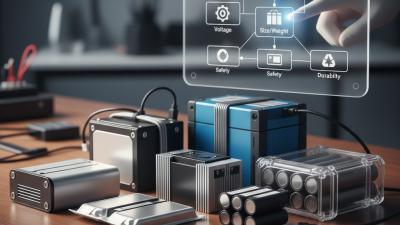
The landscape of lithium battery pack technology is rapidly evolving. Innovations are not just about efficiency; they also focus on safety and sustainability. As demand increases for electric vehicles and renewable energy solutions, the push for advanced lithium battery packs intensifies. Manufacturers are exploring new materials and designs to improve performance and reduce weight.
Recent trends reveal a significant shift towards smart features. For instance, integrating AI for monitoring battery health has gained traction. However, this presents challenges in terms of production costs and complexity. Some companies struggle to implement these technologies effectively. Consumers also seek affordable options, which adds pressure to innovate while keeping prices competitive.
Additionally, the environmental impact of lithium battery production cannot be ignored. As industries invest in greener manufacturing practices, they face tough choices. Balancing innovation with responsible sourcing of materials is crucial. The future of lithium battery packs requires thoughtful strategies that address both technological advancements and ecological concerns.

Key Innovations in Lithium Battery Pack Technology in China
In recent years, China has emerged as a leader in lithium battery pack technology. Innovations in this sector are rapidly transforming energy storage solutions. A recent report by the International Energy Agency (IEA) noted that global demand for lithium-ion batteries could rise by 30% annually through 2030. Such demand drives innovation within battery design and manufacturing processes.
One significant advancement is in battery energy density. Advanced pack designs now offer energy densities exceeding 300 Wh/kg. This increase means lighter battery packs for electric vehicles (EVs) and consumer electronics. However, challenges remain, such as thermal stability and charging speeds. Companies must continually reflect on improving safety without compromising performance.
Tip: To enhance battery life, manufacturers suggest implementing smart management systems. These systems optimize charge cycles and monitor battery health regularly. Stakeholders should also focus on recycling old batteries effectively. The circular economy approach can help reduce demand for raw materials and minimize environmental impact. Exploring these innovations makes it clear that the future of energy storage in China looks promising yet requires diligence and ethical considerations.
Market Growth and Projections for China's Lithium Battery Industry
China's lithium battery industry is experiencing remarkable growth. The demand for electric vehicles and renewable energy solutions is a major driving force. This surge impacts various sectors, including consumer electronics. Optimism surrounds projections for the industry's future.
Several innovations are shaping the battery landscape. New technologies focus on improving energy density and reducing charging times. Yet, sustainability remains a challenge. Many manufacturers are exploring recycling methods for old batteries. However, effective solutions are still under development.
Market projections indicate that China will lead global lithium battery production. Analysts predict continuous expansion over the next decade. Yet, as the industry grows, challenges in raw material sourcing and environmental impact must be addressed. The journey forward requires careful consideration. Balancing innovation with responsibility is crucial for long-term success.
Leading Chinese Companies in Lithium Battery Pack Manufacturing
China is a powerhouse in lithium battery pack manufacturing. Many companies are racing to innovate and enhance battery technologies. These innovations are critical for electric vehicles and renewable energy storage. The competition drives improvements in efficiency, capacity, and charging speed.
Recent trends reveal a push towards lighter materials. Advances in compact designs are also notable. Some companies focus on sustainability. It's essential to balance performance with environmental impact. Challenges remain in recycling and disposal. Companies are aware but progress can be slow.
The market's rapid growth brings questions about quality control. New entrants sometimes struggle to meet safety standards. Established firms have more experience and resources. Collaboration between these entities could lead to better outcomes. Overcoming regional disparities in technology access is also vital. As the industry progresses, constant adaptation will be necessary.
Innovation Trends in China's Lithium Battery Pack Manufacturing
This bar chart illustrates the innovation trends in lithium battery pack manufacturing in China, showcasing various performance metrics such as energy density, charging time, and lifespan. The data represents the average performance of leading battery technologies currently being developed in the industry.
Sustainability Trends in Lithium Battery Pack Production
Sustainability is crucial in lithium battery pack production. Reports indicate that over 50% of battery manufacturers are adopting eco-friendly processes. Recycling plays a significant role here. It can recover up to 95% of lithium from used batteries. This process lowers emissions and reduces waste. Many believe recycling initiatives are vital for future supply chains.
New trends are emerging in materials. Companies are focusing on sourcing sustainable materials. There’s a push for bio-based components. Despite this, many companies still rely on traditional sources. This creates a dilemma. Balancing innovation with sustainable practices is challenging.
Energy density remains a key focus. Higher energy density means longer battery life. However, achieving this sustainably is complex. Experts warn that without careful management, environmental impacts could worsen. The industry must strive for better solutions that prioritize both performance and sustainability.
Challenges and Regulatory Factors Impacting Lithium Battery Innovations
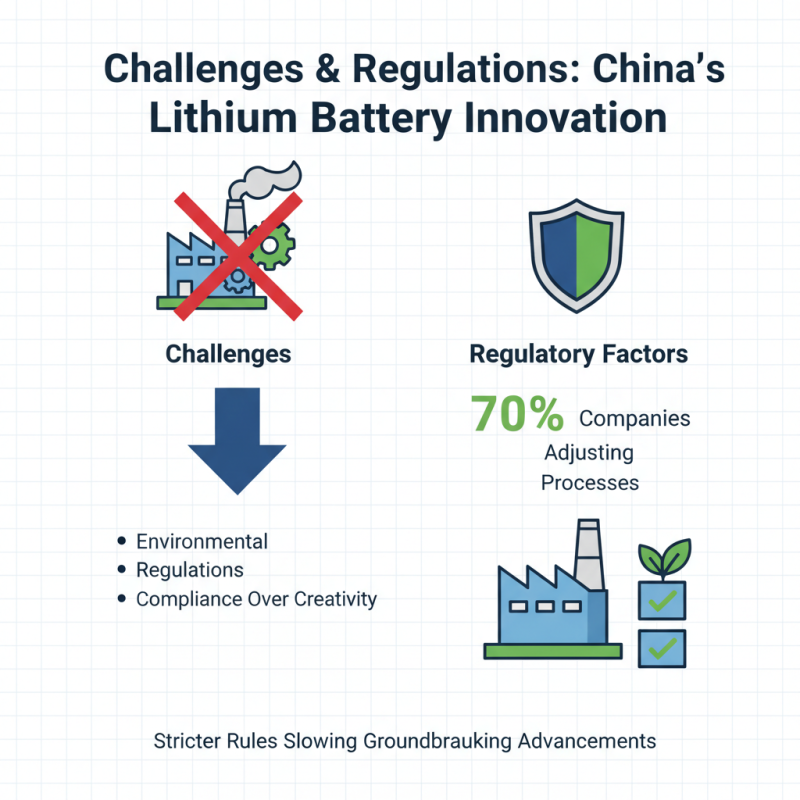
The lithium battery sector in China faces several challenges that impact innovation. Regulatory factors play a crucial role. Stricter environmental regulations are reshaping the way battery manufacturers operate. A recent report indicates that over 70% of companies are adjusting their processes to meet these requirements. This shift can stifle creativity. Companies may focus on compliance rather than groundbreaking advancements.
Additionally, safety standards are evolving rapidly. According to industry data, around 50% of battery innovations fail to meet new safety guidelines. This creates a hesitation among developers. They are compelled to spend more time on testing rather than developing new technologies. Some in the industry call for more streamlined regulations. They argue that rigid standards hinder progress in a fast-paced market.
Market dynamics are also changing. Demand for lithium batteries is expected to grow by 20% annually. However, companies may struggle to keep pace with innovation due to bureaucratic delays. The balance between regulation and innovation is delicate. As the market grows, it is essential for enterprises to adapt. Otherwise, many might find themselves lagging behind competitors. The journey is fraught with obstacles, but reflections on these challenges could spur new breakthroughs.