Why Choose a Bicycle Lithium Battery for Your Ride?
The rise of electric bicycles has changed urban mobility. With this shift, the choice of a power source has become crucial. A Bicycle Lithium Battery stands out due to its efficiency and power-to-weight ratio. According to a study by the International Energy Agency, lithium batteries can increase the range of e-bikes significantly, offering up to 50% longer rides compared to traditional lead-acid batteries.
John Anderson, a renowned expert in battery technology, emphasizes, “The future of cycling lies in leveraging advanced battery systems.” This highlights the importance of selecting the right battery. Users often overlook battery lifespan, which can impact long-term cycling enjoyment. A quality Bicycle Lithium Battery not only charges faster but also withstands a greater number of cycles, making it more cost-effective.
However, the market can be confusing. With numerous options, consumers may struggle to find the best match. It's essential to research and consider various factors, such as energy density and weight. The choice could significantly affect your riding experience. Investing in a premium Bicycle Lithium Battery is worthwhile. The right decision enhances your rides and contributes positively to sustainability.
Benefits of Lithium Batteries Over Traditional Lead-Acid Options for Bicycles
Lithium batteries have become popular for bicycles. They offer several advantages over traditional lead-acid batteries. First, they are lighter. A lithium battery can weigh half as much as a lead-acid counterpart. This weight difference improves the overall efficiency of your ride. You can easily carry the bike or maneuver it with less strain.
Lithium batteries charge faster, which is a significant benefit. While a lead-acid battery can take up to eight hours to fully charge, lithium options often need only two to three hours. This means less waiting and more riding. Another notable feature of lithium batteries is their longer lifespan. They can last up to five times longer than lead-acid batteries. This longevity can save you money in the long run, as you won't need to replace the battery as frequently.
When choosing a lithium battery, consider its discharge rate. High discharge rates can offer better power for steep climbs or quick acceleration. Ensure you check compatibility with your bike. Not all systems work seamlessly with lithium batteries. Aim to read reviews and gather user experiences to guide your decision. This approach helps avoid potential pitfalls. Make informed choices, and enjoy your ride!
Key Industry Data on Lithium Battery Lifespan Compared to Conventional Batteries
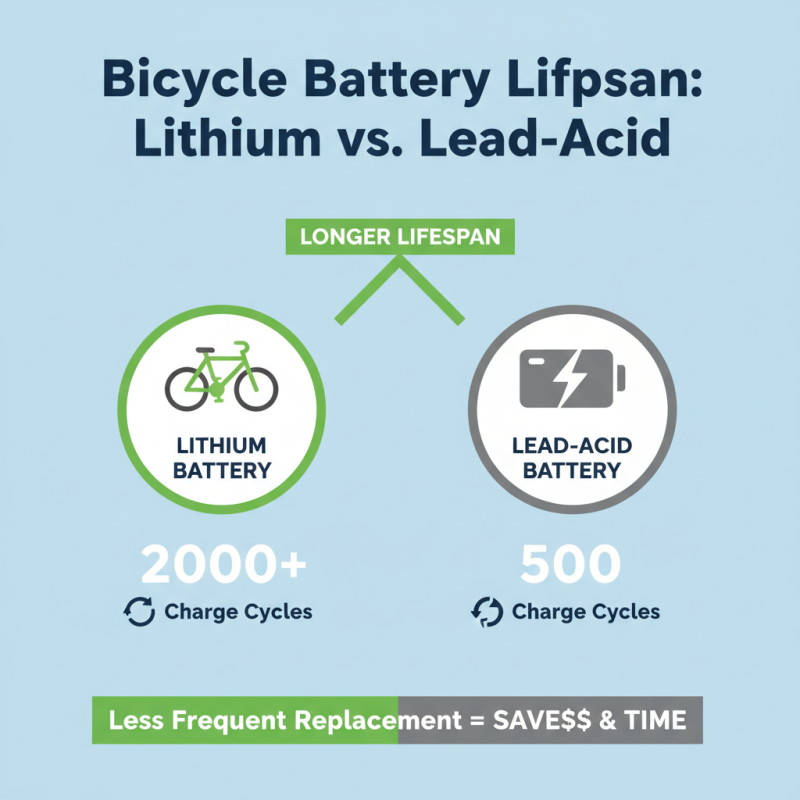
When it comes to choosing a bicycle battery, lithium batteries stand out. They offer a significantly longer lifespan than conventional batteries, making them a popular choice among cyclists. Generally, lithium batteries can last over 2,000 charge cycles. In comparison, traditional lead-acid batteries may only reach about 500 cycles. This means lithium batteries require less frequent replacement, saving both time and money in the long run.
However, this extended lifespan comes with considerations. Lithium batteries can be more expensive initially. Some might question if the investment pays off within a few years. Additionally, while they are lightweight and efficient, they can be sensitive to extreme temperatures. Maintaining optimal conditions for longevity can be a challenge for some riders. This aspect requires planning and awareness, posing potential inconveniences for those accustomed to conventional options.
Despite these challenges, the advantages of lithium batteries in terms of performance are hard to ignore. They hold their charge longer and deliver consistent power throughout their life. This reliability can greatly enhance the cycling experience. However, each rider must weigh these factors against their own needs and riding habits. In the end, awareness and reflection on personal requirements will guide the best choice for any cyclist.
Weight Savings: How Lithium Batteries Enhance Bicycle Performance
Choosing the right battery can transform your ride.
Lithium batteries are lighter than traditional options. This weight reduction improves handling and speed.
Imagine climbing steep hills with less effort. A lighter bike feels nimbler, allowing quick maneuvers.
Many cyclists appreciate reduced weight, but they might overlook capacity.
Batteries with less weight can sometimes hold less charge. This trade-off requires careful consideration.
How long will your ride be?
If you're on a long journey, battery life becomes critical.
Balancing weight and capacity is tricky but essential.
Performance is not just about weight. It's about how the battery interacts with the bike.
A well-placed lithium battery enhances balance.
Some riders feel the difference immediately; others take time to notice.
Striking the optimal balance creates an efficient ride.
Each rider’s needs are unique, and this continues to be a topic worth exploring.
Charging Efficiency: Lithium Battery Charge Times vs. Other Battery Types
When it comes to charging efficiency, lithium batteries stand out remarkably. They can recharge quickly, often in just a couple of hours. In contrast, other battery types may take much longer, leaving you waiting. The convenience of a fast recharge can make a difference in your riding plans. You can complete a ride and return home to a fully charged battery in no time.
Lithium batteries also maintain their charge better over time. They lose less power when not in use. This means you can store your bike without worrying about the battery draining quickly. However, not all lithium batteries are created equally. Some may have subpar performance or slow charging times compared to others in their class. Researching specifications is essential to ensure suitability for your needs.
There are still challenges with charging lithium batteries. Poor-quality chargers can damage them, leading to safety issues. Additionally, temperature extremes can affect their lifespan. It’s important to use appropriate charging methods. Overall, while lithium batteries present major advantages, careful consideration and awareness of limitations are key. This balance ensures a smoother ride.
Environmental Impact: The Sustainability Advantages of Lithium Batteries in Cycling
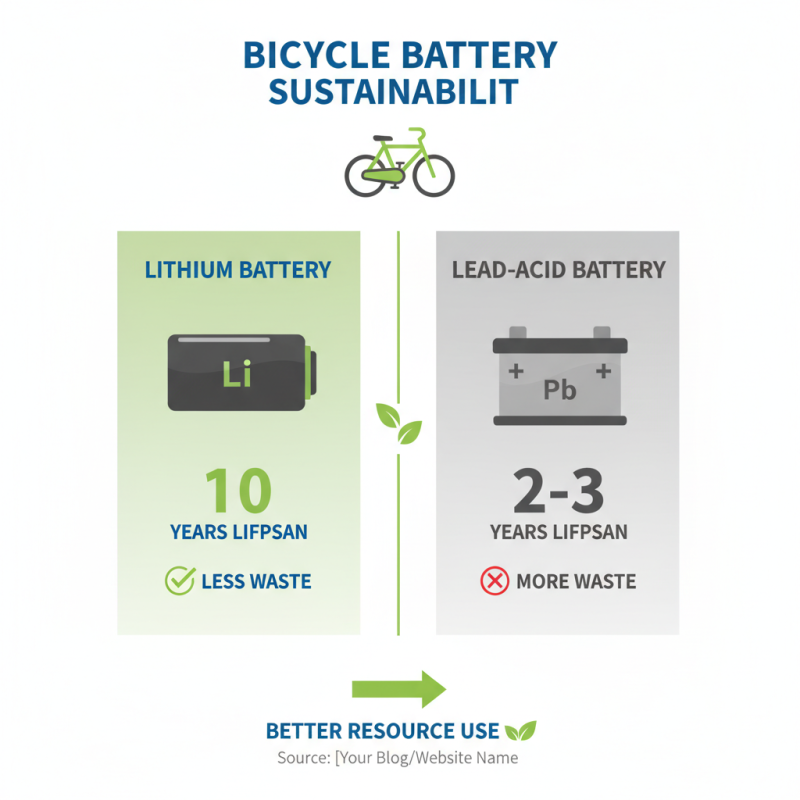
The choice of a bicycle lithium battery brings significant sustainability advantages. Lithium batteries are known for their longevity. A well-maintained lithium battery can last up to 10 years, reducing waste. In comparison, traditional lead-acid batteries typically last just two to three years. This difference reflects a better use of resources.
Moreover, lithium batteries have a lower environmental impact during production. According to a recent study, the manufacturing of lithium batteries results in 50% fewer carbon emissions than traditional options. However, the extraction of lithium poses challenges. Mining operations can disrupt local ecosystems. This raises concerns about the balance between sustainability and resource extraction.
Recycling lithium batteries is crucial for minimizing waste. Up to 95% of lithium battery components can be recycled. Yet, current recycling rates sit below 5% globally. Improving this process could lead to significant environmental benefits. The cycling community must push for better recycling initiatives. Sustainable practices in battery life and disposal can pave the way for a cleaner future.