How to Choose the Best 14.4v Lithium Ion Battery Pack?
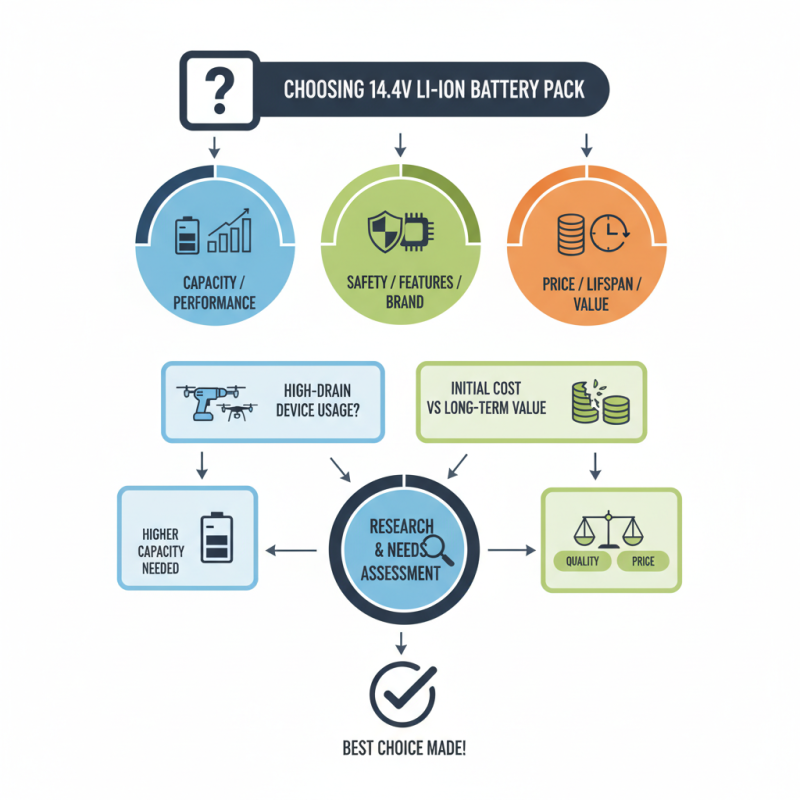
Choosing the right 14.4v Lithium Ion Battery Pack can significantly impact device performance. With so many options available, the decision isn’t simple. Factors like capacity, brand, and price come into play.
Think about the usage. Are you powering a high-drain device? A higher capacity might be needed. Also, consider battery lifespan. A cheaper pack may seem appealing but could wear out faster. It’s important to weigh long-term value against initial cost.
Don’t forget safety. A poorly made pack could lead to overheating. Look for packs with protective features. Quality varies, so research brands. Sometimes, the best choice isn’t the most popular one. Reflect on what you truly need from a 14.4v Lithium Ion Battery Pack.
Understanding Lithium Ion Battery Chemistry for 14.4V Packs
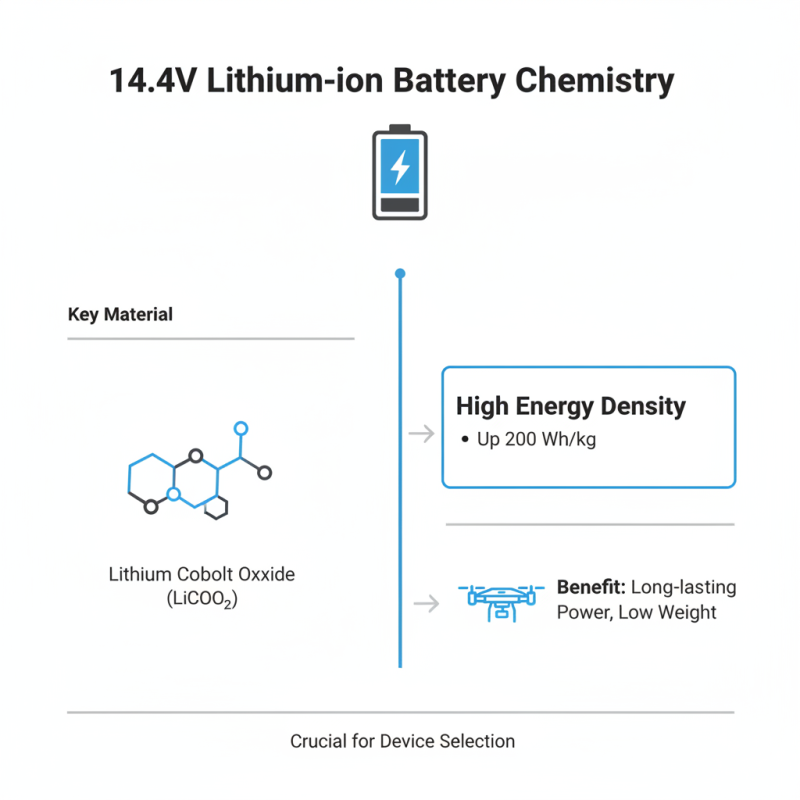
Understanding lithium-ion battery chemistry is crucial when selecting a 14.4V battery pack. These batteries primarily use lithium cobalt oxide, which provides high energy density. According to industry reports, energy densities can reach up to 200 Wh/kg in premium batteries. This is beneficial for devices that require long-lasting power without added weight.
However, lithium-ion technology has its downsides. These batteries need careful handling to avoid overheating or degradation. Overcharging can lead to significant capacity loss over time. Reports indicate that batteries can lose about 20% of their original capacity within a few years if mishandled. This highlights the importance of purchasing from a supplier that provides thorough usage guidelines and quality assurance.
Another aspect to consider is cycle life. Most 14.4V lithium-ion packs have a cycle life of 500 to 1000 cycles. The actual lifespan varies based on usage and charging habits. In practice, real-world data show that improper charging can shorten this lifespan significantly. It's essential to weigh the factors of chemistry, capacity, and longevity when making a decision.
Key Specifications to Consider in 14.4V Lithium Ion Battery Selection
When selecting a 14.4V lithium-ion battery pack, it’s crucial to consider several key specifications. Capacity is one of the most vital factors. Measured in amp-hours (Ah), capacity indicates how long the battery can power your device. A higher capacity often means longer runtime. However, larger batteries can be bulkier and heavier.
Another important aspect is discharge rate, measured in C-ratings. This figure shows how quickly a battery can release energy. A higher C-rating allows for more power-hungry applications. Keep in mind the balance between power and practicality. Sometimes, higher ratings lead to overheating issues, which is a serious concern.
Tips: Always verify the battery's compatibility with your device. Mismatched voltages can cause damage. It’s also wise to check for safety features, like overcharge protection. These can prevent accidents. Reading user reviews can provide insights into real-world performance. However, be aware that experiences can vary widely.
In addition, consider the weight and size specifications. A compact battery may be easier to handle but could offer less power. Never overlook this trade-off. Reflecting on these choices can lead to better decisions. Choosing the right battery requires careful thought. It's not just about the specs; consider your unique needs too.
Comparative Analysis of Capacity Ratings in Lithium Ion Battery Packs
When selecting a 14.4v lithium-ion battery pack, capacity ratings are crucial. These ratings determine how long the battery can power your device. It's important to understand the amp-hour (Ah) and milliamp-hour (mAh) measurements. Higher ratings generally indicate longer usage times. However, more capacity often means a larger and heavier battery.
Comparing different packs can be tricky. Some might advertise high capacities but lack efficiency. Users may overlook the discharge rate, which affects performance. High capacity does not always guarantee better results. You might need a smaller pack for lightweight devices. Balance is key in choosing the right option.
It's essential to reflect on your needs before purchasing. Consider how often you use your devices. Are you looking for sustained use or quick bursts of power? Evaluating your habits can help you avoid unnecessary expenses. Sometimes, less is more. A battery with mediocre ratings could be more than enough for daily tasks. Focus on what truly fits your lifestyle.
Battery Capacity Comparison
Safety Ratings and Certifications for 14.4V Lithium Ion Batteries
When selecting a 14.4V lithium-ion battery pack, safety ratings and certifications are crucial. These ratings indicate how well a battery performs under various conditions. Look for batteries that meet international safety standards. A product with proper certifications can minimize risks during use.
Check for certifications like UL or CE. These labels confirm that the battery has undergone rigorous testing. However, not all batteries come with these certifications. This absence raises concerns. Sometimes, manufacturers cut corners to save costs. Be cautious when evaluating such options.
Another aspect to consider is the manufacturer's reputation. A well-regarded manufacturer will likely prioritize safety. Reading reviews can provide insight into real-world performance. Some users might mention safety concerns they faced. These testimonials can help in making informed choices. Keep an eye out for patterns in feedback. Prioritize safety in your selection process, as it directly impacts your experience.
How to Choose the Best 14.4v Lithium Ion Battery Pack?
| Dimension |
Specification |
Safety Rating |
Certification |
| Voltage |
14.4V |
UL 2054 |
CE |
| Capacity |
3000mAh |
IEC 62133 |
RoHS |
| Dimensions |
130 x 90 x 70 mm |
UN 38.3 |
MSDS |
| Weight |
0.8 kg |
ISO 9001 |
FCC |
| Discharge Rate |
10C |
TÜV |
PSE |
Evaluating Lifespan and Cycle Count of Lithium Ion Batteries
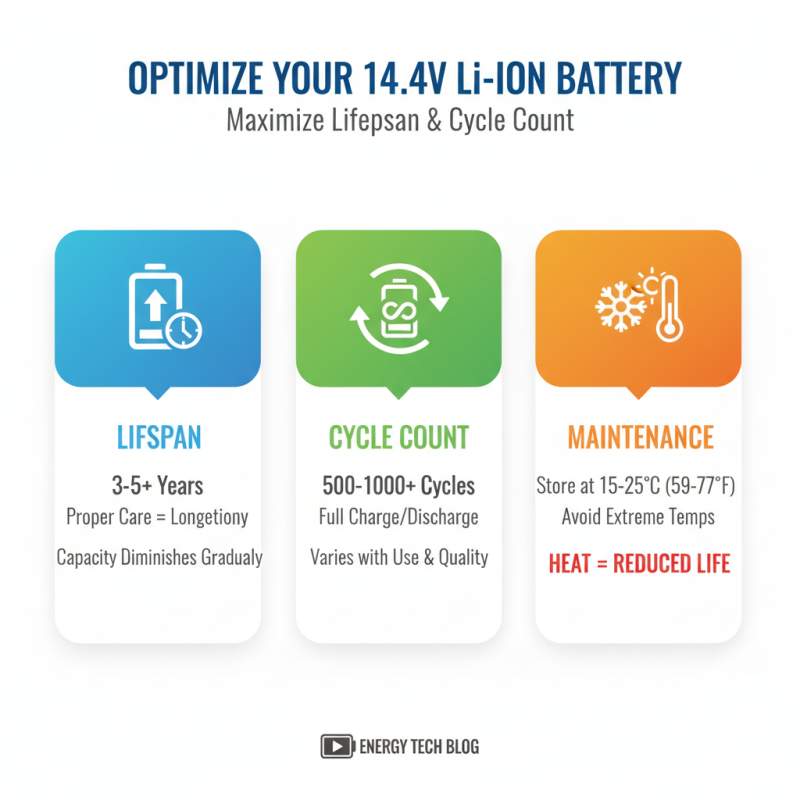
When choosing a 14.4v lithium-ion battery pack, evaluating its lifespan and cycle count is crucial. Lifespan refers to how long the battery can last before its capacity diminishes. Typically, a good lithium-ion battery can last for several years with proper care. However, many users overlook the importance of maintenance. Neglecting to store the battery at optimal temperatures can drastically reduce its life.
Cycle count, on the other hand, indicates how many complete charge and discharge cycles a battery can endure. A higher cycle count usually means the battery is more durable. For example, some batteries are rated for 300–500 cycles. If a battery’s cycle count is low, it may require frequent replacements. This can be a hassle and may lead to additional expenses. Many users find themselves buying new batteries often without realizing the implications of cycle count.
Choosing the right battery requires diligence. Evaluate these metrics carefully. Keep in mind how usage patterns may affect battery health. A high-quality battery should balance good lifespan with a high cycle count. Consider your specific needs before making a decision. It’s worth taking the time to reflect on these aspects.