Why Choose the Right Lawn Mower Battery for Your Needs?
Choosing the right lawn mower battery is crucial for optimal lawn care. As Johnathan Green, a leading expert in the lawn care industry, states, "Selecting the correct lawn mower battery can greatly affect your mower's performance."
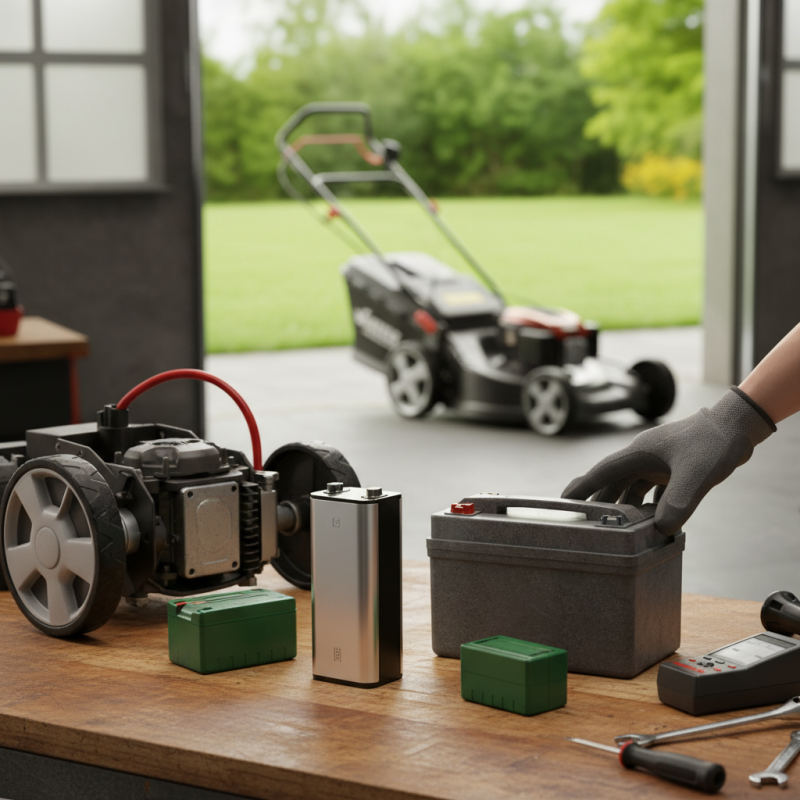
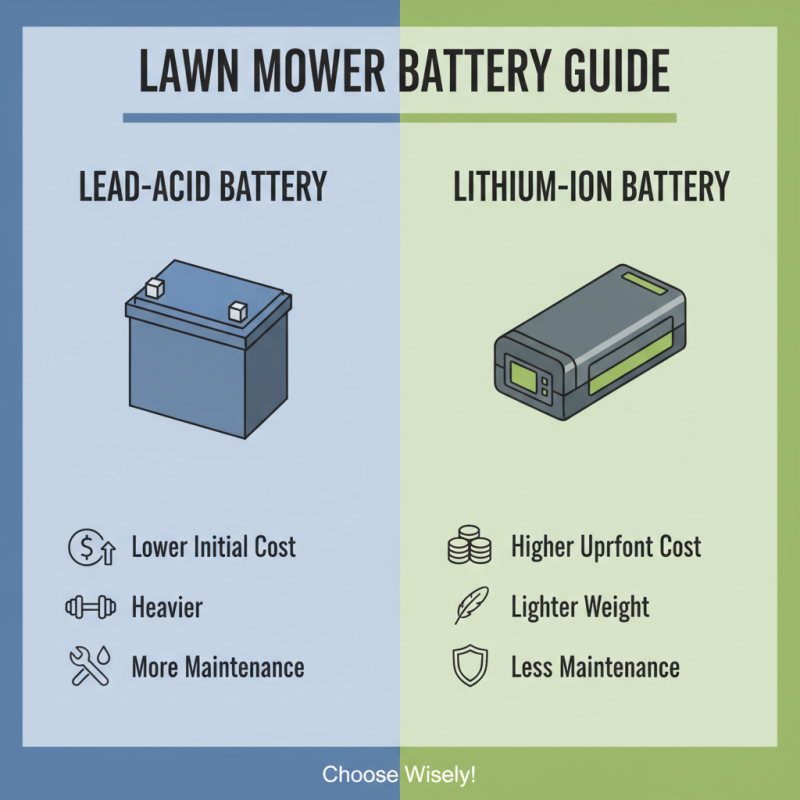
Different types of lawn mower batteries exist. These include lead-acid, lithium-ion, and nickel-cadmium options. Each type offers unique benefits and potential drawbacks. For instance, lithium-ion batteries are lightweight and efficient but can come with a higher price tag. Meanwhile, lead-acid batteries are affordable but may require more maintenance.
Understanding your specific needs is essential. Think about the size of your lawn, the mower type, and your budget. A powerful battery ensures a longer runtime. However, it’s easy to overlook crucial factors. A battery that suits one mower might not suit another. Reflecting on these details can lead to better performance and yard satisfaction.
Understanding Different Types of Lawn Mower Batteries Available
When it comes to lawn mowers, the battery type matters. There are mainly two categories: lead-acid and lithium-ion batteries.
Lead-acid batteries are less expensive but heavier. They require regular maintenance and typically last 3-5 years. In contrast, lithium-ion batteries are lighter and last longer, often exceeding 10 years. According to a 2022 industry report, lithium-ion batteries are becoming the preferred choice in many households.
Tips: Consider your lawn size. A larger area may benefit from a lithium-ion battery. Its lightweight design allows for longer mowing without fatigue. However, they come at a higher initial cost.
Another factor is charging time. Lead-acid batteries take longer to charge. You might wait 8-12 hours before the next use. Lithiums can recharge in 1-3 hours, meaning less downtime. Many users overlook these details, leading to frustration. Be mindful of battery life and charging needs to maintain efficiency.
Tips: Always check your mower’s compatibility with the battery type. Read user manuals thoroughly. This avoids potential issues and enhances performance. A little research now can save big headaches later.
Factors to Consider When Selecting a Lawn Mower Battery
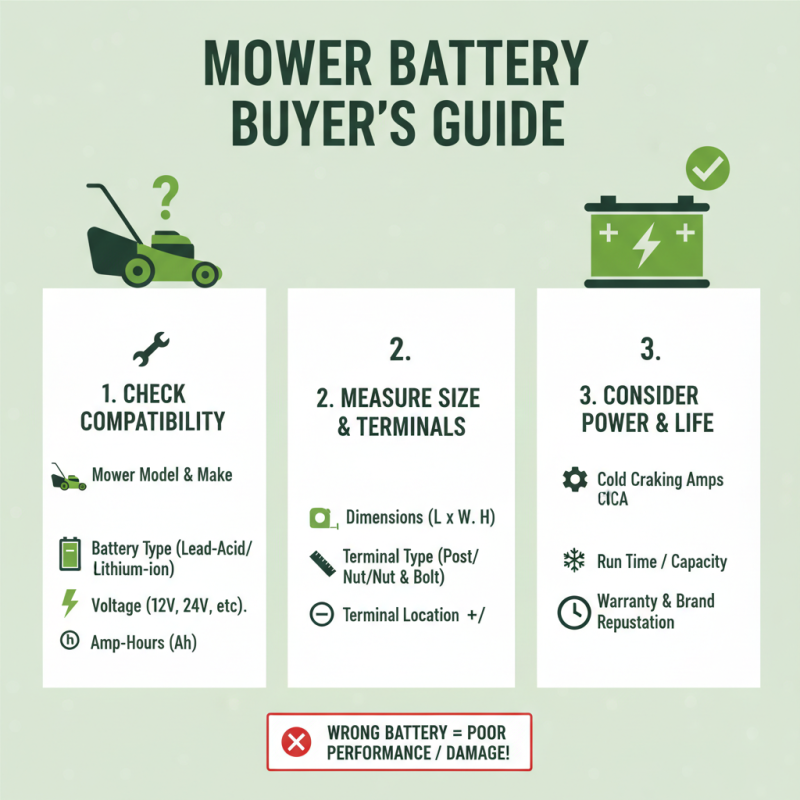
Choosing the right lawn mower battery involves several key factors. Battery type is crucial. There are lead-acid and lithium-ion options. Lead-acid batteries are often heavier but cheaper. They typically last about three years. In contrast, lithium-ion batteries offer longer lifespans and faster charging. Reports show that lithium-ion batteries can last up to ten years, which makes them a better long-term investment.
Another essential factor is voltage compatibility. Most lawn mowers require batteries between 12V and 36V. Using the wrong voltage can harm your mower. According to industry data, choosing the correct voltage can enhance efficiency by 15% or more. This can lead to longer mowing times, especially for larger lawns.
Consider maintenance needs, too. Some batteries need regular checks and water refills. Lithium-ion batteries generally require less upkeep. However, they may be more sensitive to temperature extremes. An external temperature range exceeding 95°F can decrease their lifespan. Adapting to your specific lawn care habits is essential. Analyzing these factors can lead you to a more tailored and effective battery choice.
Comparing Performance: Lead-Acid vs. Lithium-Ion Batteries
When it comes to choosing a lawn mower battery, you might feel overwhelmed by options. Two common types are lead-acid and lithium-ion batteries. Each has distinct characteristics, making them suitable for different needs. Lead-acid batteries are tried and tested. They are generally more affordable upfront. However, they are heavier and may require more maintenance. This can turn into a hassle over time.
On the other hand, lithium-ion batteries are gaining popularity. They are lightweight and have a longer lifespan. Users often appreciate the quick charging feature. But, they can be costly initially. Many people wrestle with this high cost versus long-term savings. It's essential to weigh these factors based on your lawn care habits. Some may prioritize cost, while others might value efficiency and performance. Reflect on your usage patterns before making a final decision.
Assessing Compatibility with Your Lawn Mower Model
Choosing the right battery for your lawn mower can be challenging. Compatibility with your specific mower model is crucial. Not all batteries fit all mowers, and using the wrong one can cause problems. It might lead to poor performance or even damage.
When assessing battery compatibility, check the voltage and size requirements of your mower. The voltage must match. A mismatch can prevent the mower from operating efficiently. Also, consider the battery type. Some mowers require lead-acid batteries, while others use lithium-ion.
Tips: Always consult your mower’s manual before purchasing a new battery. It provides vital information on compatible battery types. If you're unsure, contact a local expert for advice. Take time to research your options. A battery that seems right might not suit your mower. Consider performance reviews from other users. Their experiences can guide your decision process.
Maintenance Tips for Prolonging Lawn Mower Battery Life
Maintaining your lawn mower battery is crucial for a healthy lawn care routine. Regular checks can prevent unexpected failures. Keep the battery terminals clean. Dirt and corrosion can impair performance. A simple wipe with a cloth can make a difference. Make sure connections are tight. Loose connections can lead to poor functionality.
Charging your battery properly extends its life. Avoid overcharging, as it can damage the battery. Monitor the charging time. It's better to charge during cooler parts of the day. If you notice any swelling or leakage, act quickly. Ignoring these signs can lead to bigger problems.
Storage is vital too. If you need to put your mower away, store the battery in a cool, dry place. Extreme temperatures can shorten battery life. Regularly check the battery voltage, especially if it’s not in use. A well-maintained battery is the heart of your mower. Neglect can lead to pricey replacements.