How to Choose the Right Li Ion Polymer Battery for Your Needs?
Choosing the right Li Ion Polymer Battery can be a challenging task. With so many options available, it's crucial to understand your specific needs. Different applications require different battery specifications. High energy density might be essential for portable devices. Conversely, longer life cycles are often necessary for electric vehicles.
Evaluate factors such as capacity, voltage, and discharge rates. This helps ensure the battery meets your requirements. It’s also important to consider safety features. Overcharging and overheating can pose risks. Reliability in performance is another key aspect. A trusted supplier can provide insights and guidance.
While many claim to offer excellent batteries, not all products uphold quality. Research and user reviews can help discern the right choice. Investing time in understanding these batteries can save you from potential failures. Remember, your choice impacts overall performance and efficiency.
Understanding the Basics of Li-Ion Polymer Batteries
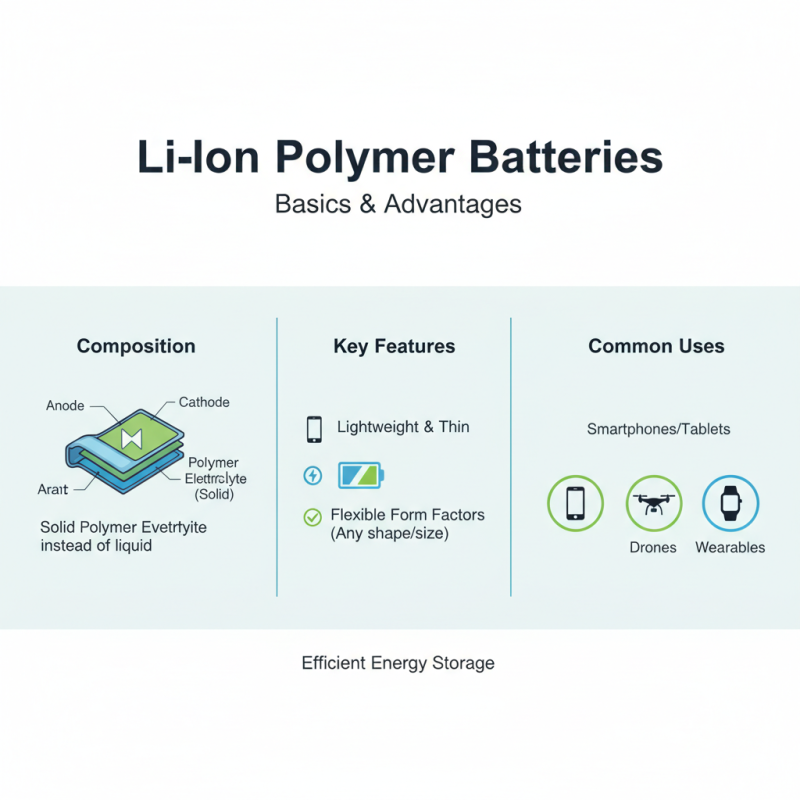
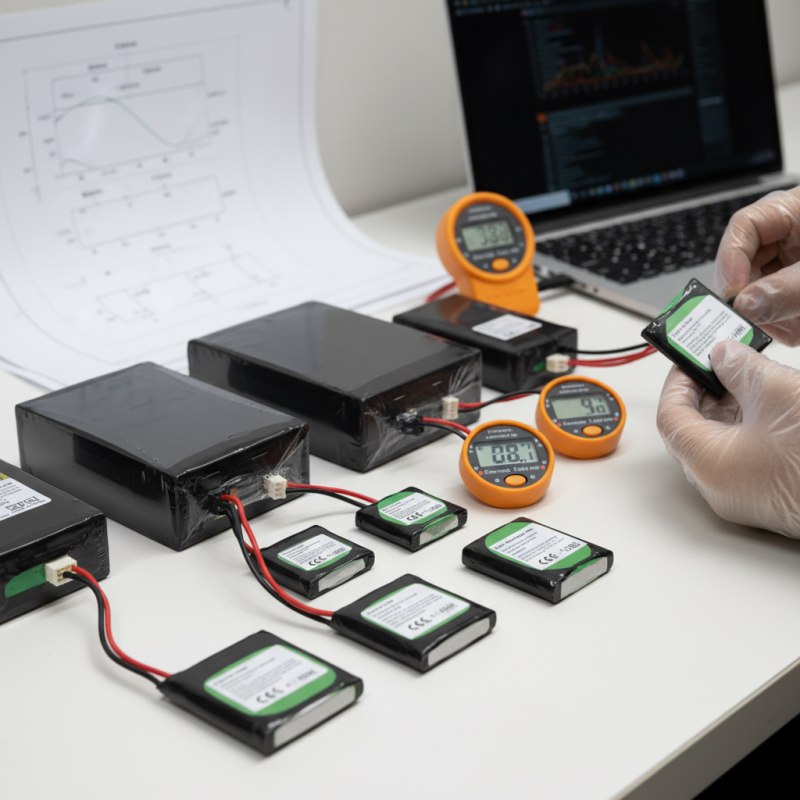
Li-ion polymer batteries are widely used in various devices today. They are popular due to their lightweight design and efficient energy storage. Understanding their components is crucial when making a selection. These batteries consist of a polymer electrolyte instead of a liquid one. This design allows for flexibility in shapes and sizes. This feature makes them ideal for smartphones, tablets, and drones.
When choosing a battery, consider the capacity, voltage, and discharge rates. A higher capacity means longer usage time, but it can also impact the size and weight. It's important to align the battery's specifications with your device's needs. Charging cycles and lifespan are also key factors. Some batteries may degrade faster than expected. Reflecting on these aspects is essential for making an informed decision.
Not all batteries perform the same under different conditions. Temperature fluctuations can affect performance. Additionally, safety should always be a priority. Check for safety certifications when evaluating battery options. Sometimes, a lower-cost battery may not meet safety standards. This could lead to unexpected issues, which would be regrettable. Always prioritize reliability when selecting a battery for your needs.
Key Factors to Consider When Selecting a Battery
When selecting a Li-ion polymer battery, understanding your needs is crucial. Start by assessing power requirements. Consider how much energy your device needs to function optimally. The battery's capacity, measured in milliampere-hours (mAh), plays a vital role here. Higher capacity means longer usage time. Evaluate your usage patterns carefully.
Tips: Always match the battery capacity with your device's specifications. A battery with too high a capacity may be unnecessary and bulky. Conversely, a low-capacity battery might not meet your demands.
Next, think about size and weight. A compact battery is ideal for portable devices, while larger batteries suit stationary applications. Don’t ignore your device’s design constraints. Choose a battery that fits well without compromising functionality. Keep in mind the energy density, which affects the battery's weight and size.
Tips: Use a scale to weigh your options. A heavier battery may impact portability. Reflect on whether you prioritize performance or convenience. This can guide your decision-making process effectively.
Evaluating Your Power Requirements and Capacity Needs
When evaluating power requirements for a Li-ion polymer battery, consider the device’s energy consumption. This includes understanding how long the device will run. Different devices have varied usage patterns. For instance, a drone typically requires more power for short bursts. A smartwatch, on the other hand, has lower demands over extended periods. By analyzing these patterns, you can better estimate the capacity needed.
Next, think about the battery capacity. Measured in milliampere-hours (mAh), this indicates how much energy the battery can store. If a device requires 500 mAh for operation, a battery with a capacity of 1000 mAh offers double the usage time. However, a higher capacity often means more size and weight. This is where trade-offs come into play. Balancing size, weight, and power is essential for optimal performance.
Additionally, reflect on how you plan to charge the battery. Some devices support fast charging, while others may need more time. Understand your charging habits. If you frequently forget to charge, a larger capacity becomes crucial. In contrast, regular charging can mean a smaller, lighter battery suffices. It’s vital to align your choices with real-world usage scenarios.
Assessing Battery Size and Weight for Your Application
When selecting a Li-Ion polymer battery, assessing size and weight is crucial. Smaller devices benefit from lighter batteries. However, too light may compromise performance. Heavy batteries can enhance longevity, but they add bulk, affecting usability.
**Tips:** Consider the application of your device. For portable gadgets, prioritize weight. If you need a stationary power source, size matters less. Balancing these factors requires careful thought and sometimes, sacrifices.
Evaluating capacity is essential. A compact battery may limit runtime. In contrast, a larger one can provide hours of use. Ensure the battery fits within your design constraints. Reflect on your priorities; convenience versus performance can lead to different choices.
**Tips:** Look for batteries that offer the best ratio of capacity to weight. Check user reviews for insights. Sometimes, unexpected choices yield the best outcomes.
Comparing Cost and Manufacturer Reputation in Your Choice
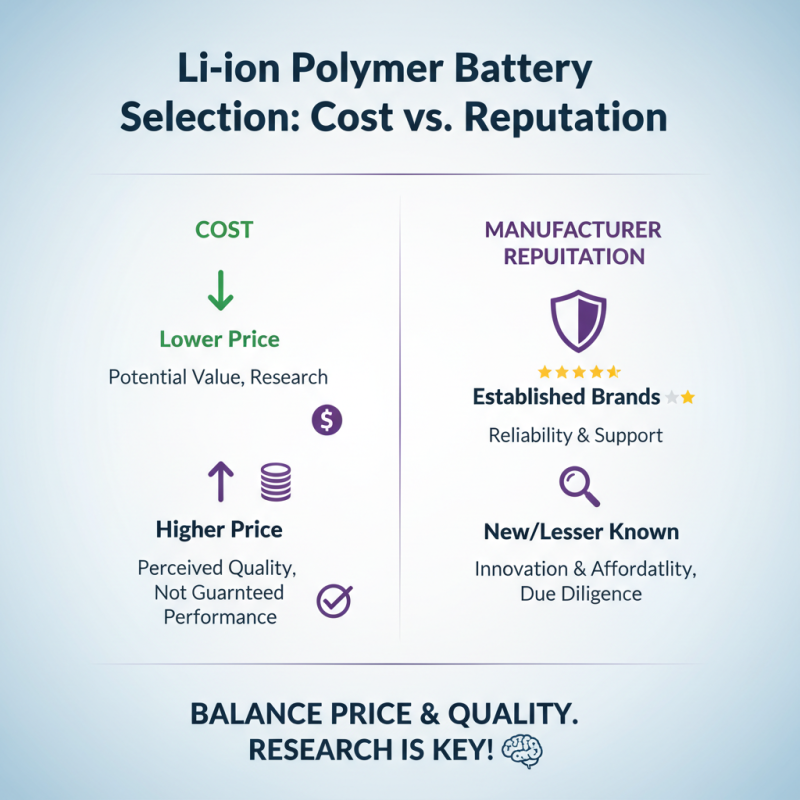
When selecting a Li-ion polymer battery, cost and manufacturer reputation play vital roles. It's crucial to balance price and quality. Many people assume that a higher price guarantees better performance. However, this isn't always the case. Some lower-cost options may surprise you with their reliability. It's wise to research various products before making a choice.
Manufacturer reputation matters significantly. A brand known for quality likely has a track record of success in the industry. Checking online reviews can provide insights into customer experiences. Look for feedback on longevity, safety, and performance. Not all well-known brands deliver the same results. Sometimes, newer companies offer innovative options that might meet your needs better.
While it's tempting to go for the cheapest or the most famous brand, deeper research often reveals hidden gems. Take time to compare specifications, warranty details, and customer support. Reflect on your specific use case. Will you need high capacity or quick charging? Your choice should align with your requirements and keep an eye on reliability factors. This approach ensures you find the right battery without overspending or settling for less.