How to Choose the Right Lithium Battery for Your Needs?
In today’s tech-driven world, choosing the right lithium battery can be a daunting task. The rapid growth of the lithium battery industry is evident. According to a recent report by MarketsandMarkets, the market is projected to reach $129.3 billion by 2027, reflecting a CAGR of 17.2%. This expansion underscores the importance of understanding battery specifications for various applications.
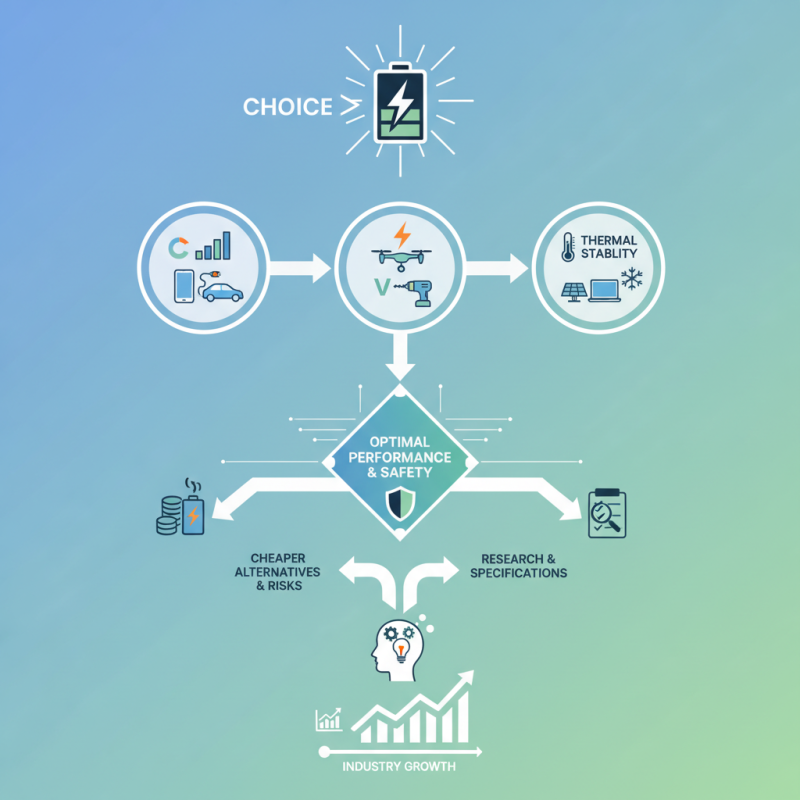
As expert Dr. Emily Zhang states, "Choosing the right lithium battery is critical for device performance." This sentiment resonates deeply as we navigate this evolving market. Factors such as capacity, voltage, and thermal stability play significant roles in the decision-making process. Many users often overlook these details, leading to suboptimal device performance or even safety hazards.
Moreover, the abundance of options can overwhelm potential buyers. Some may settle for a cheaper alternative without considering long-term reliability. Reflecting on these choices is essential. Each battery has unique attributes that dictate its suitability for specific uses. Researching and understanding these specifications is not just beneficial; it is vital for ensuring optimal outcomes in various applications.
Understanding Different Types of Lithium Batteries Available on the Market
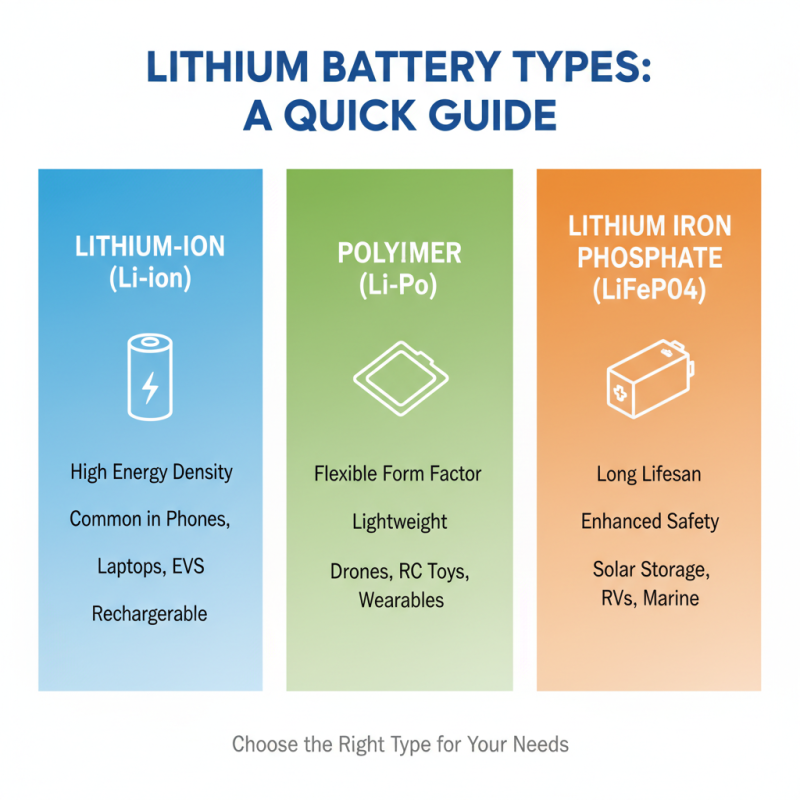
When choosing a lithium battery, it’s crucial to understand the different types available. Lithium-ion, lithium-polymer, and lithium iron phosphate are common options. Each type serves specific needs and applications.
Lithium-ion batteries are widely used. They offer high energy density and are ideal for portable devices. However, they can be sensitive to temperature extremes. Overcharging can lead to battery failure. Consider the environment in which the battery will be used.
Lithium-polymer batteries are lighter and more flexible. They are often found in drones and high-performance RC vehicles. While they are versatile, they can be more expensive. Proper handling is essential to avoid damage.
**Tip**: Always check the battery specifications to ensure compatibility. Look for discharge rates and capacity. Ensure it meets your performance needs.
Lithium iron phosphate batteries boast safety and stability. They have a longer lifespan than other types but have lower energy density. They are suitable for applications needing longevity.
**Tip**: Think about your usage pattern. Heavy users might prefer lithium-ion for its power. Casual users may find lithium iron phosphate a better choice.
Evaluating the Capacity and Voltage Requirements for Your Application
When choosing a lithium battery, understanding capacity and voltage is crucial.
Capacity refers to how much energy the battery can store, measured in ampere-hours (Ah). For instance, a battery with a higher Ah rating can power devices longer.
This is vital for applications like electric vehicles or solar storage, where extended use is crucial.
Voltage is equally important. It determines how much power a device receives. Many applications operate at specific voltages, like 3.7V for small electronics or 48V for e-bikes.
If the voltage is too high or too low, equipment can suffer damage. A mismatch might lead to poor performance or even failure.
Evaluate your needs carefully. Misjudging capacity can lead to insufficient power or excess weight.
Selecting the wrong voltage can render devices useless.
It’s essential to reflect on the actual demands of your application. Ask yourself if you need the battery for short tasks or prolonged use. Take your time. Finding the right balance ensures efficiency and longevity.
Assessing Battery Lifespan and Cycle Life Based on Usage Patterns
When choosing a lithium battery, understanding lifespan and cycle life is vital. Battery lifespan refers to how long the battery can last before it needs replacement, while cycle life indicates the number of charging and discharging cycles a battery can undergo before its capacity diminishes significantly. Different applications require different lifespans. For instance, daily gadgets may need batteries that last longer, while other devices can tolerate more frequent replacements.
Tips: Check your usage. Are you charging daily or weekly? High usage patterns lead to quicker wear. A short-stroke impact on cycle life may go unnoticed. Consider the environment too; temperature and humidity can lower battery efficiency.
Not all batteries are created equal. Some users may overestimate their needs and purchase batteries with unnecessary longevity. Others might choose based solely on price. Balancing cost with quality is crucial. Core needs should guide your choice, ensuring you select a battery that fits your specific patterns without overspending or compromising lifespan.
Examining Charging Options and Compatibility with Your Devices
When it comes to lithium batteries, charging options matter. Different devices require different charging protocols. Some batteries support fast charging, while others do not. Make sure your battery matches your device’s charging capabilities. Mismatched charging can lead to inefficiency or even damage.
Compatibility is another key factor. Voltage ratings need to align with your device's requirements. A battery with a higher voltage might not be suitable. Consider the physical size, too. Size variations can impact installation. A battery too large for the compartment will complicate usage.
Take time to review specifications. It’s easy to overlook details. Some batteries come with integrated protection features. These can be essential for safety and longevity. Remember, charging and compatibility are not just technical details; they influence performance and reliability directly.
How to Choose the Right Lithium Battery for Your Needs? - Examining Charging Options and Compatibility with Your Devices
| Battery Type |
Voltage (V) |
Capacity (mAh) |
Charge/Discharge Cycles |
Best Use Case |
| Lithium-ion |
3.7 |
2500 |
500-1000 |
Smartphones, Laptops |
| Lithium Polymer |
3.7 |
3000 |
300-500 |
Drones, RC Vehicles |
| Lithium Iron Phosphate |
3.2 |
4000 |
2000-4000 |
Electric Vehicles, Solar Storage |
| Lithium Manganese Oxide |
3.7 |
2200 |
500-1000 |
Power Tools, E-bikes |