Essential Tips for Choosing Li Ion Polymer Battery Solutions?
Choosing the right Li Ion Polymer Battery can significantly impact your projects. These batteries are widely used in consumer electronics, electric vehicles, and renewable energy systems. However, selecting the best solution is not as straightforward as it seems.
Understanding the key features of Li Ion Polymer Batteries is essential. Their energy density, cycle life, and charging speed vary considerably. You must assess your specific requirements before making a decision. Simple mistakes can lead to inefficient performance or shortened battery life.
Potential users often overlook critical factors. Consider battery size, weight, and safety features. Also, evaluating the manufacturer's reputation can save time and money. A reliable supplier provides more than just products; they offer support and expertise. It's wise to reflect on your choices and adapt as needed.
Understanding Lithium-Ion Polymer Batteries and Their Benefits
Lithium-ion polymer batteries (LiPo) have become a popular choice for various applications. Their lightweight and flexible design allows for easy integration into devices like smartphones, drones, and electric vehicles. LiPo batteries can store more energy compared to traditional batteries of the same size. This advantage makes them appealing for technology that demands efficiency and performance.
One significant benefit of LiPo batteries is their ability to maintain stable voltage output. They perform well under different conditions, which is crucial for devices that require consistent power. However, it’s essential to note that while they offer many advantages, they also come with drawbacks. For instance, improper handling can lead to swelling or, in extreme cases, thermal runaway. Awareness of these risks is vital.
When choosing a battery solution, consider factors like capacity, discharge rates, and safety features. Assessing your device's requirements will aid in making an informed choice. Look for reliable suppliers who provide clear specifications and safety guidelines. Transparency is key in selecting the right battery solution for your needs.
Key Factors to Consider When Choosing Battery Capacity
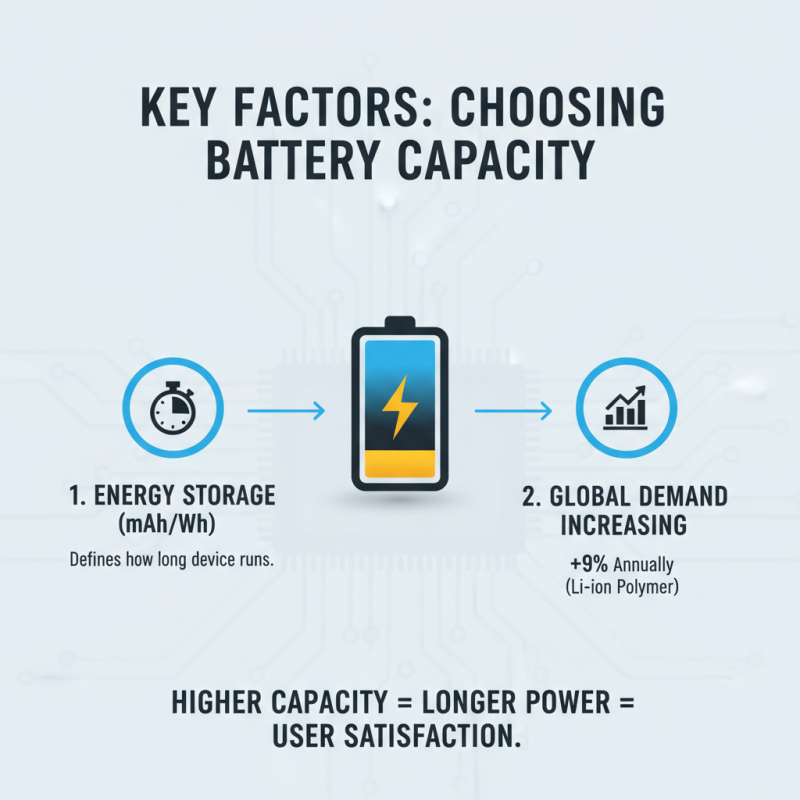
When selecting Li-ion polymer batteries, one critical factor is battery capacity. Capacity defines how much energy a battery can store. Common units are milliampere-hours (mAh) and watt-hours (Wh). According to a report by ResearchAndMarkets, the global demand for higher capacity batteries is increasing by 9% annually. Higher capacity batteries can power devices longer, which is essential for user satisfaction.
Another point to consider is how capacity affects performance. A battery with too high a capacity may not fit your device’s design. Conversely, low capacity can lead to frequent recharging. The ideal scenario is a balance between size, weight, and energy needs. The Energy Information Administration suggests that optimizing these parameters can enhance efficiency by up to 25%.
Overestimating required capacity can lead to wasted resources. An excessive battery may shorten its lifespan due to irregular charging cycles. It’s crucial to analyze actual usage patterns. Consider how often your device will be used. Think about how power-intensive the applications are. Users should reflect on these factors to avoid poor decisions.
Evaluating Battery Performance Metrics and Specifications
When evaluating battery performance metrics, several factors come into play. Capacity is a primary metric, often measured in milliampere-hours (mAh). Higher capacity generally means longer usage time. However, make sure you assess how this capacity functions under different conditions. Some batteries may perform poorly in extreme temperatures, affecting reliability.
Cycle life is another critical specification to consider. It indicates how many charge and discharge cycles a battery can endure before its performance significantly degrades. A battery that lasts longer in cycles can save money and resources in the long run. Be cautious, though; numbers can be misleading if not evaluated in real-world scenarios.
Energy density matters too. It defines how much energy the battery can store versus its weight. A lighter battery with high energy density is ideal for mobile devices. Yet, procurement decisions must also consider safety factors, like thermal stability. Not all high-performance batteries are safe. Balancing performance with reliability requires careful consideration and sometimes, tough choices.
Essential Tips for Choosing Li Ion Polymer Battery Solutions
| Metric |
Description |
Typical Values |
| Nominal Voltage |
Voltage rating during normal operation |
3.7V |
| Capacity |
Amount of charge the battery can hold |
1000 - 5000 mAh |
| Cycle Life |
Number of charge-discharge cycles before capacity falls to 80% |
300 - 1000 cycles |
| Charge Time |
Time required to fully charge the battery |
1 - 3 hours |
| Discharge Rate |
Rate at which the battery can deliver power |
1C - 5C |
| Temperature Range |
Operational temperature range |
-20°C to 60°C |
| Weight |
Total weight of the battery |
30 - 200 grams |
| Form Factor |
Physical dimensions and shape |
Customizable |
Assessing Safety Features and Certifications in Battery Solutions
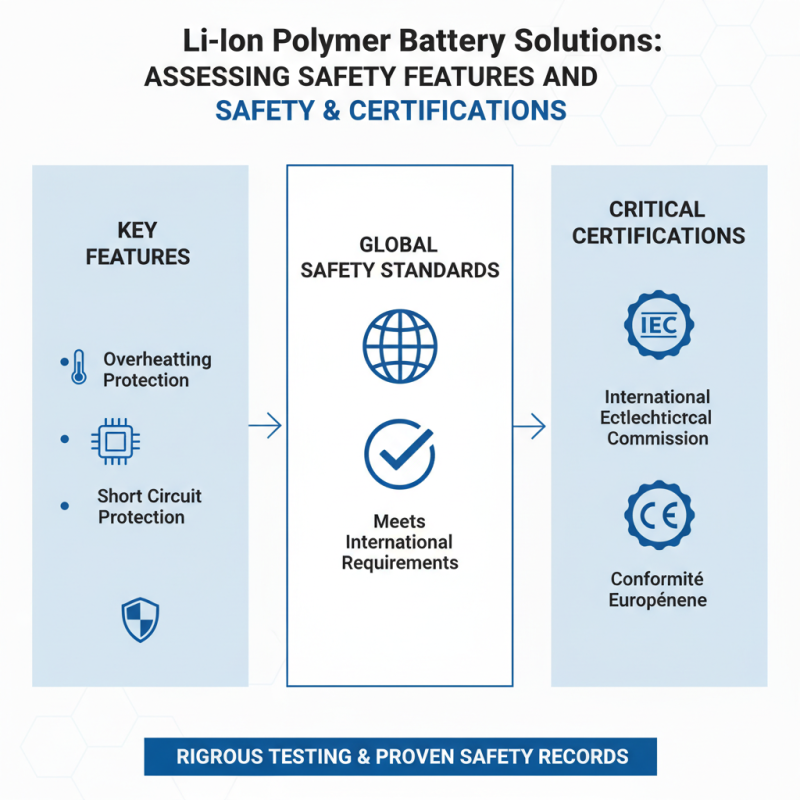
When choosing Li Ion polymer battery solutions, safety features and certifications are critical. Consider batteries that meet global safety standards. Look for certifications like UL, IEC, or CE. These ensure the battery has undergone rigorous testing. High-quality batteries will have proven safety records. They should protect against overheating and short circuits.
It’s essential to understand the manufacturer's testing protocols. Ask questions regarding their safety measures. A transparent company will share information about their quality assurance processes. Don't overlook the importance of customer reviews and feedback. This can give insights into real-world performance.
Sometimes, even well-certified batteries can fail. No product is perfect. Always have contingency plans in place. Monitor battery performance regularly. If any issues arise, be prepared to address them swiftly. By focusing on safety, you can significantly reduce risks associated with battery use.
Comparing Costs and Lifespan of Different Battery Options
When selecting lithium-ion polymer batteries, understanding costs and lifespan is crucial. Battery prices vary based on capacity, chemistry, and application. For example, high-capacity cells may cost more upfront, but they often offer longer usage periods. Finding a balance between price and performance is essential for effective budgeting.
Lifespan is a vital consideration. Generally, lithium polymer batteries can live anywhere from 300 to 500 charge cycles. A greater number of cycles typically indicates a longer lifespan. However, charging habits can significantly impact this metric. Frequent partial discharges may extend battery life, while full cycles can wear them down faster. Remember to monitor your usage to maximize the battery's potential.
Reflect on your specific needs before making a decision. Not all applications require the highest capacity or longest lifespan. Sometimes, a more affordable option may suit shorter projects better. Choose wisely and consider all factors. A right choice today can lead to better outcomes tomorrow.
Comparison of Li-Ion vs Polymer Battery Solutions: Costs and Lifespan