How to Extend the Lifespan of Retention Batteries?
Retention batteries play a crucial role in many electronic devices today. Their lifespan is essential for optimal performance. Many users struggle with battery longevity. This article focuses on practical ways to extend the lifespan of Retention Batteries.
One key aspect is charging habits. Overcharging or deep discharging can damage these batteries. Always aim to maintain a balanced charge level. Use a reliable charger to help maintain this balance. Additionally, avoid exposure to extreme temperatures. Heat can degrade battery life significantly.
Another important factor is regular maintenance. Cleaning battery terminals can help improve conductivity. Also, keep an eye on usage patterns. If you notice unusual draining, consider adjusting settings. Reflecting on these simple practices can lead to longer-lasting Retention Batteries. Small changes can make a big difference.
Understanding Retention Batteries: Types and Functions
Retention batteries play a crucial role in various applications, providing backup power during outages. These batteries store energy for later use, ensuring devices continue to operate seamlessly. Common types include lead-acid, lithium-ion, and nickel-cadmium batteries. Each type has unique advantages and drawbacks, affecting their lifespan and efficiency. For instance, lead-acid batteries, which represent about 40% of the market, have a shorter cycle life compared to lithium-ion options.
Understanding the functions of retention batteries helps in maximizing their capabilities. Lead-acid batteries typically last 3-5 years, while lithium-ion can exceed 10 years. Research shows that temperature and charging cycles significantly impact battery health. Keeping batteries in a moderate environment helps prolong their functionality. Many users ignore this fact, leading to premature failures.
Daily maintenance is key. Regularly checking battery connections and performance can enhance longevity. A 2023 industry report indicates that 20% of battery failures are due to neglect. Additionally, improper charging habits shorten lifespan. Often, users forget the importance of following charging guidelines. Monitoring and proper care are essential for optimal performance.
How to Extend the Lifespan of Retention Batteries? - Understanding Retention Batteries: Types and Functions
| Battery Type |
Typical Lifespan |
Maintenance Tips |
Common Applications |
| Lead-Acid |
3-5 years |
Keep terminals clean, maintain correct fluid levels, avoid deep discharges |
UPS systems, solar energy storage |
| Lithium-Ion |
5-10 years |
Store in a cool place, avoid complete discharges, use appropriate chargers |
Consumer electronics, electric vehicles |
| Nickel-Cadmium (NiCd) |
2-5 years |
Avoid complete discharge, keep at optimal temperature |
Power tools, emergency lighting |
| Nickel-Metal Hydride (NiMH) |
3-5 years |
Charge frequently, minimize deep discharges |
Hybrid vehicles, portable devices |
Factors Affecting the Lifespan of Retention Batteries
Retention batteries play a crucial role in various applications. Several factors affect their lifespan. Understanding these can help you extend their usable life.
Temperature is a significant factor. Extreme heat can cause chemical reactions that degrade battery life. Cold temperatures can reduce performance. Store batteries in a controlled environment. Aim for a moderate temperature to prolong life.
Another essential factor is charge cycles. Frequent full discharges can wear out batteries faster. Try to maintain a partial discharge instead. Don't wait until the battery is empty. Keep it between 20% and 80% for optimal longevity.
Tips for better care:
- Regularly check battery connections. Dirty or loose connections can cause inefficiencies.
- Avoid overcharging. It can lead to overheating and quicker degradation.
- Store batteries at a moderate charge level for longer storage periods.
Reflect on your usage habits. Are you pushing batteries to their limits?
Small adjustments can lead to big improvements in battery life.
Best Practices for Charging and Discharging Retention Batteries
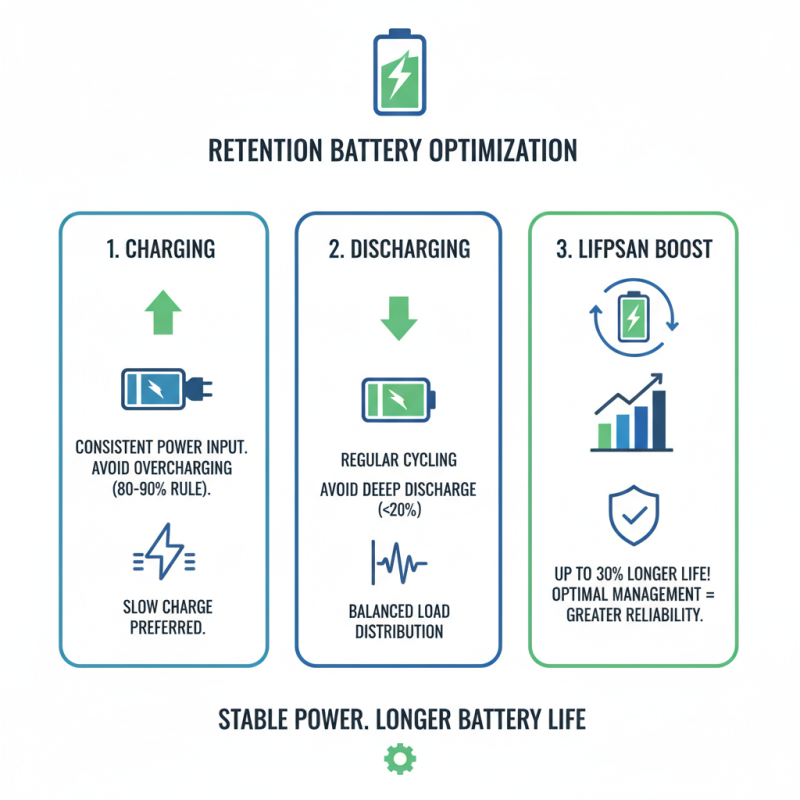
Retention batteries play a crucial role in ensuring power stability. Proper charging and discharging practices are essential to enhance their lifespan. Industry reports indicate that optimal battery management can increase battery longevity by up to 30%.
When charging, avoid letting the battery drop below 20%. Frequent low discharges can strain the battery. It’s ideal to charge the battery fully between uses. Slow charging is often better than fast charging, as it reduces heat stress. Heat can degrade battery materials, impacting lifespan.
Tip: Use a temperature-controlled environment for charging. This simple step can significantly prevent overheating.
During discharge, don’t overutilize the battery. Strive for moderate drain levels. Continuous high drain cycles can lead to faster capacity loss. Furthermore, recharge the battery promptly after use. Delaying recharge leads to deep discharges that can be damaging.
Tip: Keep track of discharge cycles. Monitoring can help in adjusting usage habits. Awareness is key to battery health.
Temperature and Environment Considerations for Battery Longevity
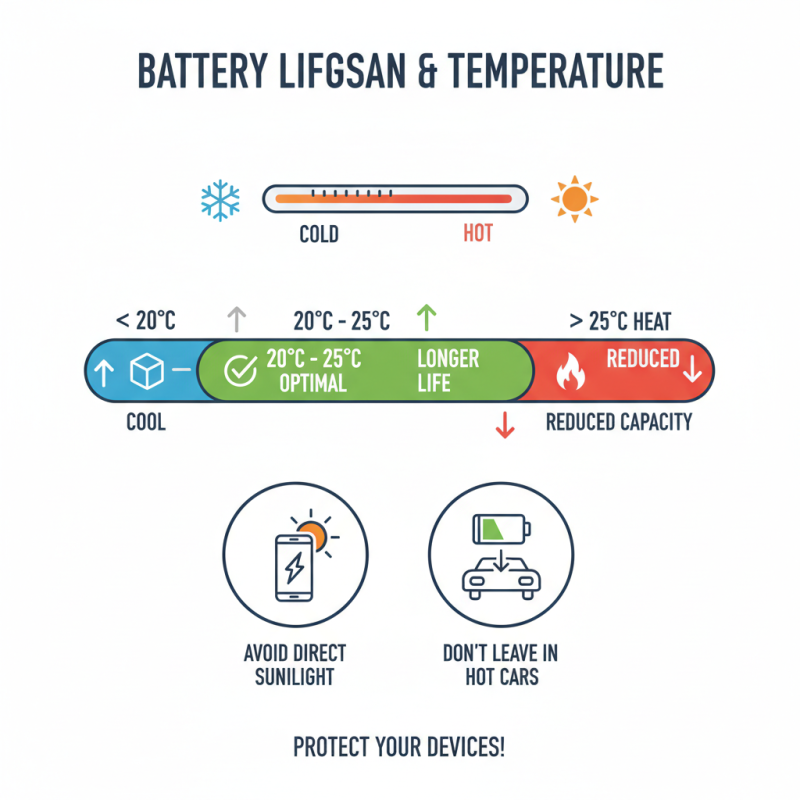
Temperature plays a crucial role in battery lifespan. High heat can cause batteries to degrade quickly. The optimal range is usually between 20°C to 25°C. Exceeding this temperature can lead to reduced capacity. Often, devices are left in direct sunlight or hot environments. This is a common mistake that many people make.
Cold temperatures also present challenges. They can slow down chemical reactions inside batteries. In severe cold, batteries may lose power more rapidly. Keeping batteries in a stable environment ensures better performance. A temperature-controlled space is ideal. Moisture is another factor. It can corrode battery components over time. This is often overlooked, but it's quite significant.
Users should avoid extremes. Moving batteries to a cooler place can help after exposure to heat. Reflecting on these factors is essential for longevity. A simple habit, like storing batteries properly, can vastly improve their life. Consider the environment, and act wisely.
Regular Maintenance and Monitoring for Optimal Performance
Regular maintenance of retention batteries is crucial for their longevity. Check battery water levels regularly. If levels are low, refill with distilled water. Keep terminals clean and free of corrosion. Dirty connections can cause reduced efficiency.
Monitor the battery's charge regularly. Ensure it is not discharged too deeply. Over-discharge can damage the battery. Keep an eye on temperature too. Excess heat can shorten battery life dramatically. It's essential to provide sufficient ventilation when charging batteries.
Track performance metrics like voltage and current. Record any irregularities, as they may indicate larger issues. Conduct routine inspections for signs of wear. Addressing small problems early can prevent bigger failures later. Remember, despite all this care, performance can still vary. Reflect on your practices and adjust as necessary for optimal outcomes.
Battery Lifespan Extension Through Regular Maintenance
This chart illustrates how various maintenance activities contribute to extending the lifespan of retention batteries. Regular monthly checks, cleaning, proper charging, maintaining optimal temperature, and avoiding deep discharges can add significant years to the overall life of the batteries.