High Capacity Lithium Battery Solutions for Global Buyers?
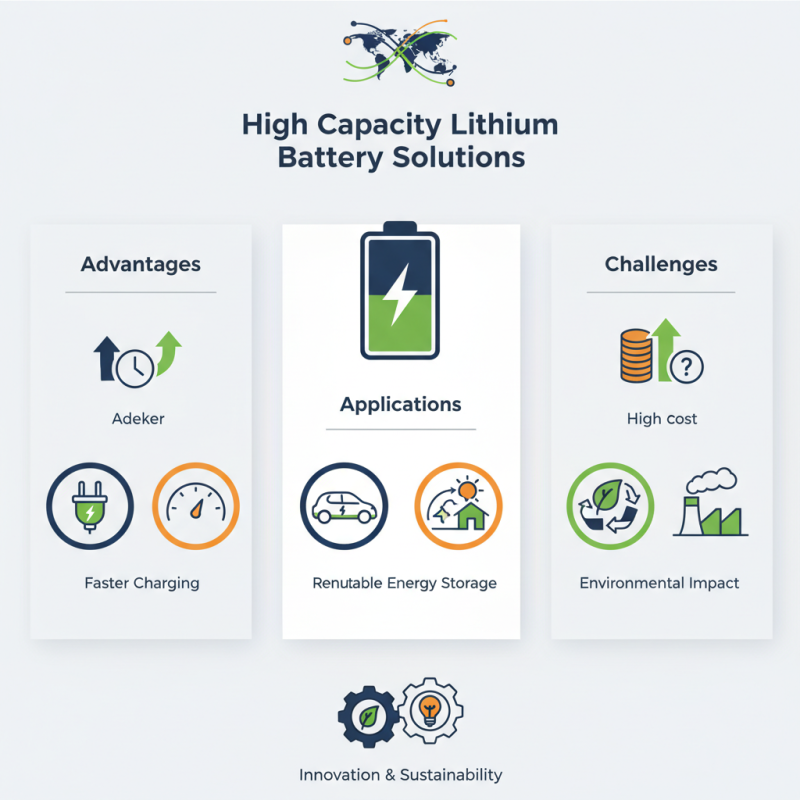
In today's fast-paced world, demand for energy storage solutions is ever-increasing. High Capacity Lithium Battery technology has emerged as a key player in this market. These batteries offer significant advantages, including longer life spans and faster charging times. As global buyers search for reliable partners, understanding these technologies becomes essential.
High Capacity Lithium Batteries combine advanced chemistry with innovative designs. Their applications range from electric vehicles to renewable energy storage systems. However, not all products in the market meet safety and performance standards. Buyers must scrutinize specifications and manufacturer reputations. This vigilance is vital to ensuring quality and reliability.
Despite the benefits, challenges remain. The high cost of production can hinder accessibility for some markets. Additionally, the environmental impact of battery production is a growing concern. Balancing innovation with sustainability is crucial. Therefore, potential buyers need to reflect on their choices and consider long-term implications.
High Capacity Lithium Battery Solutions Overview
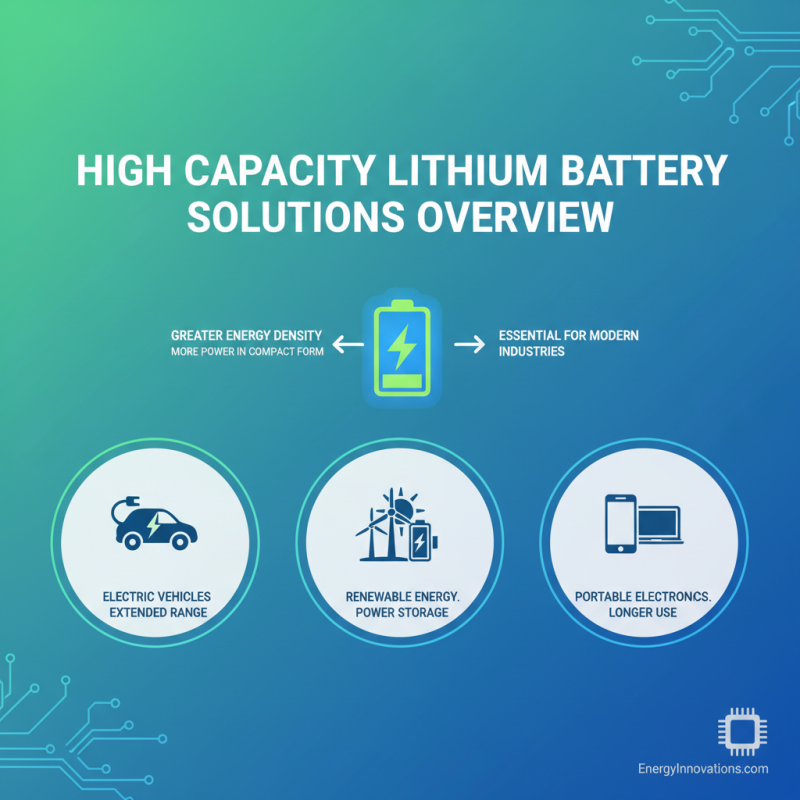
High capacity lithium battery solutions are becoming essential for various industries. These batteries offer greater energy density, meaning they can store more energy in a compact form. This is particularly valuable for electric vehicles, renewable energy systems, and portable electronics. They can extend the range of electric vehicles significantly, making them more appealing to consumers.
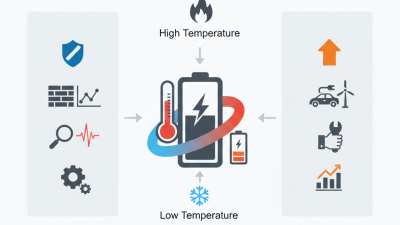
However, the journey to optimal high capacity solutions comes with challenges. Not all lithium batteries perform equally well under different conditions. Temperature fluctuations can affect performance and lifespan. Additionally, safety concerns arise if batteries are not designed properly. There is still room for improvement in ensuring reliability and efficiency.
Researchers continue to explore new materials and technologies. Solid-state batteries, for example, promise to enhance safety and energy density. Yet, commercialization remains a challenge. The industry must address production costs and scalability before these solutions become mainstream. Continuous evaluation and innovation are key in developing robust high capacity lithium battery solutions.
Global Demand for High Capacity Lithium Battery Technologies
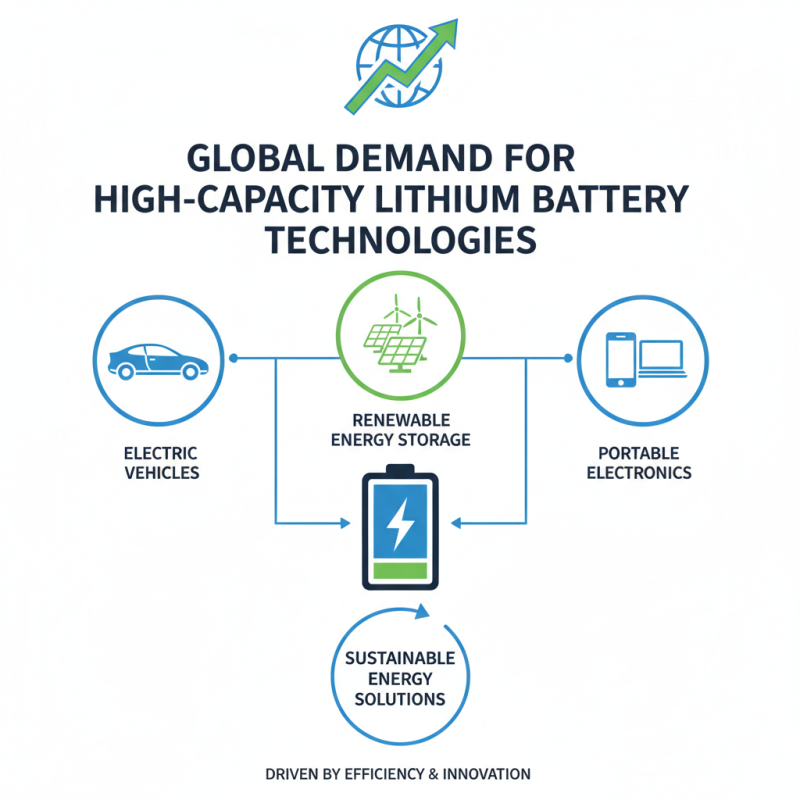
The demand for high capacity lithium battery technologies has surged globally. This trend is driven by the growing need for sustainable energy solutions. Industries such as electric vehicles, renewable energy storage, and portable electronics rely heavily on advanced batteries. As consumers and businesses seek efficient power sources, innovation in battery technology becomes crucial.
While many advancements are evident, challenges remain. Manufacturing processes can create environmental concerns. The sourcing of raw materials often raises ethical questions. Striking a balance between innovation and sustainability is essential. Moreover, the technology must be affordable to meet diverse market needs.
Many companies are investing in research and development. The goal is to create batteries that are not just powerful but also environmentally friendly. Collaborations between governments and industries are also increasing. This reflects a growing understanding of the importance of reliable and responsible battery solutions. High capacity lithium batteries continue to shape our energy future, but careful reflection on their impact is necessary.
Key Players in the Lithium Battery Market
The lithium battery market has been gaining traction, driven by its critical role in energy storage and electric vehicles. According to a report by MarketsandMarkets, the global lithium-ion battery market is projected to reach $129 billion by 2027, growing at a CAGR of 17.5%. Major players are investing heavily in research and development. They aim to improve energy density and charging speeds.
Key players in this field are focusing on sustainability. They are assessing the entire lifecycle of lithium batteries. Strategies are being adopted to address recycling and material sourcing concerns. For instance, a recent study indicated that up to 30% of lithium may come from recycled sources by 2030. This shift not only supports environmental goals but potentially lowers costs.
The competitive landscape presents challenges and opportunities. New entrants are disrupting established companies with innovative technologies. Incumbents must adapt their strategies. The demand for high-capacity solutions is pushing manufacturers to enhance performance metrics while considering ethical sourcing. As the market evolves, continual reflection on best practices will be essential for long-term success.
High Capacity Lithium Battery Solutions for Global Buyers
| Category |
Specification |
Capacity (Ah) |
Cycle Life |
Applications |
| Lithium-Ion |
18650 |
2500 |
500 |
Laptops, Power Tools |
| Lithium Iron Phosphate |
LiFePO4 |
3000 |
2000 |
Electric Vehicles |
| Lithium Polymer |
Flexible |
5000 |
300 |
Drones, Wearables |
| Solid-State Battery |
Next-gen |
4000 |
1000 |
Future EVs, Storage |
Innovative Technologies in Lithium Battery Manufacturing
Innovative technologies are transforming lithium battery manufacturing. These advancements are designed to enhance efficiency and safety. One major innovation is the use of solid-state electrolytes. They promise longer life cycles and higher energy densities. This transition could revolutionize how batteries operate in various applications.
Manufacturers are also focusing on sustainable materials. Reducing reliance on scarce resources is key. Incorporating recyclable components can minimize environmental impact. Nonetheless, this approach raises several questions. Is the recycling process efficient enough? Can it scale to meet global demands? These hurdles must be addressed for a greener future.
In addition, automation in production lines is becoming more prevalent. Robots can work tirelessly, increasing output and consistency. However, there are challenges in maintaining quality control. Quality assurance techniques must evolve alongside these technologies. Balancing speed and quality is a constant struggle in the industry.
High Capacity Lithium Battery Solutions - Global Market Trends
The graph above illustrates the projected increase in global lithium battery capacity from 2020 to 2024. The rapid growth signifies the rising demand for advanced energy storage solutions in various industries, driven by technological innovations and shifts towards sustainable energy sources.
Sustainability and Recycling in Lithium Battery Solutions
As global demand for lithium batteries surges, sustainability in this industry becomes critical. Lithium battery production has environmental implications. Responsible sourcing and recycling practices can mitigate these issues. Developing a circular economy is essential for reducing waste.
Tips: Always research how materials are sourced. Transparency is key to ensuring ethical practices in battery production.
Recycling is vital for a sustainable future. Most lithium batteries can be recycled, yet many end up in landfills. By improving recycling processes, we can recover valuable materials and reduce environmental harm. Awareness about recycling programs can drive participation.
Tips: Look for local recycling options for batteries. It empowers individuals to contribute to sustainability.
Investing in sustainable lithium battery solutions is complex. Innovations emerge, but challenges persist in logistics and infrastructure. Collaboration among manufacturers, recyclers, and consumers is necessary to foster a responsible ecosystem. Sharing knowledge and best practices can lead to improved outcomes.