Will Lead Acid Replace Lithium Batteries in 2026?
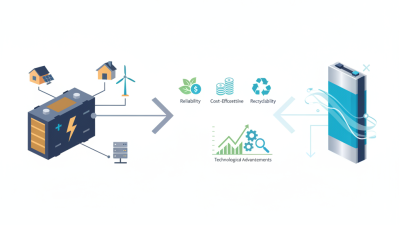
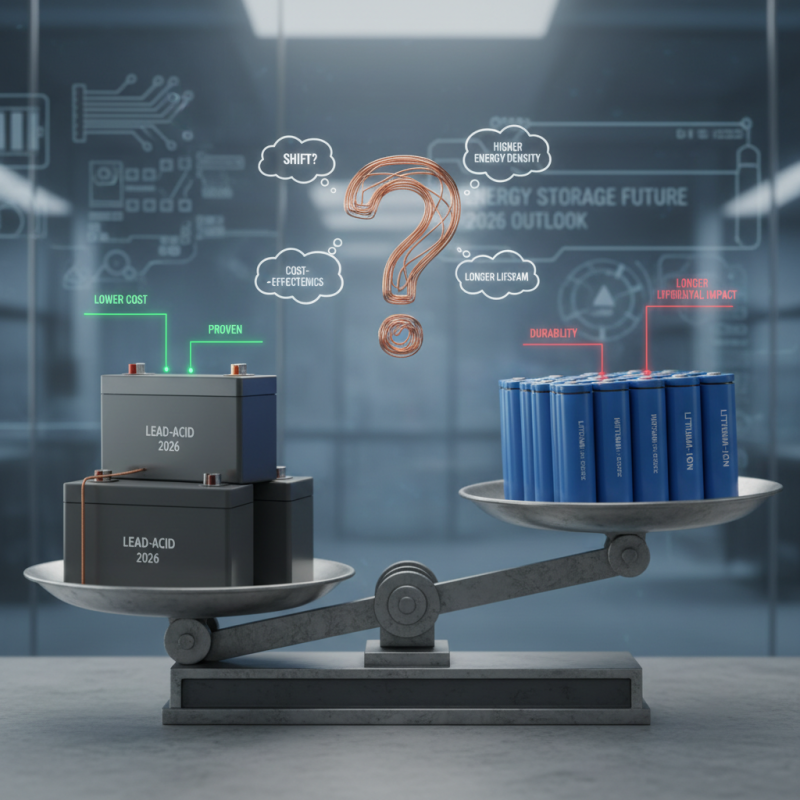
As the demand for sustainable energy solutions rises, the question arises: Will lead acid replace lithium batteries in 2026? This scenario seems more likely as lead acid technology continues to improve. Recent innovations show enhanced efficiency and lower costs. Lead acid batteries are also more recyclable, which appeals to environmentally conscious consumers.
However, challenges remain. The weight of lead acid batteries is a significant drawback. They are bulkier than lithium batteries, impacting mobility options. Additionally, their energy density still falls short compared to lithium. Transitioning to lead acid requires careful consideration of performance and application.
Lead acid replaces lithium batteries is a bold claim. While the initial signs are promising, the future is uncertain. Industry leaders must weigh the benefits against inherent limitations. Only time will tell if lead acid can truly dominate the battery market by 2026.
Current Landscape of Battery Technologies: A Comparison of Lead Acid and Lithium
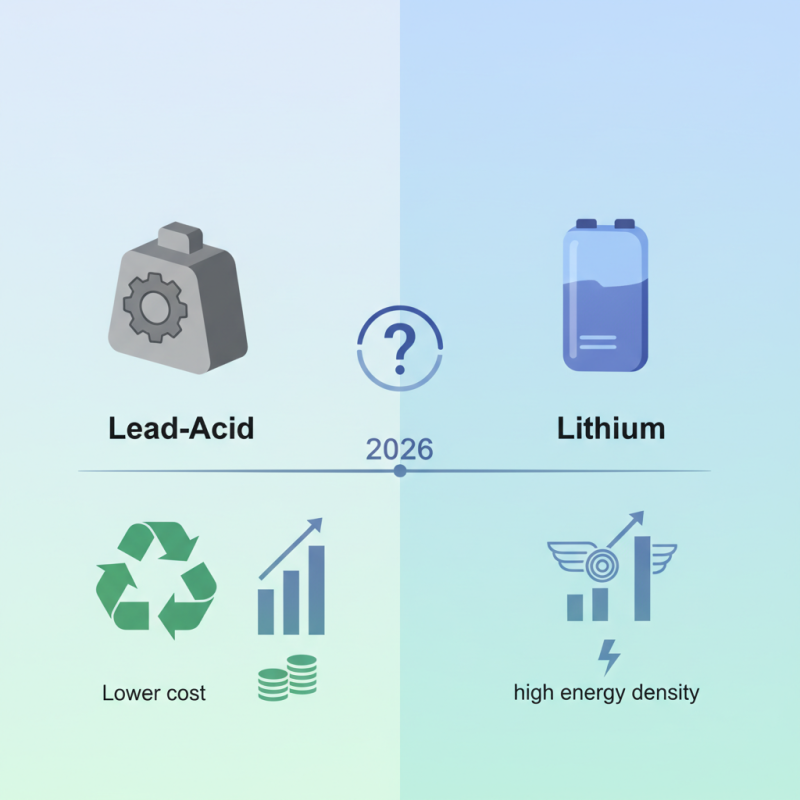
The battery landscape is evolving rapidly. Lithium batteries have dominated the market due to their energy density and efficiency. According to a recent report by Statista, the lithium battery market is projected to grow by 19% annually through 2026. In contrast, lead acid batteries, though older technology, remain widely used in specific sectors. They accounted for approximately 30% of the global rechargeable battery market in 2022.
Lead acid batteries have advantages like lower cost and recyclability. They can be disposed of safely, which appeals to environmentally conscious sectors. However, these batteries are significantly heavier and less efficient than their lithium counterparts. For instance, a lead acid battery provides about 30-50% of the energy density of lithium. This fact raises questions about their future viability, especially as electric vehicles increase in popularity.
Adoption rates of lead acid batteries in new applications are slowing. Innovations in lithium technology are offering even faster charging and longer life cycles. A study by the International Energy Agency indicated that lithium-ion battery costs have dropped by 89% since 2010. This makes it difficult for lead acid to compete. Despite its advantages, lead acid needs to innovate to avoid falling further behind.
Will Lead Acid Replace Lithium Batteries in 2026? - Current Landscape of Battery Technologies: A Comparison of Lead Acid and Lithium
| Battery Type |
Energy Density (Wh/kg) |
Charge Cycle Life (Cycles) |
Cost per kWh |
Environmental Impact |
Applications |
| Lead Acid |
30 - 50 |
500 - 800 |
$200 - $250 |
Moderate; recyclable, but heavy metals are a concern |
Automotive, backup power |
| Lithium |
150 - 250 |
2000 - 5000 |
$150 - $200 |
Higher; recycling technology improving |
Consumer electronics, electric vehicles |
Advantages and Disadvantages of Lead Acid Batteries in Today's Market
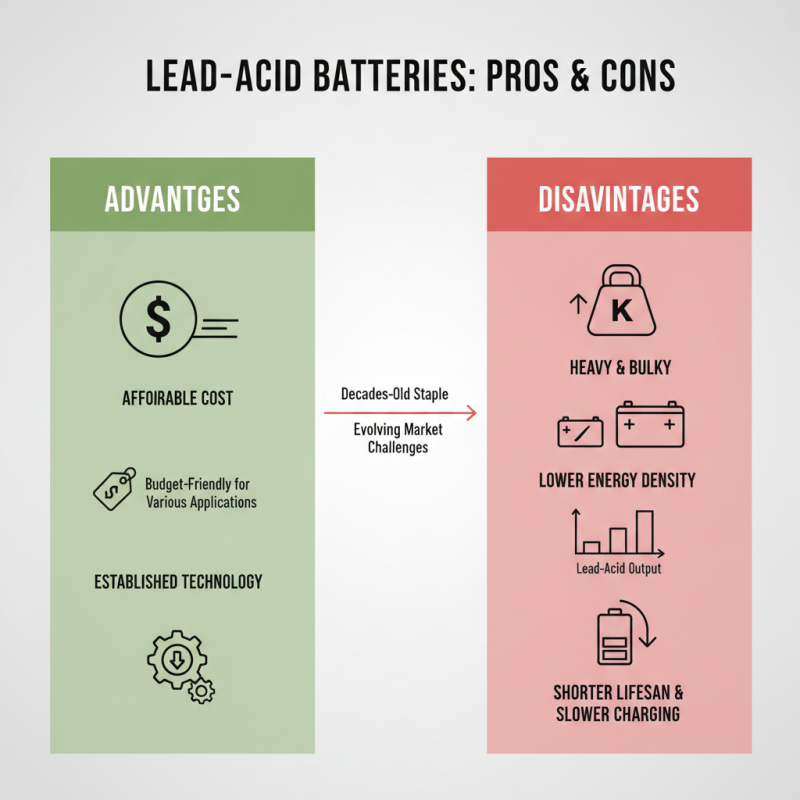
Lead acid batteries have been a staple in the energy market for decades. They are often more affordable than lithium batteries. This cost-effectiveness makes them appealing for various applications. However, they come with notable disadvantages. Lead acid batteries are heavier and bulkier. Their energy density is significantly lower compared to lithium. This can hinder their performance in energy-intensive tasks.
Another disadvantage is their shorter lifespan. Typically, lead acid batteries last around three to five years. In contrast, lithium batteries can last much longer. Additionally, lead acid batteries require regular maintenance. This involves checking the fluid levels and ensuring proper charging. Many users find this tedious and time-consuming. The environmental impact of lead acid batteries should not be overlooked either. Disposal of lead acid batteries can lead to pollution if not handled properly.
Despite these drawbacks, lead acid batteries are still widely used. They excel in applications where weight and size are less critical. For example, they are common in backup power systems and larger vehicles. Yet, the energy market is shifting. Innovations in lithium battery technology continue to improve. This raises the question: will lead acid truly replace lithium batteries in the near future? Time will tell.
Technological Innovations in Lead Acid Batteries for Potential Replacement
The question of whether lead acid batteries might replace lithium batteries in 2026 is intriguing. Recent advancements in lead acid technology show promising potential. According to industry reports, innovations aim to enhance energy density and recharge cycles. New designs focus on reducing weight, which could improve their overall efficiency.
These enhancements make lead acid batteries more attractive for various applications. For instance, they can be utilized in renewable energy storage systems. The projected growth rate for the lead acid battery market is expected to reach 4% annually, indicating significant interest. Some experts believe that with further improvements, lead acid batteries could challenge lithium's dominance.
Tips: When considering a battery option, evaluate the energy requirements of your application. Also, analyze the cost-effectiveness of long-term use. Despite the potential of lead acid innovations, they still face challenges regarding lifespan and efficiency compared to lithium. Reflect on these factors before making a decision.
Comparison of Lead Acid and Lithium Battery Capacities (2023)
This chart illustrates the average capacity in ampere-hours (Ah) of lead acid batteries compared to lithium-ion batteries as of 2023. While lead acid batteries have a sufficient capacity for many applications, lithium-ion batteries show significantly higher capacity, making them a preferred choice in modern technology.
Factors Influencing the Shift from Lithium to Lead Acid Batteries by 2026
As we look forward to 2026, the possibility of lead acid batteries replacing lithium batteries sparks interesting discussion. Several factors influence this potential shift. Cost is a significant component. Lead acid batteries are often cheaper to produce. This makes them attractive for specific applications. However, their performance is not always on par with lithium batteries.
Another factor is the environmental context. Lead acid batteries are recyclable and have a well-established recycling process. This can lessen the environmental impact compared to lithium batteries. However, the toxicity of lead poses challenges. It’s crucial to consider the whole lifecycle of battery technology.
Tips: Consider your specific needs. If cost is your priority, lead acid may be better. However, if performance and longevity matter, lithium could still be the right choice. Evaluating how each battery performs under various conditions is essential. Stay informed about the latest technological advancements. They could change the battery landscape significantly before 2026.
Future Projections: Will Lead Acid Gain Traction Over Lithium Batteries?
The debate between lead acid and lithium batteries is intensifying. Many people are curious about their future. Will lead acid batteries make a comeback? Or will they remain in the shadows?
Lead acid batteries have several advantages. They are cheaper to produce and easier to recycle. In some applications, they already perform well. However, their weight and size can be significant drawbacks. Many industries favor lithium batteries for their energy density. But lead acid could serve a niche market, especially where cost is critical.
Challenges remain for lead acid technology. Innovations are needed to reduce weight and improve efficiency. Public perception also plays a role. Some view lead acid as outdated. It will take time for individuals and businesses to consider them for modern applications again. The landscape is uncertain, but curiosity persists. The shifts in this space can be surprising.