What You Need to Know About Lithium Battery Pack Cars?
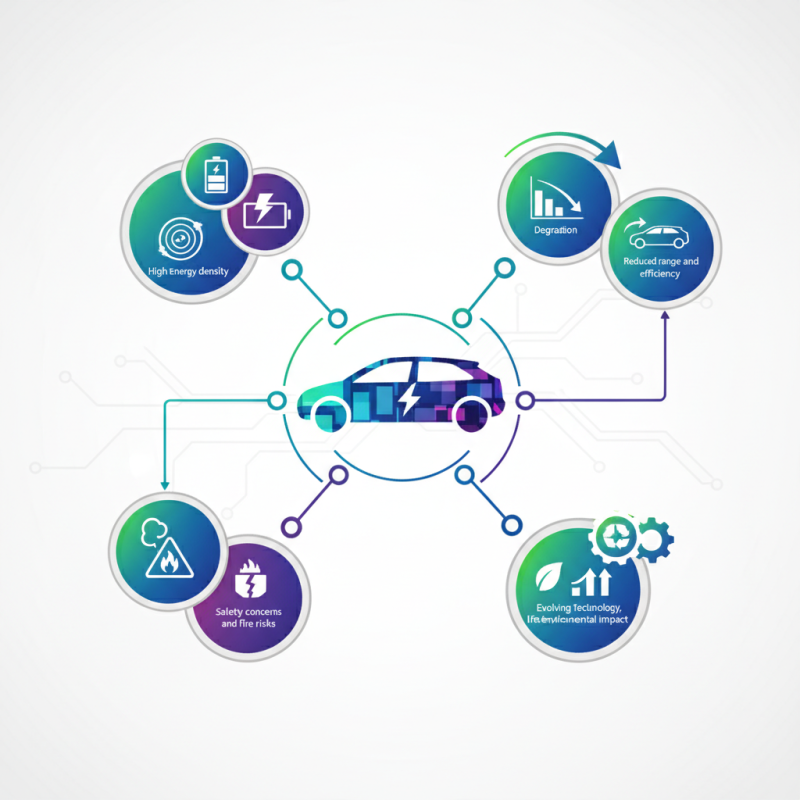
The rise of electric vehicles is reshaping the automotive landscape. At the heart of this transformation is the Lithium Battery Pack. These packs are vital for powering modern electric cars. They offer high energy density and quick charging capabilities. However, their performance and reliability vary.
Understanding Lithium Battery Packs is crucial for potential car buyers. Not all providers use the same technology. Some packs degrade faster than others, impacting efficiency and range. Safety concerns also arise from poor-quality packs. Fire risks have been reported with faulty batteries.
Investing in a car with a Lithium Battery Pack is exciting yet complex. Buyers must consider factors like lifespan and environmental impact. The technology is evolving rapidly, which can make choices overwhelming. It's essential to stay informed and reflect on the implications of battery choice.
Understanding Lithium Battery Technology in Cars
Lithium battery technology is revolutionizing the automotive industry. These batteries are lightweight and offer high energy density. This means cars can travel longer distances on a single charge. A report from the International Energy Agency highlights that the demand for lithium-ion batteries is expected to grow by over 25% annually in the coming years. However, this rapid growth also poses challenges.
Manufacturing lithium batteries involves complex processes. Issues such as resource extraction and recycling need careful consideration. Mining for lithium can lead to environmental degradation. A study by the World Bank indicates that lithium extraction can result in substantial water usage, affecting local communities. Moreover, end-of-life battery disposal remains a significant hurdle. Only about 5% of lithium batteries are recycled today. This raises questions about sustainable practices in the industry.
The performance of lithium batteries also has room for improvement. Temperature fluctuations impact efficiency. In colder climates, battery performance can drop significantly. This impacts overall vehicle performance and driver satisfaction. Research continues to advance, exploring alternative materials and technologies to enhance longevity and reduce dependency on lithium. The journey towards more efficient lithium battery technology is still unfolding.
Types of Lithium Batteries Used in Electric Vehicles
When we talk about electric vehicles, lithium batteries come to mind. These batteries power the future of transportation. However, not all lithium batteries are the same. Various types cater to different needs.
Lithium-ion batteries are the most common. They offer a high energy density, meaning they store more power in a compact form. This makes them ideal for long-range electric vehicles. Yet, their production involves environmental concerns. The mining of lithium can disrupt ecosystems.
Another type is lithium iron phosphate (LiFePO4) batteries. They are safer and have a longer lifespan compared to other lithium variants. They discharge power at a steady rate, which is beneficial for certain vehicles. However, their energy density is lower. This means they may not provide the same driving range.
Battery technology is evolving, but challenges remain. Balancing performance with sustainability is crucial.
Advantages of Using Lithium Battery Packs in Cars
Lithium battery packs are transforming the automobile industry. They offer several advantages that make them appealing for modern cars. First, lithium batteries are lighter than traditional lead-acid batteries. This weight reduction improves overall vehicle efficiency. A lighter car can accelerate faster and consume less energy.
Another benefit is longevity. Lithium batteries have a longer lifespan than older technologies. They can endure many charge cycles without significant capacity loss. This means car owners will replace their batteries less often. Cost savings from fewer replacements add to their appeal.
However, some challenges remain. Lithium batteries can be more expensive initially. The environmental impact of lithium extraction raises concerns. These factors deserve careful consideration. Balancing cost and sustainability is essential for the future of automotive technology.
What You Need to Know About Lithium Battery Pack Cars
| Feature |
Lithium Battery Packs |
Traditional Battery Packs |
| Energy Density |
High (~150-250 Wh/kg) |
Lower (~60-120 Wh/kg) |
| Weight |
Lighter |
Heavier |
| Charge Time |
Faster (1-2 hours) |
Slower (6-8 hours) |
| Lifespan |
Longer (~2000 cycles) |
Shorter (~500-1000 cycles) |
| Temperature Tolerance |
Better |
Limited |
| Environmental Impact |
Lower (less toxic elements) |
Higher (contains lead/acid) |
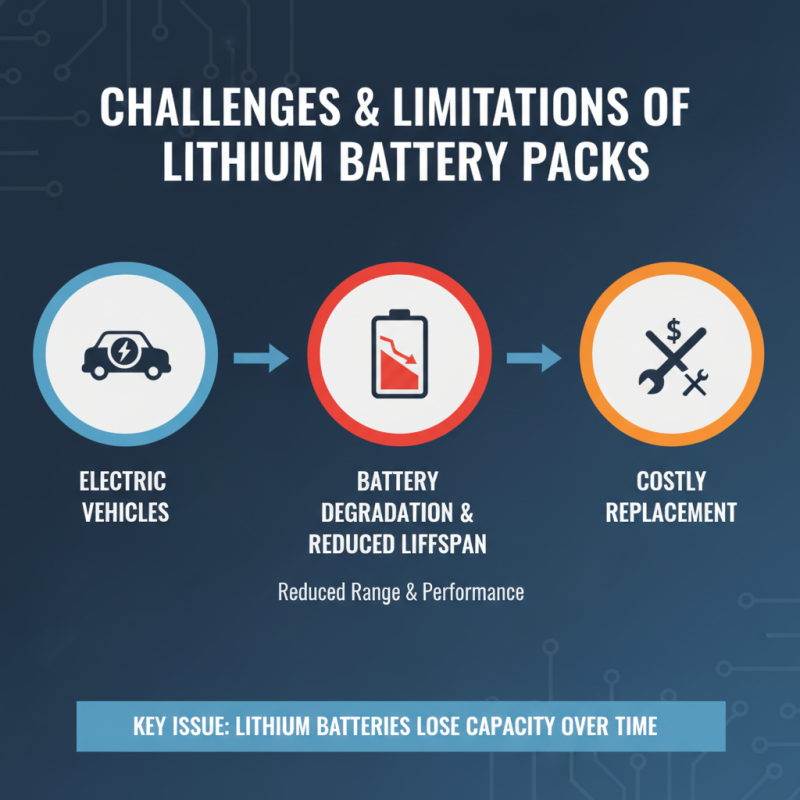
Challenges and Limitations of Lithium Battery Packs
Lithium battery packs are gaining popularity in electric vehicles. However, significant challenges remain. One major issue is their lifespan. Over time, lithium batteries degrade. This leads to reduced range and performance. Drivers may find themselves needing to replace these costly batteries sooner than expected.
Another challenge involves charging. Charging infrastructure is still developing in many areas. Long wait times at charging stations can frustrate users. Also, extreme temperatures can impact battery efficiency. This means performance might suffer in cold or hot weather.
Lastly, the environmental impact of lithium mining is concerning. Extraction can harm local ecosystems. As demand grows, these issues need to be addressed. It’s essential to consider the trade-offs involved in lithium battery technology.
Future Trends in Lithium Battery Development for Automotive Applications
The future trends in lithium battery development for automotive applications are fascinating. Most experts expect significant advancements in battery capacity and efficiency. Research indicates that lithium-ion batteries will see a capacity increase of up to 30% by 2025. This could lead to electric vehicles (EVs) traveling over 500 miles on a single charge.
Recycling will play a crucial role in this evolution. Currently, only about 5% of lithium batteries are recycled fully. Reports suggest that improving this rate could reduce raw material dependency significantly. In fact, if successful, this could lower battery costs by 20% within five years. Yet, challenges remain in the recycling process and technology integration.
Looking ahead, solid-state batteries are gaining attention. They promise greater energy density and faster charging times. Initial estimates put the energy density of solid-state batteries at 400 Wh/kg. Despite the excitement, there are still hurdles to overcome. Manufacturing processes need refinement, and large-scale production is lacking. Furthermore, cost-effectiveness remains a question. Battery innovations continue to spark discussions, but practical implementation is another story.
Future Trends in Lithium Battery Development for Automotive Applications