What is Lithium Iron Phosphate Battery and How Does It Work?
Lithium Iron Phosphate Battery (LiFePO4) has gained significant attention in recent years. Renowned expert Dr. Emily Chen, a leading researcher in battery technology, states, “LiFePO4 batteries are revolutionizing energy storage with their safety and longevity.” These batteries stand out due to their unique chemistry and efficiency.
Consumers increasingly prefer Lithium Iron Phosphate Batteries for their impressive cycle life and stability. Unlike conventional lithium-ion batteries, LiFePO4 offers enhanced thermal stability and reduced risks of combustion. Many electric vehicles now rely on this technology, making it a focal point in sustainable transportation.
However, despite their advantages, some challenges remain. The energy density of Lithium Iron Phosphate Batteries is typically lower than that of other lithium-ion chemistries. This limitation can affect their range in electric vehicles. Additionally, the initial cost of these batteries can be a barrier for widespread adoption. Thus, while LiFePO4 batteries are promising, careful consideration of their limitations is essential for innovation.
What is Lithium Iron Phosphate (LiFePO4) Battery?
Lithium Iron Phosphate (LiFePO4) batteries are a type of rechargeable battery. They utilize lithium iron phosphate for the cathode material. This composition offers several advantages. For instance, they have a long cycle life, often exceeding 2000 cycles. They are also stable and do not overheat easily. This makes them safe compared to other lithium-ion batteries.
These batteries operate on a simple electrochemical process. When charging, lithium ions move from the cathode to the anode. During discharge, the ions return to the cathode, generating electricity. One significant feature is their high thermal stability. However, this also means they have a lower energy density than some counterparts. This can limit their application in compact devices, like smartphones.
Their use is growing in various sectors. Electric vehicles, solar energy storage, and stationary power systems benefit greatly. However, challenges remain. Performance in cold temperatures can be an issue, along with cost. These points deserve attention as the technology evolves. As more innovations emerge, the future of LiFePO4 batteries looks promising.
Key Components of Lithium Iron Phosphate Batteries
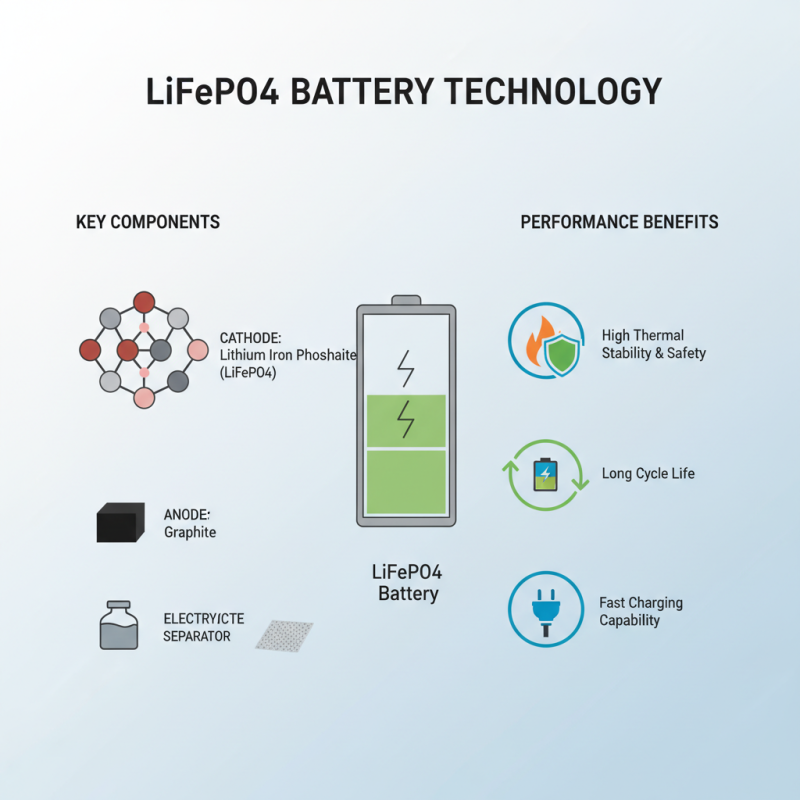
Lithium iron phosphate (LiFePO4) batteries have gained attention for their unique composition and performance. Understanding their key components is crucial to appreciating how they function. The primary ingredient is lithium iron phosphate itself, which acts as the cathode material. This compound provides stability and safety. Unlike other lithium batteries, LiFePO4 has a high thermal stability, reducing the risk of fire.
Another essential component is the anode, typically made of graphite. The interaction between lithium ions in the electrolyte and the anode is vital during charging and discharging cycles. The electrolyte, often a lithium salt solution, facilitates the movement of lithium ions. This movement is what generates electric current. The combination of these components leads to efficient performance.
However, there are challenges worth noting. While the lifespan of LiFePO4 batteries is impressive, they can have lower energy density compared to other lithium batteries. This means they are bulkier for the same amount of stored energy. Furthermore, the production process can be complex and can lead to inconsistencies in battery quality. Such factors require careful consideration when integrating them into various applications.
How Lithium Iron Phosphate Batteries Work
Lithium iron phosphate (LiFePO4) batteries are a type of lithium-ion battery. They are known for safety, thermal stability, and long cycle life. These batteries operate through electrochemical reactions. During discharge, lithium ions move from the anode to the cathode. Conversely, during charging, lithium ions migrate back to the anode.
The structure of LiFePO4 enables a higher rate of charge and discharge. Studies show that the batteries can last more than 2,000 cycles, compared to only 500 for traditional lithium-ion batteries. This longevity is appealing for renewable energy sources.
However, they also exhibit lower energy density. This means they are bulkier for the same amount of energy stored. It raises questions about application limits. For instance, in electric vehicles, weight and space are critical. Despite their advantages, researchers point out that improvements are still needed.
More efficient designs could enhance energy storage without sacrificing size.
Advantages of Lithium Iron Phosphate Batteries
Lithium Iron Phosphate (LiFePO4) batteries are gaining popularity. Their unique chemistry offers several advantages. These batteries provide excellent thermal stability. They do not catch fire easily, unlike some other lithium batteries. This safety feature makes them ideal for various applications.
Another significant advantage is their long cycle life. LiFePO4 batteries can last over 2,000 charge cycles. This means less frequent replacements and lower long-term costs. They also maintain a steady voltage while discharging. This consistent performance is vital for many electronic devices and vehicles.
Charging times are relatively quick. Users can recharge them in a short period. However, they can be heavier compared to other lithium battery types. This weight can be a consideration for portable applications. While they are efficient, some users may find the upfront cost higher. Balancing these factors is essential for making informed decisions.
Applications and Use Cases of Lithium Iron Phosphate Batteries
Lithium iron phosphate (LiFePO4) batteries are becoming increasingly popular across various sectors. Their robust performance and safety features make them ideal for electric vehicles, renewable energy storage, and power tools. These batteries excel in applications where thermal stability and durability are crucial.
In electric vehicles, LiFePO4 batteries provide a higher cycle life compared to other lithium batteries. Their performance is reliable under challenging conditions. This makes them suitable for long-term use in vehicles. In renewable energy systems, such as solar power storage, these batteries efficiently store energy for later use. They ensure a steady power supply during low production periods.
Despite their advantages, there are areas for improvement. The energy density of LiFePO4 batteries lags behind other lithium technologies. Space constraints in some applications may make this a critical factor. Additionally, while safe, they still require proper management to prevent any issues. Continued advancements in technology may help address these challenges and enhance their overall viability.