How to Manage High and Low Temperature Lithium Batteries Effectively
The management of High and Low Temperature Lithium Batteries is crucial in various industries. Reports indicate that lithium batteries can experience significant performance drops at extreme temperatures. Research shows that high temperatures can lead to accelerated aging. Conversely, low temperatures often reduce battery capacity and efficiency. In real-world applications, this can mean lower operational performance and increased costs.
Data from industry studies highlight that around 20% of battery failures are temperature-related. Such statistics emphasize the need for effective temperature management strategies. Implementing proper thermal insulation can enhance battery life significantly. Additionally, companies overlook the importance of consistent monitoring systems, which can detect harmful temperature fluctuations. This lack of focus leads to preventable degradation and financial loss.
With the rise of electric vehicles and renewable energy systems, effective management of High and Low Temperature Lithium Batteries has never been more vital. Industry experts suggest that failure to adapt can lead to subpar performance and widespread operational inefficiencies. Thoughtful attention to temperature issues is key to optimizing battery life and performance. Emphasizing diligence in battery temperature management will help ensure future success.

Understanding Lithium Battery Temperature Sensitivity
Lithium batteries are sensitive to temperature.
Extreme heat can damage the internal components, reducing life. Low temperatures can also affect performance.
They may lead to a decrease in capacity and efficiency.
Understanding this sensitivity is crucial for effective management.
Heat can cause excessive chemical reactions.
This may lead to potential safety hazards.
It’s important to keep batteries in a suitable environment.
Ideally, temperatures should be moderate.
Storing them in areas with good ventilation helps.
Avoid placing them near heat sources.
On the other hand, cold conditions can slow down the battery’s chemical processes.
Users may experience shorter run times in winter.
Monitoring the temperature is key.
Installing temperature sensors could provide real-time data.
This allows for adjustments when needed.
However, many people neglect this aspect.
They might overlook signs of strain or suboptimal conditions.
Reflecting on these oversights can lead to better practices.
Proper education about lithium battery care is essential for optimal performance.
Best Practices for Charging Lithium Batteries at Various Temperatures
Charging lithium batteries at different temperatures requires attention. Extreme heat can damage battery cells. High temperatures can lead to thermal runaway, causing safety risks. On the other hand, low temperatures can reduce performance. Charging a cold battery may result in inefficient charging.
When charging in cold conditions, it’s best to warm the battery first. Placing it in a moderate environment aids efficiency. It’s vital to monitor the battery’s state. If it's below freezing, delay charging. This prevents damage while ensuring it operates well later.
For warmer conditions, keep the battery cool. Avoid direct sunlight during charging. If the battery gets too hot, pause the charging process. This might seem inconvenient, but protecting the battery ensures longevity. It’s a balance between immediate convenience and long-term health. Regular checks can help spot issues before they escalate.
How to Manage High and Low Temperature Lithium Batteries Effectively - Best Practices for Charging Lithium Batteries at Various Temperatures
| Temperature Range (°C) |
Optimal Charging Voltage (V) |
Optimal Charging Current (A) |
Recommended Charging Time (hours) |
Notes |
| 0 to 10 |
4.1 |
0.5 |
6-8 |
Charge slowly to avoid damage. |
| 10 to 25 |
4.2 |
1.0 |
3-5 |
Ideal charging conditions. |
| 25 to 35 |
4.2 |
1.5 |
2-4 |
Fast charging is possible. |
| 35 to 45 |
4.1 |
1.0 |
4-6 |
Monitor closely to prevent overheating. |
| Above 45 |
4.0 |
0.2 |
N/A |
Avoid charging, risk of battery failure. |
Optimal Storage Conditions for Lithium Batteries: Hot and Cold Environments
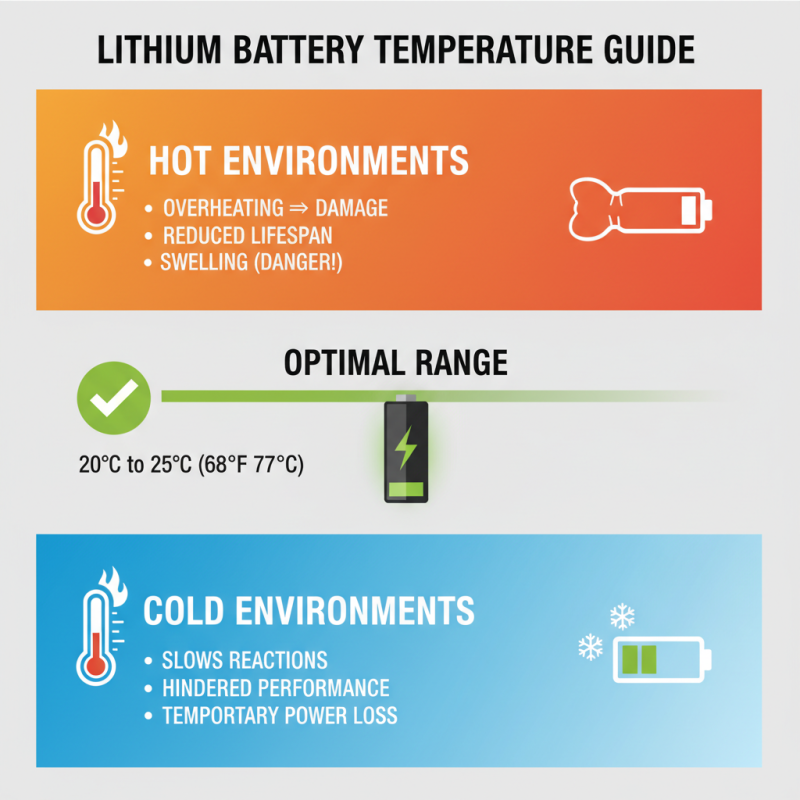
Lithium batteries thrive in specific temperature ranges. Storing them in hot environments can lead to overheating. This damages internal components, reducing lifespan. Exposure to high temperatures can also cause swelling, which is a dangerous sign. On the flip side, cold environments can hinder performance. Low temperatures slow down chemical reactions inside the battery. This might lead to temporary power loss.
Optimal storage conditions are crucial. Aim for a temperature between 20°C and 25°C. This range allows for maximum efficiency. Keep batteries in a dry place. Humidity can corrode terminals, causing failure. Remember to check the battery's condition regularly. If there’s any sign of physical damage or swelling, consider replacing it.
Reflect on your storage habits. Are you keeping them in a stable environment? Sometimes, we overlook details that matter. Even minor temperature fluctuations can impact battery health. Regular maintenance checks can prolong their life. Take the time to create an ideal storage solution. Your batteries will appreciate it.
Signs of Temperature-Related Damage in Lithium Batteries
Lithium batteries are sensitive to temperature changes. Extreme heat or cold can cause noticeable damage. Signs of this damage are crucial for users. Overheating may lead to swelling or a strange odor. In cold weather, batteries can lose charge rapidly. Reports show that up to 20% of lithium batteries fail due to temperature issues.
It's essential to monitor temperature ranges. Ideally, lithium batteries function best between 20°C and 25°C. Beyond this range, performance deteriorates. A study indicates that batteries exposed to temperatures above 40°C can lose up to 30% of their capacity within a year. Conversely, charging a cold battery can lead to lithium plating, which endangers its lifespan. Users should be aware of these critical signs.
Regular checks can prevent irreversible damage. If swelling or leaks appear, it may be too late. Some users overlook these signs, leading to battery failure. Understanding these aspects can help improve battery management. Ignoring temperature effects jeopardizes safety and performance. A reflective approach toward battery health ensures longevity and reliability.
Temperature-Related Damage in Lithium Batteries
Safety Precautions for Handling Lithium Batteries in Extreme Conditions
Handling lithium batteries in extreme conditions demands caution. High temperatures can increase the risk of thermal runaway, a phenomenon that can lead to fire. According to a report by the National Renewable Energy Laboratory, lithium batteries can experience significant degradation at temperatures above 60°C. This degradation can reduce battery life by up to 30%. Therefore, monitoring the environment is crucial.
Low temperatures pose their own risks. Batteries can lose capacity and voltage, affecting performance. The International Battery Association highlights that temperatures below 0°C may cause a drop of up to 60% in battery efficiency. Users should be wary of these conditions. Ensuring proper insulation and using warming blankets can mitigate risks when operating in cold settings.
Always wear protective gear. Safety goggles and gloves are essential. Proper storage is equally important. A study from the Battery Innovation Center indicates that storing batteries in temperature-controlled units reduces risks significantly. Batteries should not be left in extreme heat or cold for prolonged periods. Reflecting on these precautions can prevent accidents and enhance safety in battery management. Ignoring these factors can lead to dangerous situations.