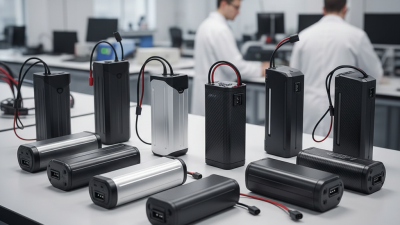
China has become a central manufacturing base for the global Lithium Bike Battery market. The International Energy Agency’s Global EV Outlook 2024 reports that China held about 75% of global battery-cell manufacturing capacity. That scale influences cell access, pricing, engineering talent, and export readiness. Yet factory size alone does not prove a dependable bicycle battery supplier. Real performance appears on a workbench, road, and charging log.
This guide examines ten Chinese manufacturers through practical purchasing criteria. These include cell chemistry, usable capacity, cycle life, thermal control, battery-management systems, certification evidence, warranty terms, and after-sales support. The battery must fit the bike, not merely match a catalogue photograph. A 36V commuter pack needs stable current delivery on hills, secure mounting, and predictable indoor charging. Small details matter: connector quality, enclosure sealing, replacement parts, and traceable production batches.
BloombergNEF’s Battery Price Survey 2023 reported a record average lithium-ion pack price of 139 dollars per kWh. However, prices vary by chemistry, order volume, and region. This figure offers context, not a promise for bicycle batteries. Certification should also match the destination market. UL Solutions, the European Commission, and national regulators publish relevant safety guidance. Supplier documents still require careful verification. No ranking is perfect. Some companies disclose little, and public information can age quickly. Therefore, this selection combines reported industry scale with technical transparency and practical buyer experience. It offers a useful starting point, not a replacement for independent testing.
China’s lithium e-bike battery market largely follows 36V and 48V pack standards. A 36V lithium-ion pack usually uses ten series cells, reaching about 42V when fully charged. A 48V pack commonly uses thirteen series cells, with a full charge near 54.6V. These figures matter when matching the motor, controller, charger, and display. A mismatch can cause poor performance or unsafe charging behavior.
Reliable manufacturers normally provide cell specifications, BMS protection details, cycle-test records, and production inspection data. Buyers should check capacity at a stated discharge rate, not only the printed label. In practical sampling, connector quality and welding consistency often reveal more than polished product photos. I would not treat every 36V or 48V label as universal. Cell chemistry, temperature, and BMS settings can change real-world results. This is where comparisons become less tidy.
Tips:
Ask for a complete test report.
Confirm rated and charging voltage.
Check whether the battery fits the frame enclosure.
Request sample testing under climbing and stop-start conditions.
Inspect insulation, fuse placement, waterproof sealing, and balancing performance.
A small voltage error can become an expensive lesson.
Also verify packaging, traceability, warranty terms, and after-sales response before placing a large order.
Ranking China’s top ten lithium bike battery manufacturers requires more than comparing advertised capacity. A credible assessment should examine annual production, verified shipment records, cell procurement, and quality-control staffing. Capacity must mean usable energy, not only a label value. Inspectors should compare rated watt-hours with test results from independent laboratories.
Safety deserves equal weight. Review battery management systems, thermal protection, overcharge testing, water-resistance procedures, and traceability for every production batch. Ask for evidence of transport and product compliance under applicable regulations.
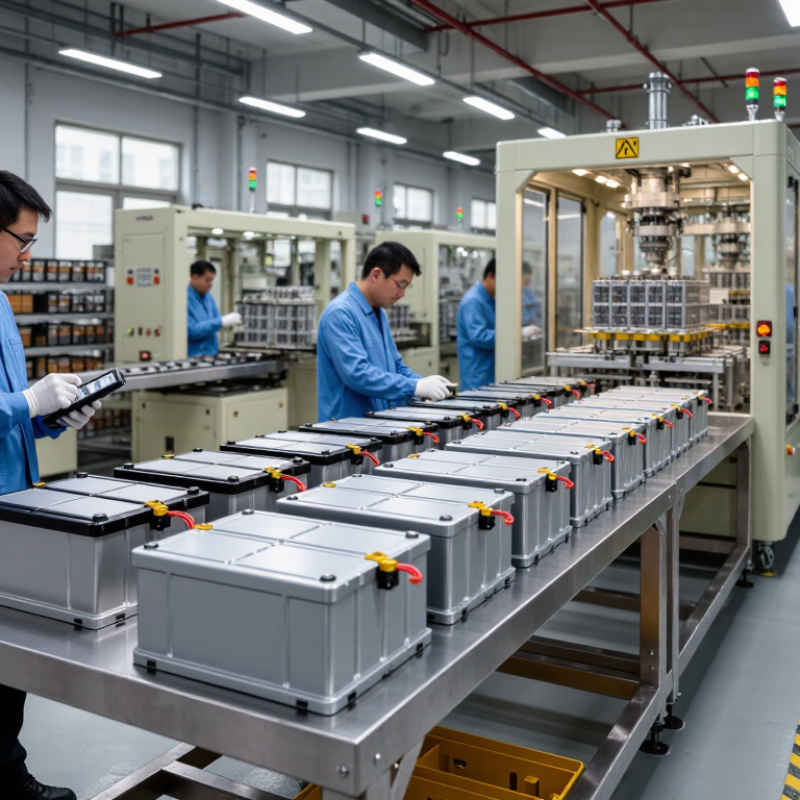
Factory scale also matters. Check automated assembly lines, aging rooms, warehouse controls, warranty teams, and response times for field failures. A large facility is not automatically reliable.
Tips:
Use a weighted scorecard, such as 35% safety, 30% capacity, and 25% manufacturing scale. Reserve 10% for service transparency. Visit the factory when possible. Photograph test equipment, but verify its calibration dates.
Speak with engineers, not only sales staff. No ranking is perfect. Supplier data can be selective, and my own weighting may favor safety more than some buyers expect.
Recheck production figures every year, because expansion can change quality before public ratings reveal it.
China’s top lithium bike battery manufacturers are competing in a practical range: 10–30Ah packs and 360–1,440Wh output. These figures suit commuter bikes, cargo models, and longer-distance platforms. At 36V, a 10Ah pack provides about 360Wh. At 48V, 30Ah reaches roughly 1,440Wh. Actual output depends on voltage, usable capacity, temperature, and battery management settings.
A serious top-ten comparison should examine cell consistency, welding quality, enclosure design, and traceable testing. Experienced factories usually offer multiple connector types, communication options, and mounting formats. They should also provide cycle-test records, protection thresholds, and clear charging guidance. Ask about low-temperature charging control. It is often overlooked. Water resistance claims need careful review, because laboratory ratings may not reflect road vibration or damaged seals.
The strongest Chinese manufacturers typically support customized voltage, capacity, and casing dimensions without treating every request as standard. Production audits can reveal more than polished catalog images. Check whether incoming cells are tested individually and whether final packs receive capacity screening. A weakness remains common across the industry: published cycle life may use gentle laboratory conditions. Real riders accelerate, climb, store batteries poorly, and charge irregularly. Therefore, compare test methods, warranty terms, and replacement procedures instead of trusting one impressive number. Ten manufacturers may share similar specifications, yet their consistency, documentation, and after-sales discipline can differ sharply.
When comparing ten leading Chinese lithium bike battery manufacturers, chemistry deserves close attention. Start with NMC and LFP. NMC cells usually provide higher energy density, often near 200–250 Wh/kg at cell level. They can reduce pack weight, but require careful thermal control and conservative charging. LFP commonly offers longer cycle life and stronger thermal stability. Its density often sits closer to 150–180 Wh/kg. That difference matters on steep roads.
A reliable manufacturer should clarify whether its figures describe cells or complete packs. Cases, wiring, fuses, connectors, and the BMS add weight. Therefore, a 250 Wh/kg cell does not create a 250 Wh/kg bicycle battery. Ask for measured capacity at practical temperatures, not laboratory peaks. Request cycle-test curves, temperature logs, and protection thresholds. Those documents reveal engineering quality.
The BMS is the pack’s quiet gatekeeper. It monitors voltage, current, and temperature while balancing cells during charging. Better systems record faults and disconnect safely during abnormal conditions. In practical inspections, connectors and seals sometimes fail before the cells. That detail is easy to overlook. Some specifications look polished but lack independent validation. Buyers should compare sample packs, inspection reports, warranty terms, and traceable test data. Density is attractive, but it is not the whole decision.
Representative industry ranges for lithium battery technologies commonly used in electric bikes and light electric vehicles. Values are technology-level references, not company or brand rankings.
Gravimetric energy density is shown as a representative midpoint from commonly reported production ranges: approximately 150–250 Wh/kg for NMC and 90–160 Wh/kg for LFP. Cycle-life values are typical planning estimates under controlled conditions; actual results depend on cell design, temperature, charging limits, and the battery management system (BMS). A BMS improves safety and usable life through voltage, current, temperature, and state-of-charge protection, but it does not have an independent Wh/kg rating.
China’s top lithium bike battery manufacturers should be evaluated through compliance, not production volume alone. The China Bicycle Association reported more than 40 million electric bicycles produced in 2023. The IEA’s Global EV Outlook 2024 also recorded over 750 GWh of global electric vehicle battery demand. Scale matters. Traceability matters more.
GB 17761:2018 covers essential electric bicycle safety requirements, including battery protection, charging systems, wiring, and fire-related risks. Buyers should request the applicable test report, product model, cell details, and charger records. UN 38.3 confirms that lithium batteries have passed transport-related tests. A complete test report and test summary should match the shipped battery. Small differences can create large problems.
IEC 62133-2:2017 evaluates safety for portable sealed secondary lithium cells and batteries. It can strengthen supplier qualification, but it does not replace GB 17761 requirements. During an audit, inspect samples, BMS records, incoming-cell controls, and production-batch codes. Check whether certificates match the exact configuration, not merely a similar product. A certificate is not proof of every batch. That assumption is risky. The weakest point is often a missing record, not a failed laboratory test.
| No. | Compliance Dimension | Applicable Standard | What Should Be Verified | Typical Supporting Evidence | Applicability |
|---|---|---|---|---|---|
| 01 | Complete Electric Bicycle Compliance | GB 17761-2018 | Confirm that the complete electric bicycle configuration complies with the mandatory technical requirements, including electrical safety, mechanical safety, speed, weight, and tamper-resistance provisions. | Product technical file, test report from a qualified laboratory, final product configuration record, and applicable conformity documentation. | Complete bicycle |
| 02 | Battery-System Integration | GB 17761-2018 | Check that the battery, charger, controller, wiring, connectors, mounting structure, and protection functions are evaluated as the supplied bicycle system rather than as unrelated components. | System-level test configuration, wiring diagram, battery mounting description, charger specification, and compatibility records. | System level |
| 03 | Battery Enclosure and Mechanical Protection | GB 17761-2018 | Review enclosure strength, secure attachment, protection against foreseeable impact, accessibility of live parts, and resistance to unauthorized modification where relevant to the bicycle design. | Mechanical test records, enclosure drawings, mounting-strength data, ingress-protection information where specified, and production inspection criteria. | Battery pack |
| 04 | Lithium Battery Transport Testing | UN Manual of Tests and Criteria, Part III, Sub-section 38.3 | Verify that the lithium-ion cell or battery type has completed the applicable T.1 to T.8 transport tests, including altitude simulation, thermal test, vibration, shock, external short circuit, impact or crush as applicable, overcharge, and forced discharge. | UN 38.3 test summary containing cell or battery identification, rated capacity, test configuration, test date, laboratory details, and results. | Transport |
| 05 | UN 38.3 Design-Change Control | UN 38.3; applicable transport regulations | Determine whether changes to cell model, chemistry, protection circuit, enclosure, capacity, or battery configuration could invalidate the existing test summary or require reassessment. | Revision history, engineering-change procedure, cell-list control, battery model comparison, and documented applicability assessment. | Change control |
| 06 | Portable Lithium Battery Safety | IEC 62133-2:2017+A1:2021 | Assess the safety of portable sealed secondary lithium cells and batteries under intended use, including electrical, mechanical, environmental, and abuse-related conditions covered by the standard. | IEC 62133-2 test report, certificate where issued, battery model identification, cell information, and tested configuration. | Cell and pack |
| 07 | Protection Circuit and BMS Functions | IEC 62133-2:2017+A1:2021 | Verify protection against abnormal charging, over-discharge, external short circuit, overheating, and other applicable hazards. Confirm that the tested BMS version matches production units. | BMS schematic, protection-threshold records, firmware revision, fault-condition test results, and production functional-test specification. | Battery pack |
| 08 | Cell Traceability and Configuration | IEC 62133-2; UN 38.3 | Confirm traceability from finished battery pack to cell manufacturer, cell model, chemistry, batch, nominal voltage, rated capacity, and parallel or series configuration. | Bill of materials, cell certificates or specifications, incoming inspection records, production batch records, and serial-number traceability. | Supply chain |
| 09 | Charging-System Compatibility | GB 17761-2018; IEC 62133-2 | Check charger-to-battery compatibility, charging voltage and current limits, connector polarity, communication functions where used, and protection against incorrect or abnormal charging conditions. | Charger specification, charging-profile data, compatibility test report, connector drawings, BMS communication description, and end-of-line charging checks. | Battery and charger |
| 10 | Documentation and Ongoing Surveillance | GB 17761-2018; UN 38.3; IEC 62133-2 | Ensure that reports are current, issued for the exact model and configuration, and supported by production controls. Recheck compliance after changes to cells, BMS firmware, enclosure, charger, capacity, or assembly location. | Current test reports, certificates where applicable, technical construction file, quality-control plan, change notifications, corrective-action records, and periodic audit results. | All stages |