China has become a central manufacturing base for global Lithium Battery buyers. The International Energy Agency reported that global electric vehicle battery demand exceeded 750 GWh in 2023. China represented roughly 60% of that demand, supported by extensive material, cell, and pack production capacity. This scale gives Chinese manufacturers advantages in sourcing, engineering, automation, and delivery efficiency.
The BloombergNEF Battery Price Survey recorded an average lithium-ion battery pack price of $139 per kWh in 2023. Prices vary by chemistry, order volume, region, and technical specification. Lithium iron phosphate batteries often suit commercial vehicles and stationary storage, while nickel-based cells may support higher energy density. Buyers should examine capacity retention, cycle-life testing, thermal management, traceability, and after-sales support. A factory visit can reveal details that brochures cannot, such as electrode cleanliness, warehouse conditions, and quality-control discipline.
This guide reviews China’s leading Lithium Battery manufacturers for international buyers. It considers production experience, certifications, application expertise, export capability, and independent performance evidence. Standards such as UN 38.3 testing, IEC requirements, and ISO management systems deserve careful verification. However, no ranking remains perfect. Market data can lag behind factory changes, and impressive capacity figures may not reflect consistent output. Responsible buyers should compare audited documents, sample results, warranty terms, and real project references before signing contracts. The best supplier is not always the largest. It is the one that delivers stable performance, transparent communication, and measurable value under actual operating conditions.
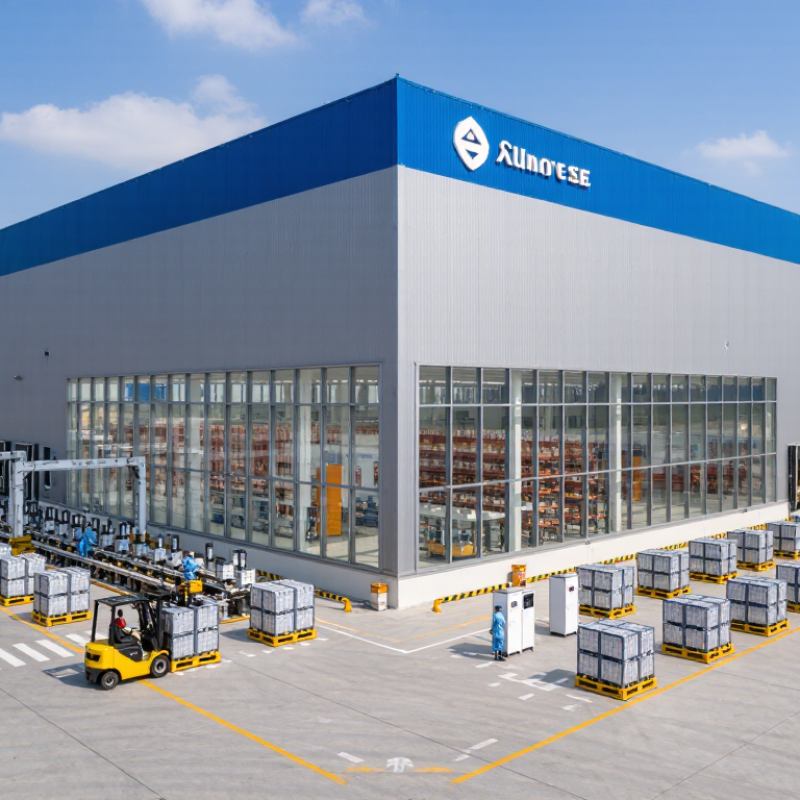
A leading lithium battery manufacturer in China is defined by more than production volume. The IEA’s Global EV Outlook 2024 reported that China held around 80% of global battery cell manufacturing capacity in 2023. Scale matters, but consistency matters more. Buyers should examine cell-to-cell variation, thermal testing, cycle-life records, and warranty claims. A reliable factory can show batch data, not only polished samples.
Look closely at traceability. Each cell should connect to records for materials, formation, testing, and shipment. Strong manufacturers also maintain automated inspection lines and independent safety testing. The relevant standards may include UN 38.3, IEC 62619, and ISO-based quality systems, depending on the application and destination market. Certification alone is not proof of quality. It is only a starting point.
Cost pressure is real. BloombergNEF’s 2024 Battery Price Survey placed the average lithium-ion pack price at 115 dollars per kWh. However, the cheapest quotation can hide weaker testing, limited after-sales support, or unstable raw-material sourcing. A practical buyer should request sample data, factory audit access, and clear failure-handling procedures. That takes time. It may prevent expensive surprises later. Even experienced teams can overlook humidity control or connector durability during evaluation. The best manufacturer keeps improving, documents its mistakes, and accepts technical questions without vague promises.

China’s major lithium battery manufacturers operate at an unmatched industrial scale. The International Energy Agency reported that China held about 80% of global battery cell production capacity in 2023. Large producers often control cathode processing, cell assembly, testing, and pack integration. This vertical structure can shorten lead times and improve cost control. Scale matters.
Their core strengths differ by product design. Prismatic LFP cells support buses, commercial vehicles, and stationary storage because they offer strong thermal stability and long cycle life. High-nickel cells provide greater energy density for longer-range vehicles. Some manufacturers also develop sodium-ion systems, though commercial adoption remains limited. According to BloombergNEF’s 2024 survey, average lithium-ion pack prices reached 115 dollars per kilowatt-hour globally, while China averaged about 94 dollars. Price leadership is clear, but not automatic.
For global buyers, engineering support may matter more than a factory’s headline capacity. Leading Chinese suppliers commonly provide sample testing, battery management system matching, thermal analysis, and production traceability. Buyers should verify cell consistency, UN 38.3 transport documentation, IEC testing, warranty limits, and independent audit results. A low quotation can conceal weaker after-sales support. That risk is easy to underestimate. The industry also changes quickly; reported capacity may exceed actual utilization, and technical claims require practical validation through pilot orders.
Global buyers should compare lithium battery technologies before reviewing supplier catalogs. Lithium iron phosphate (LFP) cells offer strong thermal stability, long cycle life, and lower material risk. They suit energy storage, commercial vehicles, and backup systems. Nickel-rich chemistries can deliver higher energy density, making them useful for compact mobility products. However, they require stricter thermal control and careful charging design.
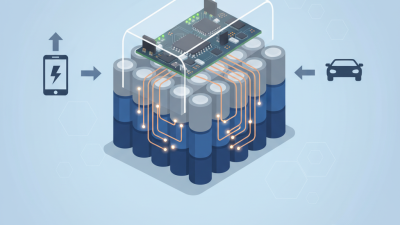
Product structure matters as much as chemistry. Prismatic cells simplify pack assembly and maintenance. Cylindrical cells support flexible production and efficient heat distribution. Pouch cells reduce weight, but their packaging needs reliable protection against swelling. A complete battery system also includes a battery management system, thermal sensors, fuses, and mechanical protection. In practice, weak integration can reduce the value of excellent cells. No chemistry wins every project.
Tips: Ask suppliers for verified cycle-life data under your actual temperature, load, and charging conditions. Check cell consistency, traceability, factory testing, and safety documentation. Confirm transport and product requirements, including UN 38.3 and relevant IEC standards. Request sample packs before placing volume orders. Test them under realistic conditions, not only in a laboratory. Buyers often focus on capacity first, but long-term reliability may depend more on thermal design, software settings, and service response. Some specifications look impressive on paper. They still need independent verification.
| Technology / Product Category | Typical Cell Format | Typical Nominal Voltage | Typical Energy Density | Typical Cycle-Life Range | Main Global Applications | Key Buyer Considerations |
|---|---|---|---|---|---|---|
| Lithium Iron Phosphate (LFP) | Prismatic, pouch, cylindrical | 3.2 V per cell | Approximately 90–180 Wh/kg at cell level | Approximately 2,000–7,000 cycles | Energy storage systems, electric buses, commercial vehicles, solar storage, marine systems | Strong thermal stability, long service life, cobalt-free chemistry, and good total cost of ownership |
| Nickel Manganese Cobalt (NMC) | Pouch, prismatic, cylindrical | Approximately 3.6–3.7 V per cell | Approximately 150–280 Wh/kg at cell level | Approximately 1,000–2,500 cycles | Passenger electric vehicles, power tools, light electric mobility, portable equipment | Higher energy density, compact design, and a need for carefully engineered thermal management |
| Lithium Titanate (LTO) | Prismatic, cylindrical | Approximately 2.3–2.4 V per cell | Approximately 50–90 Wh/kg at cell level | Approximately 10,000–30,000 cycles | Fast-charging buses, industrial vehicles, grid regulation, demanding backup systems | Very high cycle life and charging capability, but lower energy density and higher purchase cost |
| Battery Energy Storage System (BESS) | Battery rack, cabinet, containerized system | 12 V, 24 V, 48 V, 512 V and higher system configurations | System rating commonly specified in kWh or MWh | Approximately 4,000–10,000 cycles, depending on chemistry and operating profile | Solar self-consumption, peak shaving, backup power, microgrids, frequency regulation | Round-trip efficiency, depth of discharge, fire protection, HVAC, EMS and grid-connection requirements |
| Low-Voltage Residential Battery | Wall-mounted or floor-standing module | 48 V-class systems are common | Approximately 5–20 kWh per system | Approximately 4,000–8,000 cycles | Residential solar storage, emergency backup, load shifting | Inverter compatibility, modular expansion, installation method, warranty terms and usable capacity |
| High-Voltage Commercial Battery | Rack-mounted modules or integrated cabinets | Typically 300–1,000 V DC | Approximately 50–500 kWh per cabinet or system block | Approximately 4,000–8,000 cycles | Commercial and industrial peak shaving, backup power, renewable integration | High-voltage safety, isolation monitoring, installation certification, EMS and maintenance access |
| Electric Vehicle Battery Pack | Prismatic or pouch modules integrated into a pack | Approximately 300–900 V DC | Approximately 100–300 Wh/kg at pack level | Approximately 1,000–3,000 cycles | Passenger vehicles, buses, trucks, specialty electric vehicles | Pack cooling, crash safety, BMS communication, fast-charging performance and vehicle integration |
| Electric Two-Wheeler Battery | Removable or fixed cylindrical/prismatic pack | 36 V, 48 V, 60 V and 72 V are common | Approximately 0.5–6 kWh per pack | Approximately 800–2,000 cycles | Electric bicycles, scooters, motorcycles and delivery vehicles | Pack dimensions, water resistance, vibration performance, removable design and local transport rules |
| Portable Power Station | Integrated battery, inverter and control unit | 12 V, 24 V or higher internal battery architecture | Approximately 0.2–5 kWh per unit | Approximately 500–3,000 cycles | Outdoor power, emergency backup, mobile workstations and recreational use | AC output waveform, USB interfaces, solar input, noise level, portability and safety certification |
| Marine and Industrial Battery Pack | Sealed module, rack or custom enclosure | 12 V, 24 V, 48 V and high-voltage systems | Approximately 1–500 kWh per system | Approximately 2,000–6,000 cycles | Electric boats, forklifts, automated guided vehicles, robotics and telecom backup | Ingress protection, vibration resistance, salt-air protection, peak-current capability and serviceability |
Note: Values are representative industry ranges for preliminary global sourcing and comparison. Actual specifications vary according to cell design, pack architecture, operating temperature, charge/discharge rate, depth of discharge, safety controls and applicable regional standards.
China’s lithium battery manufacturers increasingly compete through verifiable quality systems, not only production scale. The International Energy Agency reported that global battery manufacturing capacity reached nearly 2.6 TWh in 2023, while demand was about 750 GWh. This surplus makes supplier evaluation more important for global buyers.
A credible factory should maintain ISO 9001 procedures and apply relevant IEC safety standards, such as IEC 62619 for industrial lithium batteries. Export shipments also require UN 38.3 transport testing. Certificates alone are insufficient. Buyers should request batch-level test reports, laboratory accreditation details, and traceability records linking each cell to its production line.
Quality control should be visible on the factory floor. Technicians check electrode coating thickness, cell capacity, internal resistance, welding strength, and insulation. Automated cameras can detect damaged tabs or uneven seals. Each battery pack should receive protection-board testing, thermal checks, charging verification, and controlled aging. The International Energy Agency also notes that manufacturing consistency strongly affects battery performance and cost.
Ask for sample data, not promises. A supplier should explain its corrective-action process when a batch fails. It should also retain records for recalls and field complaints. A certificate may be genuine, yet the latest shipment can still vary. That uncomfortable gap deserves attention. Audits should include production areas, storage temperatures, calibration records, and rejected-cell handling. Independent testing remains wise.
Selecting a Chinese lithium battery supplier requires more than comparing quoted prices. Global buyers should examine cell chemistry, production capacity, export experience, and documented quality controls. Ask for recent test reports, factory audit records, and traceable batch numbers. A reliable supplier can explain how materials move from incoming inspection to final pack testing. Look closely.
Request samples from the same production line intended for mass orders. Test capacity, cycle performance, charging behavior, thermal protection, and performance at low temperatures.
Do not rely only on a laboratory sheet. Real operating conditions may expose wiring weaknesses, connector heating, or software limits. An experienced buyer should define acceptance criteria before signing a purchase agreement.
Include tolerances, inspection steps, packaging requirements, spare-part support, and response times. These details prevent vague promises from becoming expensive disputes.
Supplier evaluation should also cover worker safety, environmental controls, and compliance with destination-market requirements. Verify transport documents and applicable certifications through independent channels, not copied files. Visit the facility when possible, or arrange a live remote audit with production access.
Ask who owns technical decisions. That answer matters. Some suppliers communicate well during sampling but respond slowly after payment. This is an uncomfortable risk, yet it deserves a written contingency plan.
Review financial stability, backup production capacity, and after-sales procedures every year. No evaluation is perfect; even careful buyers can underestimate demand changes or integration problems.