Top Waterproof Battery Options for Reliable Power Solutions?
The demand for reliable power solutions has surged, particularly for waterproof batteries. Industries such as outdoor recreation, marine, and emergency services depend heavily on these robust solutions. A report by MarketsandMarkets projects that the waterproof battery market will grow significantly, driven by the increasing need for waterproof electronic devices.
Waterproof batteries offer unique advantages. They ensure functionality in challenging environments, ranging from hiking to underwater exploration. According to a study published by the Battery Research Institute, waterproof batteries can increase operational longevity by over 30%. While this is promising, users must consider factors like weight, cost, and charging speed.
Additionally, not all waterproof batteries are created equal. Some may excel in water resistance but lack efficiency or power capacity. Balancing performance with reliability can be difficult. Therefore, when choosing a waterproof battery, careful evaluation of specific use cases is essential. Users must reflect on actual needs versus ideal specifications.

Understanding Waterproof Batteries: Types and Benefits
Waterproof batteries are essential in various industries, from outdoor equipment to marine applications. Understanding their types and benefits is crucial. Lithium-ion, for instance, often emerges as a leading choice. According to recent industry reports, they offer superior energy density and longer life cycles compared to their counterparts, making them ideal for rugged environments.
The benefits of waterproof batteries extend beyond their resilience. These batteries prevent damage from moisture, thus ensuring uninterrupted power. In a recent market analysis, companies reported a 30% reduction in maintenance costs when using waterproof options. This highlights their reliability, especially in critical situations. However, not all waterproof batteries perform equally. Issues like weight and temperature sensitivity can impact performance.
Users also need to consider potential drawbacks. Some waterproof batteries may not be as efficient in extreme temperatures. This inconsistency can lead to performance issues over time. A careful assessment of specific needs is essential. Ultimately, choosing the right battery involves balancing features, benefits, and potential limitations.
Top Waterproof Battery Options for Reliable Power Solutions
Key Features to Look for in Waterproof Battery Designs
When choosing a waterproof battery, several key features should stand out. First, consider the IP rating. This rating indicates the level of water resistance. A higher rating means better protection against water and dust. Look for batteries with an IP67 or IP68 rating for optimal performance in wet conditions. These batteries can withstand temporary immersion or even prolonged exposure to water.
Next, assess the durability of the battery. Materials like rubber or silicone enhance waterproof capabilities. They also protect against shock and impact. A sturdy design adds to the reliability. Check for additional features like built-in thermal protection. This ensures the battery operates safely in various temperatures.
Another aspect to consider is the battery lifespan. Waterproof batteries should maintain their charge for extended periods, even underwater. It's essential to evaluate the manufacturer's warranty. A longer warranty often indicates confidence in the product's reliability. Lastly, think about the ease of use. Batteries that are simple to install and recharge can save time and reduce frustration. While many options exist, each has unique strengths and weaknesses. Make informed choices based on your specific needs.
Applications of Waterproof Batteries in Various Industries
Waterproof batteries are essential in various industries that demand reliable power sources. These batteries are designed to withstand harsh environments, making them suitable for applications in marine, construction, and outdoor recreational sectors. According to a recent industry report, the global waterproof battery market is projected to grow by 15% annually. This growth reflects the increasing demand for durable and efficient power solutions.
In marine applications, waterproof batteries power boats and ensure safety in unpredictable conditions. In construction, they supply energy for tools and machinery exposed to moisture and dust. Outdoor recreation, such as camping and hiking, also benefits from waterproof batteries, providing reliable energy for portable devices. This versatility showcases their importance across different sectors, highlighting the need for robust power solutions.
Tips: Choose batteries with proper IP ratings to ensure effective waterproofing. Regularly inspect battery connections to prevent corrosion. Remember to consider size and weight based on your specific application needs. These steps will enhance battery life and improve overall performance. Reducing the risk of unexpected failure is crucial for any project relying on dependable power.
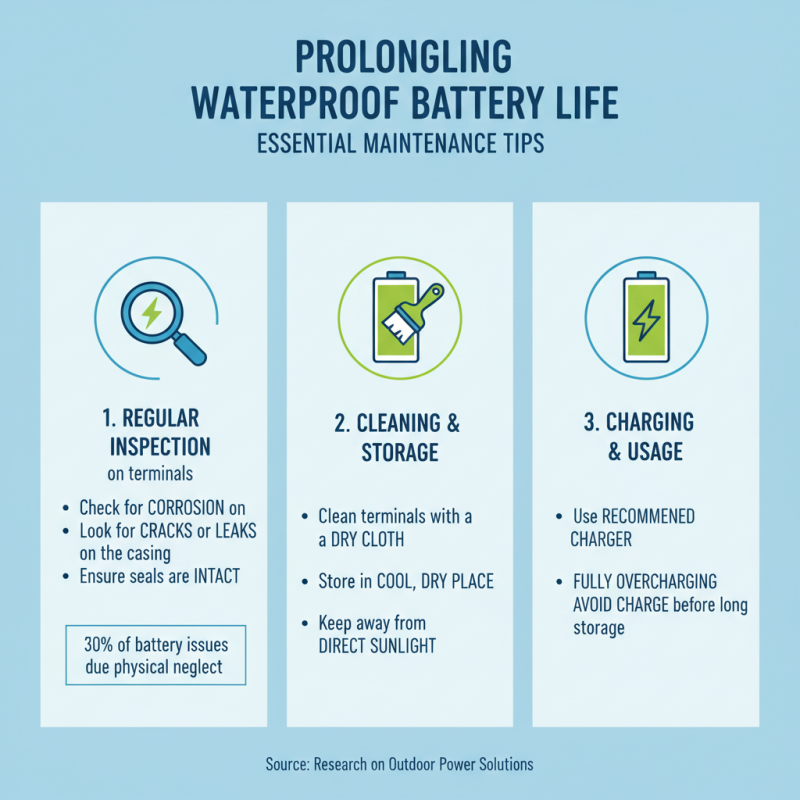
Maintenance Tips for Prolonging the Life of Waterproof Batteries
Waterproof batteries are essential for various outdoor activities and emergency power situations. Proper maintenance can significantly extend their lifespan. Regular inspection is key. Checking for corrosion, cracks, or leaks can prevent early failure. Research shows that 30% of battery issues stem from neglecting physical deterioration.
Keeping terminals clean is vital. Dirt and grime can create resistance, reducing efficiency. A simple wipe can enhance performance. Additionally, charging practices matter. Overcharging can lead to overheating, which reduces battery life. According to a report by the Battery Innovation Center, optimal charging maintains integrity.
Store batteries in a cool, dry place. High temperatures can degrade materials faster. It's recommended to charge them to about 50% if storing for long periods. Following these tips could potentially double the battery’s operational lifespan. Missing these details might result in unexpected failures during your critical moments.