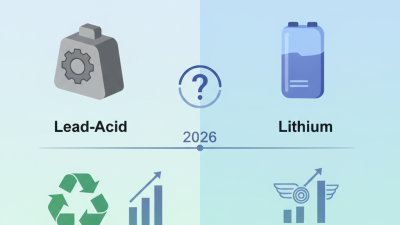
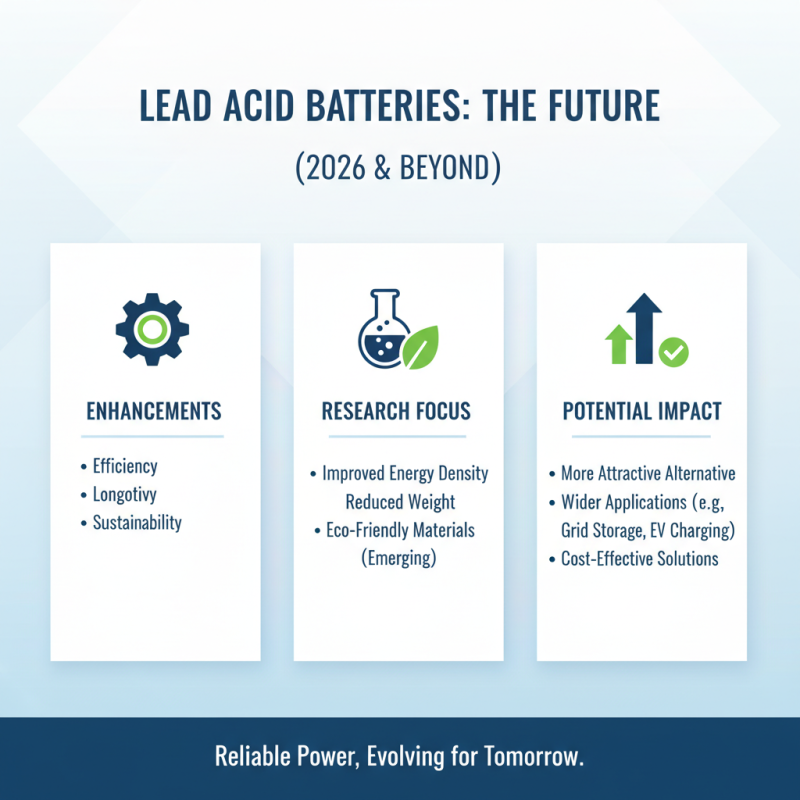
Will Lead Acid Replace Lithium Batteries by 2026?
The battery industry is undergoing significant changes. A question arises: Will lead acid replace lithium batteries by 2026? Lead acid batteries have been around for decades. They are heavy and bulky but offer affordable options. Many industries still rely on them for their simplicity and cost-effectiveness.
Lithium batteries, on the other hand, have gained popularity due to their higher energy density and lighter weight. However, they also come with higher costs and environmental concerns. This raises critical questions about sustainability and future trends. As technology progresses, industries must weigh these factors carefully.
Can lead acid effectively replace lithium batteries? The discussion is ongoing. As manufacturers seek solutions, exploring lead acid's potential is essential. The industry may be at a pivotal moment where traditional methods face modern challenges. Evaluating these dynamics will be vital in shaping the future of battery technology.
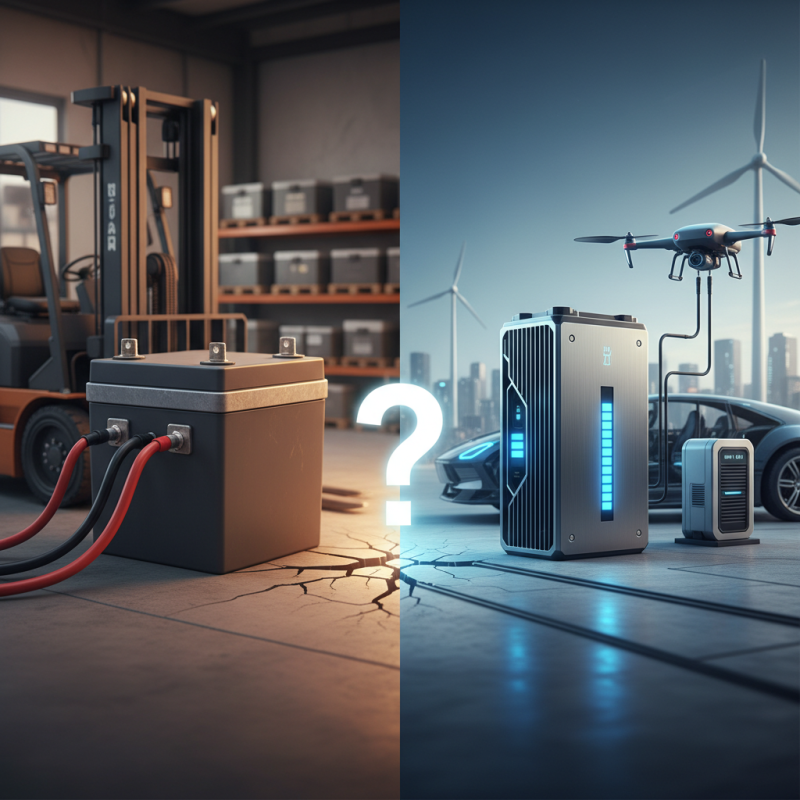
Lead Acid Batteries: An Overview of Technology and Applications
Lead acid batteries have been a cornerstone of energy storage for many years. Their technology is straightforward yet effective. These batteries consist of lead dioxide, sponge lead, and sulfuric acid. They are widely used in vehicles, emergency lighting, and renewable energy systems. Their ability to provide high surge currents makes them popular, especially in older technologies.
Despite their benefits, lead acid batteries have limitations. They are heavier and less efficient than newer alternatives. Their lifespan often falls short compared to lithium batteries. Additionally, lead is toxic and poses environmental risks. However, lead acid remains cheaper and recyclable, which attracts budget-conscious consumers.
In modern applications, the demand for reliable power sources is rising. Lead acid batteries find their niche in sectors that prioritize cost over performance. They are convenient for backup power systems. Yet, as innovations continue, questions arise about their future role. Will they adapt? Or will more advanced technologies like lithium take over completely? The ongoing debate reflects the industry's evolving landscape. The reality may challenge traditional preferences and push for a reevaluation of existing technologies.
Comparison of Lead Acid and Lithium-Ion Battery Capacity and Applications (2023)
Current Market Trends in Lithium Batteries: Strengths and Limitations
The lithium battery market has grown significantly in recent years. In 2020, the global lithium-ion battery market was valued at around $36 billion. This figure is expected to soar to approximately $129 billion by 2027. Such growth stems from rising demand for electric vehicles (EVs) and renewable energy storage. However, lithium batteries face limitations. They can overheat, degrade quickly, and have resource constraints. These issues raise concerns about their long-term sustainability.
Lead-acid batteries are often considered as an alternative. They are cheaper and well-understood technology. Their recycling rates are impressive, with about 99% of lead-acid batteries being reused. However, they also have downsides. They are heavier and less efficient than lithium batteries. The energy density of lead-acid batteries is roughly 30-50 Wh/kg, while lithium batteries can deliver over 200 Wh/kg. This efficiency gap poses a challenge for lead-acid adoption in EVs.
Tips: Consider the application before choosing a battery type. For large-scale storage or low-cost scenarios, lead-acid may be suitable. Focus on the trade-offs, weigh cost against performance. Sustainability is crucial; recycling and waste management impact the overall battery lifecycle.
Comparing Performance: Lead Acid vs. Lithium Batteries
When comparing performance, lead acid batteries and lithium batteries exhibit distinct characteristics. Lead acid batteries are cheaper and widely available. They are often used in vehicles and backup systems. However, they have a lower energy density, typically around 30-50 Wh/kg. This limits their use in applications that require lighter and more efficient power sources.
In contrast, lithium batteries offer a higher energy density, reaching up to 265 Wh/kg. This makes them ideal for portable devices and electric vehicles. Their longer cycle life also stands out. Lithium batteries may achieve over 2,000 cycles, while lead acid ones typically last only 500 cycles. Despite their advantages, lithium batteries come with challenges, such as higher costs and environmental concerns during disposal.
Tip: Consider the application. If cost is a critical factor, lead acid might be a better choice. But for performance-oriented needs, lithium is preferred.
Tip: Always evaluate the total lifecycle. Lead acid batteries can require more maintenance, unlike lithium options, which are often low maintenance.
In future comparisons, many factors will play a role. The advancement in manufacturing processes for both battery types may shift the market dynamics significantly. As of now, both technologies have their place. Users should assess their specific needs carefully.
Environmental Impact and Sustainability Considerations of Both Battery Types
Lead-acid batteries have been a staple in energy storage for decades. Their manufacturing processes are simpler, and they can be recycled efficiently. However, they are heavier. They also have lower energy density compared to lithium batteries. This weight can make a difference in applications like electric vehicles.
On the environmental front, lead-acid batteries can be detrimental. Lead is toxic and poses risks during disposal. Moreover, it requires energy-intensive processes to recycle them. Lithium batteries, while lighter and more efficient, raise concerns too. Mining lithium can lead to significant land degradation. Water scarcity issues also emerge, especially in dry regions.
Both battery types have advantages and drawbacks. Lead-acid batteries have established recycling systems. Yet, their environmental risks cannot be ignored. Conversely, lithium batteries are less hazardous but the extraction processes are troubling. A balanced approach is needed to weigh these factors. Sustainable innovation is crucial for the future of energy storage.