How to Choose a Lithium Iron Phosphate Battery?
Choosing a Lithium Iron Phosphate Battery is less about chasing the largest capacity and more about matching it to a real job. A good choice begins with the load, daily energy use, and available charging equipment. For an RV, that may mean checking inverter demand and whether the battery fits beneath a seat. For solar storage, reserve capacity and charging behavior matter just as much. Details matter. Rated capacity alone can mislead because usable energy depends on system limits and operating conditions. A practical comparison looks beyond the label.
This guide explains how to compare nominal voltage, capacity, continuous and peak current, dimensions, weight, and battery management system protections. It also covers why charger compatibility, temperature limits, warranty terms, and manufacturer support deserve attention. Check the product manual, not only a marketplace summary, and confirm that key ratings suit your equipment. In cold climates, charging limits can be especially important; follow the manufacturer’s stated guidance. Battery performance varies by model, setup, and use. A datasheet may still leave questions. Ask for clarification rather than guessing. The right Lithium Iron Phosphate Battery is the one whose documented specifications suit your needs with a sensible margin. No single model is best for everyone, and even a careful choice may require adjustments once the system is in use.
Define Your Energy Needs and Operating Conditions
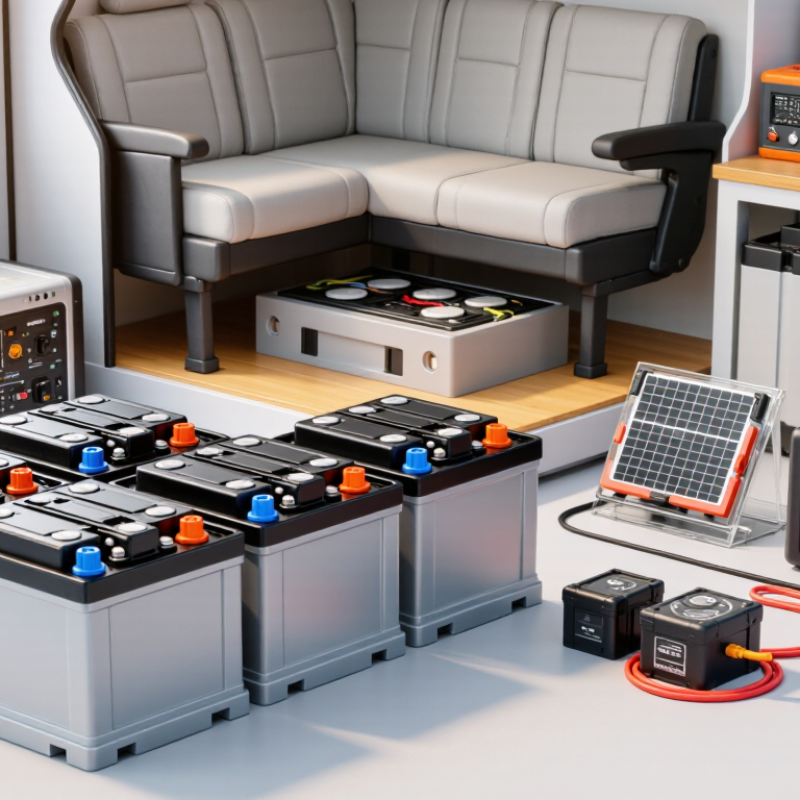
Start by listing every device the battery will support, its power draw, and the hours it runs each day. A 60-watt pump used for five hours needs about 300 watt-hours. Add the other loads, then allow for inverter losses and a sensible reserve. Check both daily energy use and peak demand; a fridge compressor may briefly draw far more power than its running rating. A spreadsheet estimate is only a starting point. Real use can differ.
Tips: Record actual energy use over several days if possible. Check the battery’s rated capacity, usable capacity, continuous current, and peak current. Leave room for growth, but avoid paying for capacity you will rarely use.
Next, consider where and how the battery will operate. Note the expected temperature range, charging method, available space, ventilation, and whether the system faces vibration or moisture. Many LiFePO4 batteries require charge limits at low temperatures; confirm the specific unit’s instructions before planning winter use. Match the charger and inverter to the battery’s voltage and current limits. Also compare expected daily cycling with the manufacturer’s cycle-life conditions, since depth of discharge and heat affect service life. If your assumptions feel uncertain, measure the load or ask a qualified installer to review the design.
Check Compatibility with Your Equipment and Charging System
Before choosing a lithium iron phosphate battery, check the voltage and charging limits of every connected device. A “12-volt” battery may have a different operating range from a lead-acid battery, even if the terminals fit. Compare the battery’s specified charge voltage with your charger, solar controller, inverter, and equipment manuals. Small details matter. A charger with a lithium setting is not automatically compatible; confirm that its profile matches the battery maker’s requirements. Also check the battery management system’s maximum charge and discharge current. A system that draws too much current may shut down unexpectedly.
Look at how the battery will be charged in real conditions. For example, a camper’s alternator, long cable runs, and a DC-to-DC charger can affect current and voltage at the battery terminals. In cold weather, some batteries restrict charging below a stated temperature, while others include low-temperature protection. Do not guess. Check the battery’s series or parallel limits before expanding a bank, and verify that your equipment supports the resulting voltage and capacity. A mismatch may seem harmless during a quick test, then cause cutoffs or poor charging later. It is easy to overlook one small controller setting; reviewing the manuals side by side can prevent that mistake.
Evaluate Safety Features, Certifications, and Battery Quality
Safety claims need evidence, not just a “stable chemistry” label.
The IEA’s Global EV Outlook 2024 estimates that LFP accounted for nearly 40% of the global electric-car battery market in 2023. That scale suggests maturity, not guaranteed quality. Check whether the exact battery model—not merely its cells—has independent test documentation. Look for applicable certification to UL 1973 or IEC 62619, and ask what the certificate covers. A UN 38.3 test summary addresses transport testing; it does not prove a battery is safe in every stationary installation. Details matter.
Inspect the battery management system specifications for cell-level voltage monitoring, temperature sensors, overcurrent protection, and documented temperature cutoffs. Ask for reports covering vibration, short-circuit, overcharge, and thermal-abuse tests, plus traceable production-batch records. A neat metal case tells little. Check terminals for secure covers, clear polarity marks, and cable strain relief; request the manual’s clearance and installation limits. Compare warranty exclusions with cycle-life test conditions, including depth of discharge and temperature. If the seller cannot link a certificate to the exact model or revision, pause. I would still want clearer evidence; datasheets can leave gaps.
Compare Lifespan, Warranty, and Total Cost of Ownership
Choosing a lithium iron phosphate battery means comparing delivered energy, not just its purchase price.
LFP cells can support many charge cycles, but heat, deep discharge, and fast charging can shorten service life. Ask for the warranty term, minimum retained capacity, and any energy-throughput limit. Check which limit ends coverage first. Read the exclusions. NREL’s 2024 Annual Technology Baseline models utility-scale lithium-ion storage at 85% round-trip efficiency and a 15-year life. These are planning assumptions, not promises for a home battery. Compare them with the warranty and tested usable-capacity figures for the exact system.
Estimate total cost of ownership across the battery’s working life. Include the battery, installation, inverter replacement, service, and electricity lost during charging and discharging; divide this by the usable energy delivered. The U.S. Department of Energy’s 2022 Grid Energy Storage Technology Cost and Performance Assessment offers a useful framework for comparing cost, performance, and lifetime. A 10-kWh label may not mean 10 kWh is available for daily use, especially when reserve limits apply. Warranty language can look reassuring, but it may not cover every cause of capacity loss. Honestly, estimates wobble. Local tariffs, operating temperatures, and actual usage can change the result, so request the calculation assumptions in writing.