Top Tips for Choosing Solar Lithium Iron Phosphate Battery?
As the renewable energy landscape evolves, Solar Lithium Iron Phosphate Batteries (LiFePO4) have gained significant attention. According to a report by the International Energy Agency, the solar energy sector is projected to grow 20% annually. This shift increases the demand for efficient storage solutions like LiFePO4 batteries.
Experts like Dr. Emily Turner emphasize the importance of choosing the right battery. She states, "The right battery can enhance the performance of solar systems significantly." With advancements in technology, these batteries are not only safer but also more durable. However, selecting the right battery can be daunting due to various options available.
When considering Solar Lithium Iron Phosphate Batteries, it's essential to evaluate factors such as capacity, lifespan, and cost. Many users overlook specific capacity ratings, leading to unsatisfactory performance. A well-informed decision can make a difference in efficiency and energy savings.
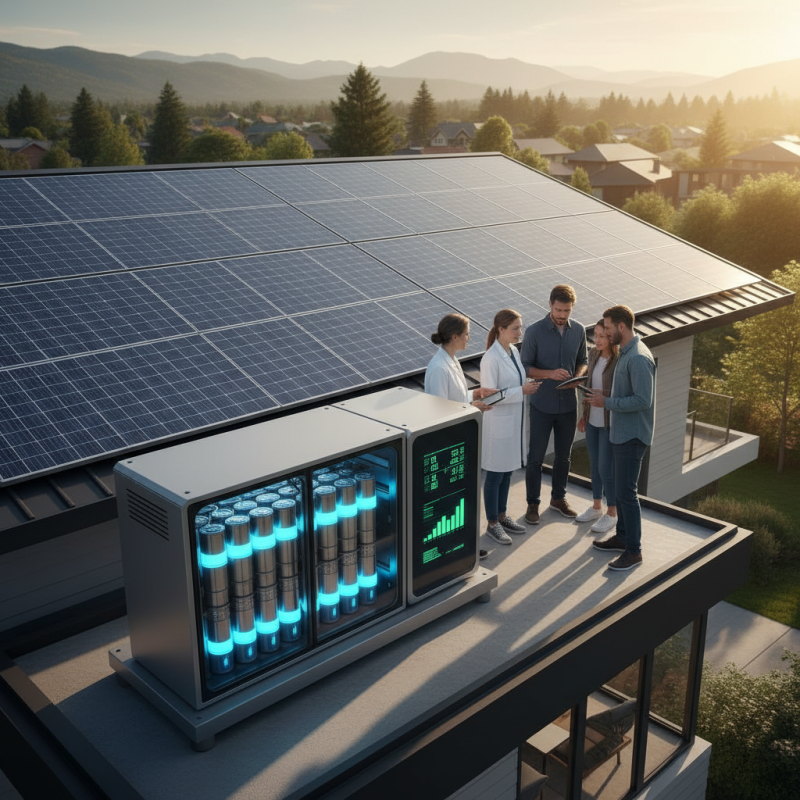
Understanding Lithium Iron Phosphate Battery Technology for Solar Use
Lithium Iron Phosphate (LiFePO4) batteries have gained traction in solar applications due to their performance and safety features. Their thermal stability is noteworthy. They are less prone to overheating compared to other lithium-ion chemistries. A study by the National Renewable Energy Laboratory indicates that LiFePO4 batteries have a cycle life of over 2,000 cycles, doubling the lifespan compared to traditional lead-acid batteries. This longevity is crucial when selecting a battery for solar energy storage.
In terms of environmental impact, LiFePO4 batteries are a greener option. They do not contain toxic heavy metals, making them safer to dispose of. However, their lower energy density means they occupy more physical space. A recent report by Wood Mackenzie suggests that while these batteries are efficient, they may require larger installations, raising possible logistical concerns.
Cost also plays a pivotal role in decision-making. While LiFePO4 batteries can be more expensive upfront, their durability can lead to lower long-term costs. The initial investment may deter some users, even though the return on investment is often substantial. Evaluating space requirements and budget constraints is essential.
Top Tips for Choosing Solar Lithium Iron Phosphate Battery
This chart illustrates key specifications for Lithium Iron Phosphate (LiFePO4) batteries, commonly used in solar applications. Understanding these metrics can help you make an informed choice when selecting a battery for solar energy storage.
Evaluating Battery Capacity and Performance for Your Energy Needs
When evaluating battery capacity, consider your energy consumption patterns. List appliances that will use the battery. Calculate their power requirements in watt-hours. This helps you determine the total energy storage needed. For instance, a fridge may need 100-200 watts. A few lights might require another 30-50 watts. Add these values to understand your minimum capacity.
Next, assess the performance of lithium iron phosphate (LiFePO4) batteries. Look for cycle life, efficiency, and discharge rates. Typically, LiFePO4 batteries offer longer lifespans than other lithium types. However, their performance can vary. Testing rates are often overestimated by manufacturers. Consider real user reviews for a more accurate perspective.
Pay attention to temperature tolerance and safety features. These are crucial, especially in extreme conditions. A battery that performs well in mild climates may falter elsewhere. Check if the battery has built-in protection against overcharging and short circuits. Understanding these details can prevent potential issues down the line and ensure your investment in solar energy is effective.
Considerations for Battery Lifespan and Cycle Durability
When selecting a solar lithium iron phosphate battery, considering the battery's lifespan and cycle durability is crucial. These factors directly impact overall efficiency and cost-effectiveness. A longer lifespan means fewer replacements, saving you money over time.
Cycle durability reflects how many charging cycles the battery can endure before significant capacity loss occurs. This can prevent premature failures and enhance your solar system's reliability.
One important tip is to look for batteries with extensive cycle life ratings. Typically, a battery with more than 3000 cycles indicates good quality. It's essential to compare these ratings across different products. Additionally, observe temperature specifications. Higher temperatures can shorten a battery's lifespan. Developing a thorough understanding of the environment will aid in making an informed choice.
Another aspect to consider is warranty. A solid warranty suggests manufacturer confidence in their product's longevity. Note, however, that it won't cover everything. Ask questions about warranty conditions. Ultimately, it's about balancing performance and cost. These considerations may seem overwhelming, but they are key for long-term satisfaction. Don't rush. Take your time when making the choice. Reflect on your unique energy needs, and aim for a battery that stands the test of time.
Assessing Safety Features and Certifications for Solar Batteries
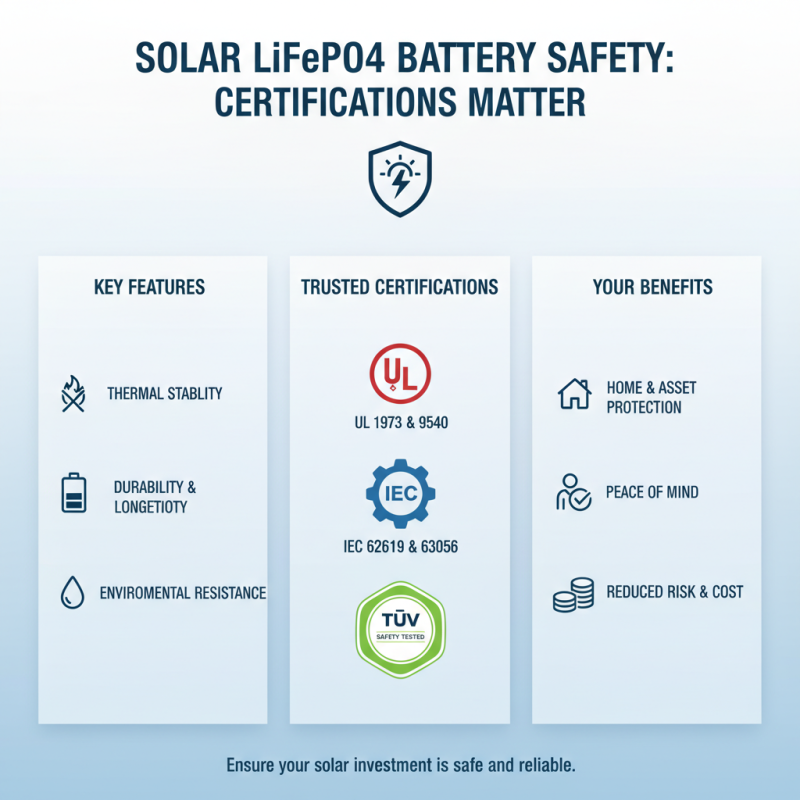
When selecting solar lithium iron phosphate batteries, assessing safety features and certifications is vital. Look for batteries that come with certifications from recognized safety organizations. These certifications indicate the battery meets stringent safety standards. This ensures that it can withstand various environmental conditions without posing safety risks.
Pay attention to specific safety features like thermal management systems. A well-designed thermal management system can prevent overheating. Also, check for short circuit and overcharge protection. These features increase battery lifespan and enhance user safety. Some batteries even have fire-resistant casings, which add another layer of protection.
However, not all safety features are easily visible. Some batteries may look safe but lack essential certifications. Always research and ask questions about these features. It's better to invest time upfront. Consider your specific energy needs and how the battery will be used. This reflection can help guide your decision, ensuring a safe and efficient choice for your solar energy system.
Cost Analysis: Budgeting for a Lithium Iron Phosphate Solar Battery Setup
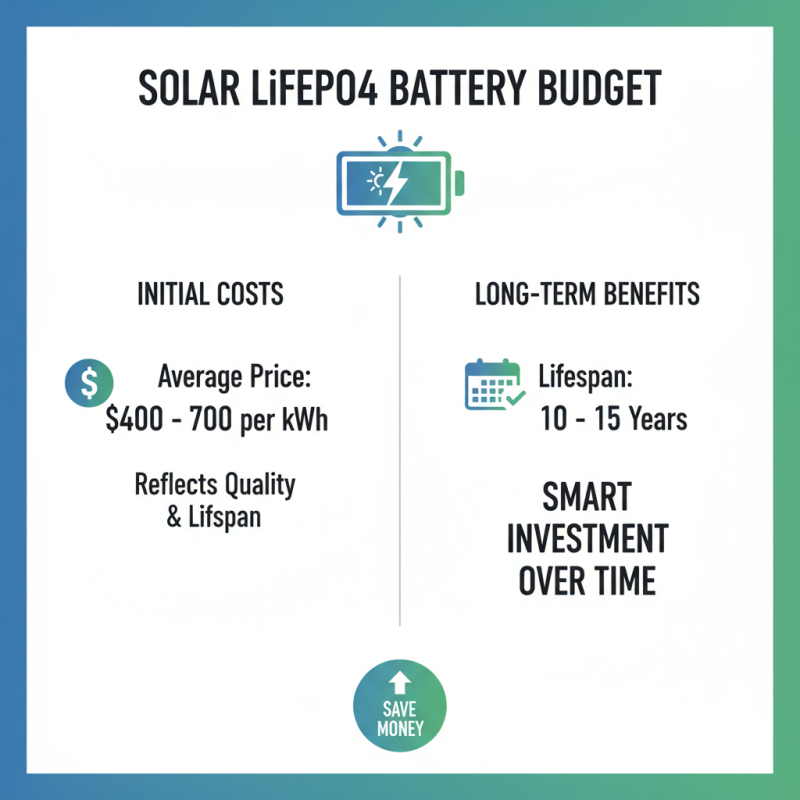
When budgeting for a solar lithium iron phosphate (LiFePO4) battery setup, consider initial costs and long-term benefits. Reports indicate that the average price of these batteries ranges from $400 to $700 per kWh. This pricing often reflects the quality and lifespan of the battery. However, while upfront costs can be high, these batteries typically last between 10 to 15 years, making them a good investment over time.
Energy storage systems require additional components as well. Include inverters, charge controllers, and installation costs. A complete setup may lead to total expenses of $7,000 to $20,000. Many homeowners struggle with these figures. They often overlook future savings from reduced electricity bills. According to studies, investing in solar technology can save a household up to 80% on energy costs annually.
It's crucial to analyze energy needs before purchasing. Calculate average daily consumption and necessary battery size. Small oversights here can lead to underperformance. A poorly designed system might not provide adequate electricity, leaving users dissatisfied. Remember, the right setup should balance cost and efficiency for optimal performance.