留下你的信息

Top 10 E Scooter Lithium Battery Manufacturers in China

Choosing an E Scooter Lithium Battery manufacturer is about more than comparing prices or advertised capacity. Buyers need to understand how a supplier manages cell selection, battery management systems, assembly, testing, and after-sales support. These details can affect range consistency, charging behavior, product lifespan, and the reliability of an electric scooter in everyday use.

China has a broad ecosystem of battery producers, but manufacturers differ in scale, technical focus, customization options, and communication practices. This overview introduces ten companies for buyers to investigate, not as a substitute for direct evaluation. Ask for clear specifications, documented quality procedures, warranty terms, and evidence of testing relevant to your intended market. Confirm that a proposed pack fits the scooter’s voltage, dimensions, connectors, and operating requirements. Details matter.

A polished product page cannot answer every question. Request sample documentation and discuss how the supplier handles production changes, fault reports, and replacement parts. Where possible, compare responses with independent technical advice and your own application requirements. No ranking can settle every buyer’s question, and company information may change over time. Even a capable supplier may not suit every project. Use this list as a practical starting point, then verify the details before making a purchasing decision.
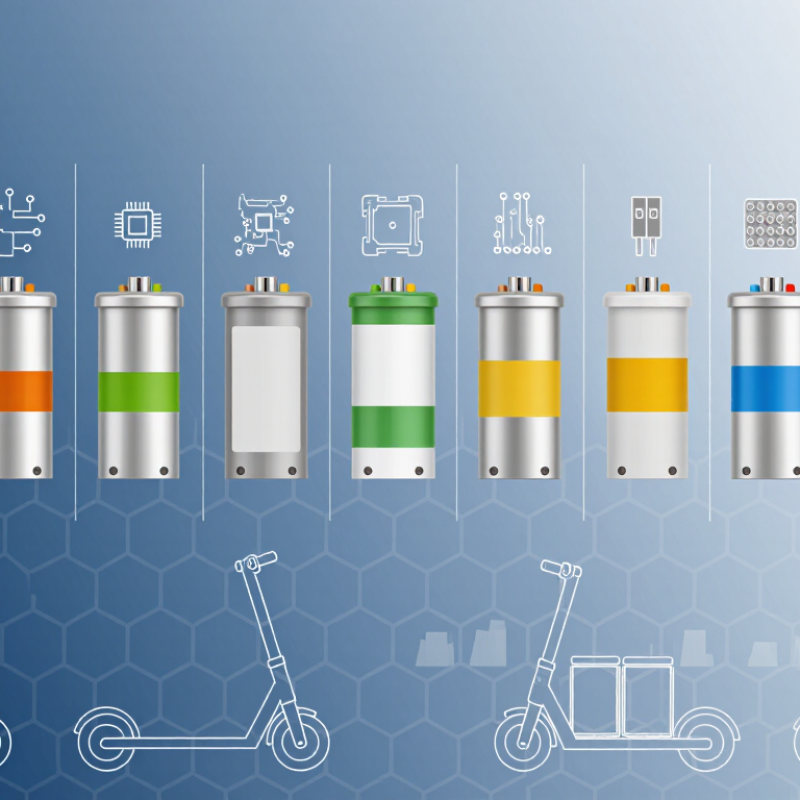
Top 10 E Scooter Lithium Battery Manufacturers in China

China’s E-Scooter Lithium Battery Industry: Market and Manufacturing Overview

Top 10 E Scooter Lithium Battery Manufacturers in China

China’s E-Scooter Lithium Battery Industry: Market and Manufacturing Overview

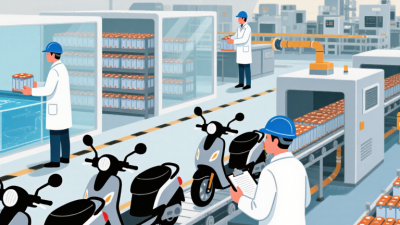
China’s e-scooter battery industry combines cell sourcing, battery-pack assembly, battery management systems, and testing. Manufacturers often adjust pack dimensions, voltage, and capacity to fit a scooter’s frame and expected range. Production scale can support varied order sizes, but a large factory alone does not guarantee consistent quality. Buyers should check traceable test records and ask how suppliers handle cell variation, heat, vibration, and aging.

Manufacturing typically involves cell inspection, pack assembly, wiring, enclosure sealing, and electrical checks. A reliable evaluation looks beyond advertised capacity: confirm usable energy, charging limits, protection functions, and performance under realistic temperatures. Ask for documented inspection procedures and sample results, then compare them with the intended vehicle and riding conditions. Specifications differ between suppliers, and published figures may not reflect everyday use. That gap deserves attention.
Battery Types, Key Components, and Safety Standards

E-scooter packs commonly use lithium-ion cells based on nickel-rich NMC or lithium iron phosphate (LFP). NMC offers high energy density; LFP generally favors thermal stability and long cycle life. Chemistry matters. The IEA’s Global EV Outlook 2024 reports that LFP supplied nearly 40% of global electric-car battery sales in 2023. That figure covers cars, not scooters, but it shows the chemistry’s growing industrial relevance.

A reliable pack is more than cells in a case. Its battery management system monitors voltage, current, and temperature, then limits charging or discharging when readings exceed safe ranges. Matched cells, welded connections, insulation, and a sturdy enclosure also matter. Heat changes everything. In practice, poor cell matching or weak joints can undermine an otherwise well-designed pack; a neat specification sheet cannot reveal every assembly flaw.

Safety checks should cover both cells and the complete battery system. IEC 62133-2 addresses portable sealed lithium cells and batteries, while UL 2271 covers light electric vehicle batteries and UL 2272 evaluates personal e-mobility electrical systems. China’s GB 43854-2024 sets safety requirements for lithium-ion batteries used in electric bicycles; it is not a scooter-specific standard. Requirements vary by market, and certification is not a substitute for careful design, inspection, and traceable production records. One point deserves scrutiny: paperwork can look more reassuring than the pack itself.

How to Evaluate Chinese E-Scooter Battery Manufacturers

Evaluating a Chinese e-scooter battery manufacturer starts with evidence, not catalog claims. The IEA’s 2022 report, Global Supply Chains of EV Batteries, estimated that China held nearly 75% of global battery-cell manufacturing capacity in 2021. Scale is not proof of quality. Ask for traceable cell-batch records, production dates, and incoming inspection data. Compare a regular production sample with the supplier’s specifications. A polished sample alone proves little.

Inspect the battery management system, weld consistency, insulation, and pack sealing. Ask for independently verified safety-test reports and shipment-test records. Check how cycle life was measured, including temperature, discharge rate, and cutoff voltage. Without those conditions, a cycle-life figure is hard to compare. Request warranty terms and anonymized defect data from real production, then confirm how problems are investigated. During an audit, follow one battery from cell receipt to final testing. Does each stage leave a record? No single certificate settles every question. I would still ask whether the factory can explain a failed test clearly; that answer can be more revealing than another sales presentation.

Top 10 E-Scooter Lithium Battery Manufacturers in China — How to Evaluate Chinese E-Scooter Battery Manufacturers

Nominal Pack Voltage by Cell Series Count

A technical reference for checking whether a supplier’s stated pack voltage matches its cell configuration.

Values are calculated using a nominal cell voltage of 3.6 V: pack voltage = series cell count × nominal cell voltage. When evaluating a manufacturer, confirm the cell chemistry, series count, and cell specifications against the quoted pack voltage. These figures describe configurations, not company rankings or measured market data.

Profiles of 10 Leading E-Scooter Lithium Battery Manufacturers in China

China’s e-scooter battery sector includes manufacturers with different strengths. One profile centers on cell selection and consistent pack assembly. Another focuses on high-volume production, where repeatable processes matter more than impressive factory claims. A third offers custom pack layouts for narrow scooter frames. Space is tight. A fourth develops battery-management systems that monitor voltage, temperature, and charging behavior.

A fifth manufacturer may specialize in lightweight packs for commuter scooters. A sixth builds more rugged enclosures for frequent outdoor use. Another supports scooter makers with prototype and original-equipment production. An eighth emphasizes traceability, including documented checks on incoming cells and finished packs. A ninth invests in testing equipment for capacity, vibration, and thermal performance. A tenth may stand out through responsive engineering support after delivery.

These are useful distinctions, not a ranking.

Buyers should request test reports, sample packs, and clear warranty terms. A large stated capacity alone proves little. Ask how performance is measured, and under what conditions. Even a capable supplier can miss a project’s needs if communication is slow or specifications remain vague. That deserves a closer look.

Comparing Manufacturers by Capacity, Technology, and After-Sales Support

Comparing Chinese e-scooter battery manufacturers takes more than checking factory size. The IEA’s Global EV Outlook 2024 estimates that China held nearly 85% of global battery-cell manufacturing capacity in 2023. That scale is useful context, but it does not prove a supplier can deliver consistent scooter packs. Ask for monthly output, actual lead times, and traceable cell records. Rated capacity and delivered capacity are not the same.

Technology deserves close inspection. Compare cell chemistry, battery management system protections, cycle-life test conditions, and pack-level thermal results. The IEA’s Batteries and Secure Energy Transitions report puts global battery demand at about 750 GWh in 2023, with electric vehicles accounting for nearly 90%. That broad figure signals a fast-growing industry, not scooter-specific performance. Request test reports for the exact pack configuration, including performance after repeated charge cycles. Small details matter.

After-sales support can separate similar offers. Check warranty exclusions, replacement-part availability, and how quickly technical teams answer fault reports. Ask what happens when a pack loses capacity early, and request the remedy in writing. A spreadsheet cannot capture every issue. I have seen buyers focus on price, then struggle to identify the right replacement connector. That is a modest detail, yet it can stall repairs. The strongest comparison weighs verified capacity, documented testing, and practical support together.