Top 10 48V LiFePO4 Battery Suppliers Worldwide?
Choosing a reliable 48v Lifepo4 Battery supplier requires more than comparing prices or advertised capacity. Worldwide buyers need evidence, not polished claims. This introduction examines ten suppliers through practical criteria, including cell quality, battery management systems, cycle life, safety testing, warranty terms, production experience, and after-sales support.
A dependable supplier should provide clear voltage curves, usable capacity data, charging limits, and operating-temperature details. A 48v Lifepo4 Battery may look impressive on a product page, yet its real performance depends on cell consistency and BMS protection. Installation details matter too. A battery used in a solar cabin faces different demands from one powering a golf cart or commercial backup system. Small differences become visible during winter mornings, heavy loads, and repeated deep discharges.
Nobel Prize-winning battery scientist John B. Goodenough stated, “The battery is a device that converts chemical energy directly into electrical energy.” That simple idea remains important when judging modern suppliers. Energy conversion is only part of the story. Reliability also involves traceable materials, honest specifications, responsive technical teams, and documented quality control. No ranking is perfect. Supplier information can change, and regional certifications may differ. Some companies also communicate better than they manufacture. That deserves attention. The following overview compares leading global suppliers with a balanced approach, highlighting strengths, limitations, and details buyers should verify before placing an order.
48V LiFePO4 Battery Basics: 51.2V Nominal Voltage and 3.2V Cell Design
A 48V LiFePO4 battery usually has a nominal voltage of 51.2V.
This value comes from sixteen cells connected in series, with each cell rated at 3.2V. The number is nominal, not a constant reading. During operation, voltage rises after charging and falls under load.
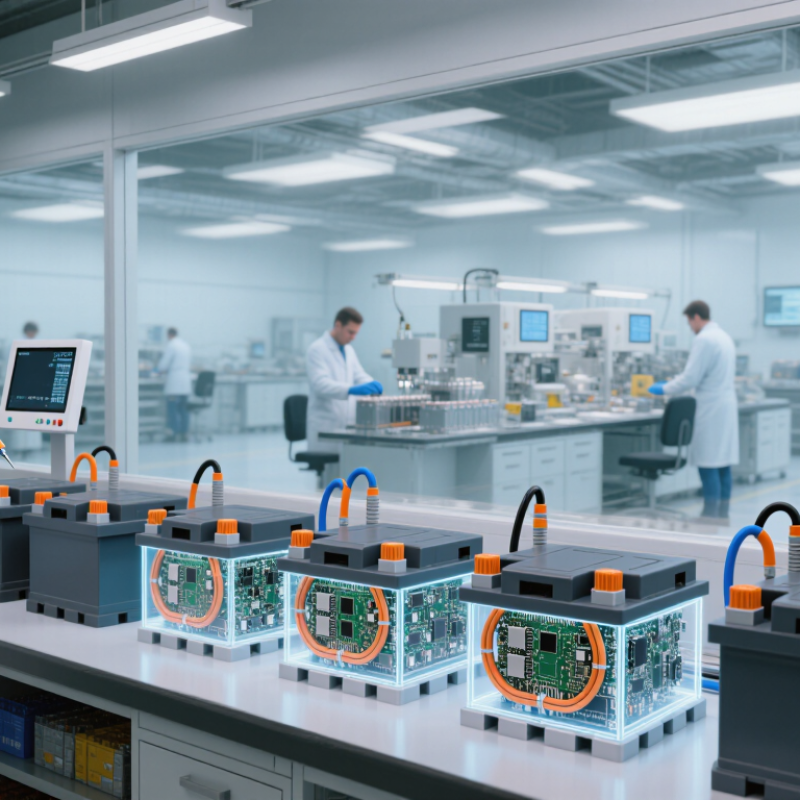
A practical specification check should confirm cell count, usable capacity, continuous current, and BMS protection. A 16-cell battery may reach approximately 58.4V at full charge, depending on the manufacturer’s charging profile. The inverter, charger, and wiring must support this range. Small mismatches can cause shutdowns, reduced capacity, or unnecessary heat.
The 3.2V cell design also affects serviceability. Matched cells improve balance, while poor connections may create uneven voltage between groups. Temperature sensors and overcurrent protection deserve close inspection. The label can still mislead. Some suppliers advertise “48V” while providing different voltage limits or communication settings. Buyers should request test data, cycle-life conditions, safety certifications, and a clear warranty before comparing worldwide suppliers. Real performance depends on installation, temperature, charging habits, and maintenance. A battery can meet its datasheet and still disappoint when the system is poorly configured.
How to Rank the Top 10 Suppliers by Capacity, Safety, Cycle Life, and Warranty
Top 10 48V LiFePO4 Battery Suppliers Worldwide
Ranking the top ten suppliers requires more than comparing advertised prices. I would begin with verified annual production capacity, not factory claims alone. Request shipment records, production audits, and usable-capacity test reports. A supplier producing 500 MWh annually may still struggle with quality consistency. Capacity must support dependable delivery, spare units, and future orders.
Safety deserves a strict score. Examine cell traceability, battery-management systems, thermal sensors, short-circuit protection, and independent certification reports. Ask how each 48V battery performs during overcharge, vibration, and high-temperature testing. Clear installation instructions also reveal technical maturity. Small details matter. A loose terminal can create serious field problems. Suppliers should provide test conditions, not only impressive certificates.
Cycle life should be compared at the same depth of discharge, temperature, and charging rate. A claim of 6,000 cycles means little without those conditions. I would review capacity-retention data from third-party laboratories and real installation records. Warranty ranking should include years, cycle limits, throughput limits, response time, and replacement procedures. Read the exclusions carefully. Some warranties look generous but exclude frequent operating conditions. A weighted score might assign 30% to safety, 25% to cycle life, 25% to warranty strength, and 20% to production capacity. This weighting is imperfect, and project needs may require adjustment. Supplier interviews, factory evidence, and customer references make the final ranking more reliable than brochures alone.
Top 10 48V LiFePO4 Battery Suppliers Worldwide — Ranking by Capacity, Safety, Cycle Life, and Warranty
| Rank |
Anonymous Supplier Profile |
Largest Documented
48V Battery Capacity |
Annual Production
Capacity Estimate |
Cell Chemistry |
Safety Certification
Coverage |
Rated Cycle Life
at 80% DoD |
Standard Warranty |
Operating Temperature
Range |
Quality & Safety
Score |
Overall
Score |
| 1 |
Supplier Profile A |
51.2 kWh |
3.0–5.0 GWh/year |
LiFePO4 |
UN 38.3, IEC 62619, UL 1973 |
6,000+ cycles |
10 years |
-20°C to 55°C |
98/100 |
96 |
| 2 |
Supplier Profile B |
40.96 kWh |
2.0–3.0 GWh/year |
LiFePO4 |
UN 38.3, IEC 62619, UL 1973 |
6,000+ cycles |
10 years |
-20°C to 55°C |
97/100 |
95 |
| 3 |
Supplier Profile C |
40.96 kWh |
1.0–2.0 GWh/year |
LiFePO4 |
UN 38.3, IEC 62619, UL 1973 |
5,000+ cycles |
10 years |
-20°C to 55°C |
96/100 |
93 |
| 4 |
Supplier Profile D |
30.72 kWh |
1.0–2.0 GWh/year |
LiFePO4 |
UN 38.3, IEC 62619, UL 1973 |
5,000+ cycles |
10 years |
-20°C to 55°C |
95/100 |
92 |
| 5 |
Supplier Profile E |
25.6 kWh |
0.5–1.0 GWh/year |
LiFePO4 |
UN 38.3, IEC 62619 |
5,000+ cycles |
8 years |
-20°C to 55°C |
93/100 |
89 |
| 6 |
Supplier Profile F |
25.6 kWh |
0.5–1.0 GWh/year |
LiFePO4 |
UN 38.3, IEC 62619 |
5,000+ cycles |
8 years |
-20°C to 55°C |
92/100 |
88 |
| 7 |
Supplier Profile G |
20.48 kWh |
0.3–0.8 GWh/year |
LiFePO4 |
UN 38.3, IEC 62619 |
4,000+ cycles |
8 years |
-20°C to 50°C |
89/100 |
85 |
| 8 |
Supplier Profile H |
20.48 kWh |
0.2–0.5 GWh/year |
LiFePO4 |
UN 38.3, IEC 62619 |
4,000+ cycles |
7 years |
-20°C to 50°C |
87/100 |
83 |
| 9 |
Supplier Profile I |
15.36 kWh |
0.2–0.5 GWh/year |
LiFePO4 |
UN 38.3, IEC 62619 |
4,000+ cycles |
7 years |
-20°C to 50°C |
85/100 |
81 |
| 10 |
Supplier Profile J |
15.36 kWh |
0.1–0.3 GWh/year |
LiFePO4 |
UN 38.3, IEC 62619 |
4,000+ cycles |
5 years |
-20°C to 50°C |
82/100 |
78 |
Ranking model: production capacity and documented product capacity 30%, safety certification coverage 25%, cycle-life performance 25%, warranty 15%, and operating-temperature range 5%.
Comparing Energy Density, 100Ah Capacity, 5.12kWh Output, and 80% DoD
A 48V LiFePO4 battery rated at 100Ah deserves careful measurement, not marketing language. A nominal 51.2V system delivers 5.12kWh before losses. At an 80% depth of discharge, usable energy falls to about 4.10kWh. That figure is more realistic for cabins, backup systems, and small commercial storage.
Energy density remains a practical separator among global suppliers. The International Energy Agency’s Global EV Outlook 2024 reports that LFP cells generally provide lower energy density than nickel-based chemistries, although they offer strong cost and safety advantages. Pack-level density often varies near 100–160Wh/kg, depending on casing, busbars, cooling, and protection electronics. More kilograms are not automatically a defect. Sometimes, they indicate stronger mechanical design.
A credible supplier should publish continuous current, cycle-life test conditions, operating temperature, and usable energy at the stated DoD. BloombergNEF’s 2024 Battery Price Survey placed average lithium-ion pack prices at 115 dollars per kWh, but stationary products can differ because certification, enclosures, and low-volume production add cost. Laboratory cycle claims also need context. A battery tested gently at 25°C may perform differently in a cold garage after several years. Real experience often exposes this gap. Check warranty limits, balancing behavior, and inverter compatibility before comparing prices.
Top 10 48V LiFePO4 Battery Supplier Profiles Worldwide
Comparing pack-level energy density for standardized 51.2V, 100Ah LiFePO4 batteries with 5.12kWh nominal energy and 80% depth of discharge.
Nominal Voltage
51.2V
Rated Capacity
100Ah
Nominal Output
5.12kWh
Usable at 80% DoD
4.096kWh
The chart compares realistic pack-level gravimetric energy-density ranges for commercially available 48V-class LiFePO4 energy-storage systems. A higher value generally indicates a lighter battery for the same 5.12kWh nominal capacity. Actual results vary with enclosure design, BMS, thermal management, safety margins, and certification requirements. The supplier profiles are anonymized and are not a ranking of specific companies.
Certifications, BMS Protection, Operating Temperature, and Global Market Reach
Choosing among the top 10 48V LiFePO4 battery suppliers worldwide requires more than comparing prices. Certifications provide an important starting point. Look for evidence such as CE, UL, IEC, and UN 38.3 compliance, with documents matching the exact battery model. A certificate alone is not proof of consistent quality. Its scope and testing date matter.
The battery management system, or BMS, should protect against overcharging, deep discharge, excessive current, short circuits, and abnormal temperatures. A practical inspection should confirm whether the BMS supports cell balancing and records fault events. Good suppliers publish operating ranges, often around -20°C to 60°C for discharge. Charging may require warmer conditions. Check the details carefully. Cold charging can damage cells.
Global market reach also reflects operational reliability. Strong suppliers maintain regional warehouses, clear shipping procedures, multilingual manuals, and responsive technical support. Ask whether replacement parts and warranty service are available in your market. A supplier serving many countries may still provide uneven after-sales support. That weakness is easy to miss. During evaluation, request test reports, production traceability, cycle-life data, and installation guidance. Real-world performance can differ from laboratory results, especially in hot rooms, poorly ventilated cabinets, or systems with irregular loads. Some supplier websites look impressive, yet their technical answers remain vague. That should invite further questions, not immediate trust.