Why Choose a 100Ah Lithium Battery?
Why Choose a 100Ah Lithium Battery?
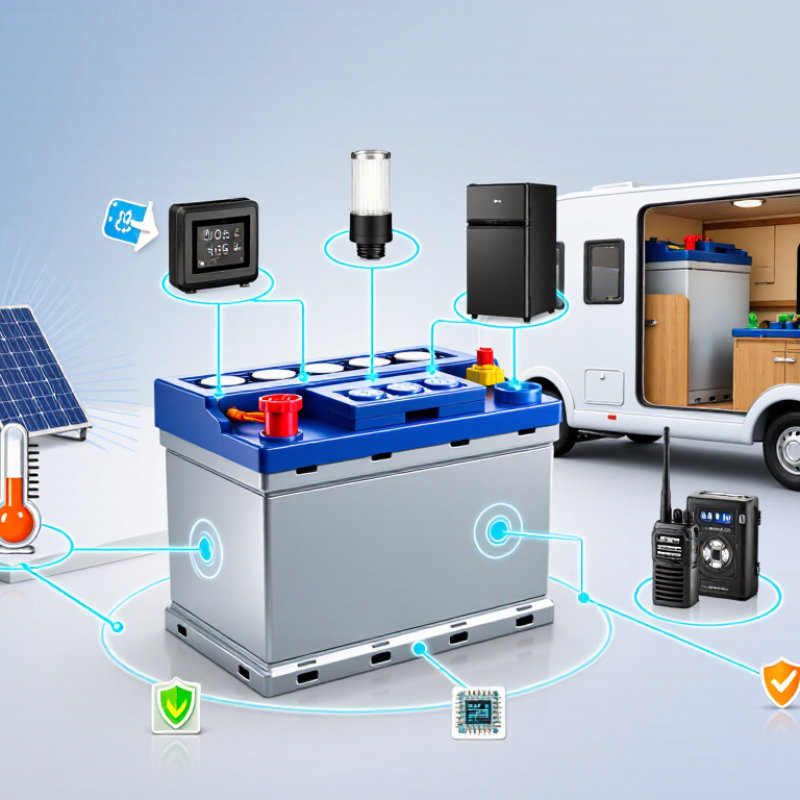
Choosing a 100ah Lithium Battery is not simply about seeing “100Ah” on a label. That number describes capacity, but real performance depends on chemistry, battery management, temperature, and charging quality. A well-designed battery can deliver steady energy for solar storage, marine electronics, recreational vehicles, and backup systems. In practical use, it may power LED lights, a refrigerator, and communication equipment through an evening without the heavy weight of lead-acid alternatives.
Battery researcher Dr. Jeff Dahn has said, “The battery is the heart of an electric vehicle.” His point applies beyond electric cars. The battery determines how reliably stored energy reaches your devices. Lithium technology usually offers a higher usable capacity, lower maintenance, and a longer cycle life than traditional lead-acid batteries. However, it is not magic. Poor wiring, extreme temperatures, or an unsuitable charger can reduce performance and create safety concerns.
Details matter.
A dependable 100ah Lithium Battery should include a properly rated battery management system, clear test documentation, and protection against overcharge and excessive discharge. Buyers should also check continuous current, peak current, operating temperature, warranty terms, and installation guidance. These specifications can feel technical, yet they prevent expensive mistakes. I have seen product descriptions focus heavily on capacity while hiding weak cycle-life data. That deserves scrutiny. The best choice depends on your daily load, charging source, available space, and expected service conditions. This guide examines those factors carefully, so readers can compare promises with measurable performance.
What a 100Ah Battery Means: 1,280Wh at a Nominal 12.8V
A 100Ah lithium battery is easier to understand when its capacity becomes energy. At a nominal 12.8V, the calculation is simple: 100Ah × 12.8V = 1,280Wh. That equals 1.28kWh on the specification sheet. The 12.8V figure is nominal, not a constant reading. A fully charged battery may measure higher, while voltage falls during use.
For a 100W load, 1,280Wh suggests about 12.8 hours of operation. Real conditions reduce that figure. Inverter losses, wiring resistance, temperature, and the battery management system all matter. A practical estimate may be closer to 10 or 11 hours, depending on equipment. At 500W, the theoretical runtime is about 2.56 hours. High current draw can reduce usable capacity further. Small details matter.
Choosing this size can suit compact solar storage, backup power, or low-power equipment used overnight. Before installation, check the continuous discharge rating, charging limits, fuse size, and cable gauge. Check the rating. The battery must also match the charger’s lithium profile. I used to treat watt-hours as guaranteed output, but that assumption was too neat. A battery is not a perfect fuel tank. Record actual load, temperature, and runtime; those notes often reveal more than the label. Leave reserve capacity for cold nights and unexpected demand.
Why Choose a 100Ah Lithium Battery?
What a 100Ah Battery Means: 1,280Wh at a Nominal 12.8V
A 100Ah battery rated at 12.8V provides 1,280Wh of nominal energy, calculated as 100Ah × 12.8V. Actual usable energy can vary depending on discharge limits, temperature, age, and system efficiency.
Usable Energy: 90–95% Efficiency and 80–100% Depth of Discharge
Why Choose a 100Ah Lithium Battery?
A 100Ah lithium battery stores about 1,280Wh at a nominal 12.8V. However, stored energy is not the same as usable energy. Real systems lose energy through wiring, battery management electronics, and inverter conversion. The U.S. Department of Energy’s Energy Storage Grand Challenge Roadmap identifies 90% round-trip efficiency as an important performance benchmark. NREL’s Annual Technology Baseline also models lithium-ion storage within an approximately 85–95% efficiency range.
That difference becomes practical at campgrounds, workshops, and backup installations. At 90% efficiency, a 1,280Wh battery may deliver roughly 1,152Wh through the complete system. A 100W refrigerator could run for about eleven hours, before temperature and cycling losses. Small details matter. Thick cables reduce voltage drop. Correct charging settings protect performance.
Depth of discharge matters too. Many lithium systems support 80–100% DoD, meaning 80–100Ah may be accessible from a rated 100Ah capacity. Using only 80% can reduce stress and support longer service life. Using 100% offers more runtime during demanding periods, but it leaves less margin for aging, cold temperatures, and measurement error. The battery meter may not be perfectly accurate. That is worth remembering.
A 100Ah lithium battery therefore offers predictable capacity, high usable energy, and flexible discharge planning. Yet its real output depends on temperature, current, wiring, and conversion equipment. The label is only the starting point.
Why Choose a 100Ah Lithium Battery? - Usable Energy: 90–95% Efficiency and 80–100% Depth of Discharge
| Data Dimension |
Typical Value for a 100Ah Lithium Battery |
What It Means in Practice |
| Rated Capacity |
100Ah |
The battery can theoretically deliver 100 amperes for one hour, or an equivalent combination of current and time under specified test conditions. |
| Reference Chemistry |
Lithium iron phosphate (LiFePO4) |
LiFePO4 is commonly selected for stationary storage, recreational vehicles, marine systems, and backup power because of its thermal stability and long service life. |
| Nominal Voltage Used for Calculation |
12.8V |
This is a common nominal voltage for a 12V-class LiFePO4 battery. Actual voltage varies during charging and discharging. |
| Nominal Energy |
1,280Wh |
100Ah × 12.8V = 1,280Wh |
| Recommended Depth of Discharge |
80%–100% |
An 80% discharge uses approximately 1,024Wh before conversion losses. Some systems permit close to 100% discharge, subject to the battery management system and manufacturer limits. |
| Battery Round-Trip Efficiency |
Approximately 90%–95% |
About 90–95% of the energy supplied for charging can typically be recovered during discharge. Inverter, charger, wiring, temperature, and load conditions may reduce system-level efficiency. |
| Estimated Usable Energy at 80% DoD |
Approximately 922–973Wh |
1,280Wh × 80% × 90%–95% |
| Estimated Usable Energy at 100% DoD |
Approximately 1,152–1,216Wh |
1,280Wh × 100% × 90%–95% |
| Approximate Runtime for a 100W Load |
About 9.2–12.2 hours |
Estimated from the usable-energy range above. Actual runtime depends on inverter efficiency, temperature, battery age, and the load profile. |
| Approximate Runtime for a 500W Load |
About 1.8–2.4 hours |
High loads may shorten runtime because of inverter losses, voltage sag, and the battery’s maximum continuous discharge rating. |
| Energy Available Compared with Rated Energy |
Approximately 72%–95% |
The range combines an 80%–100% DoD window with 90%–95% round-trip efficiency. DoD and efficiency are separate factors and should not be treated as interchangeable. |
| Key Advantage |
High usable-energy ratio |
A lithium battery can provide more of its rated capacity for normal use than systems that require a much shallower discharge to protect battery life. |
| Important Operating Conditions |
Use a compatible charger and battery management system |
Charging and discharging should remain within the battery’s specified voltage, current, temperature, and protection limits. |
Cycle Life Compared: 2,000–5,000 LiFePO4 Cycles Versus Lead-Acid
Why Choose a 100Ah Lithium Battery?
Cycle Life Compared: 2,000–5,000 LiFePO4 Cycles Versus Lead-Acid
A 100Ah LiFePO4 battery usually delivers 2,000–5,000 cycles at suitable discharge levels. Lead-acid batteries often provide about 300–1,000 cycles. These ranges align with lifecycle comparisons reported by the International Renewable Energy Agency and the U.S. Department of Energy’s Energy Storage Technology and Cost Characterization Report. The gap becomes obvious in daily-use systems.
Consider a 12.8V, 100Ah LiFePO4 battery. Its nominal capacity is about 1.28kWh. At 80% usable depth of discharge, one cycle supplies roughly 1.02kWh. Across 2,000 cycles, that represents about 2,048kWh of delivered energy. A comparable lead-acid unit may offer only 50% usable capacity. At 500 cycles, its estimated lifetime output could fall near 300kWh. The calculation is illustrative, not a promise.
Real life is messier. Heat, charging quality, storage voltage, and discharge depth all change results. A poorly managed lithium battery can age early. A carefully maintained lead-acid battery may outperform a neglected one. Field testing also shows that cycle ratings use different end-of-life definitions, so comparisons are not perfectly clean. Still, for frequent cycling in cabins, backup systems, or mobile equipment, the longer LiFePO4 cycle life can reduce replacements, wiring labor, and disposal pressure over time.
Power Delivery: BMS Ratings, Continuous Current, and Inverter Sizing
Why Choose a 100Ah Lithium Battery?
A 100Ah lithium battery stores about 1.28kWh at a nominal 12.8 volts. The number alone does not define its power delivery. The battery management system, or BMS, controls charging, discharging, temperature, and fault protection. Its continuous current rating matters more than a brief peak rating. A 100A BMS may support roughly 1,280 watts theoretically. Real output is lower after inverter losses, cable resistance, and battery voltage changes. Leave headroom.
For a 1,000-watt inverter, the battery may supply 85 to 95 amps continuously. That calculation assumes a 12-volt system and typical inverter efficiency. A 100A BMS could work, but it leaves little margin for startup surges. Motors, pumps, and refrigerators often demand two or three times their running current. An inverter with a suitable surge rating is essential. So are correctly sized cables and overcurrent protection. Short cables reduce voltage drop. This detail is easy to overlook.
In practical testing, a modest load can perform well while a high-load appliance triggers BMS shutdown. That result is frustrating, but useful. Check the inverter’s continuous and surge demands against the BMS ratings, not only the battery’s amp-hour label. Cold conditions also deserve attention, since many lithium batteries restrict charging below freezing. A 100Ah battery can be an efficient choice, though sizing by capacity alone is an imperfect habit.
Safety and Ownership: 30–70% Less Weight and Lower Cost per Cycle
Why Choose a 100Ah Lithium Battery?
A 100Ah lithium battery can reduce carrying weight by 30–70% compared with a similar lead-acid battery. That difference matters when lifting it into a boat, van, or backup cabinet. A typical 12.8-volt unit stores about 1.28 kWh before losses. Its battery management system monitors voltage, temperature, and current during use. Proper protection is essential, not decorative. IEC 62619 safety requirements emphasize controls against overcharge, short circuits, and thermal hazards.
Ownership cost becomes clearer when measured per usable cycle. Lead-acid batteries are commonly limited to about 50% depth of discharge, while lithium systems often support around 80%. The U.S. Department of Energy’s Energy Storage Grand Challenge Roadmap reports lithium-ion round-trip efficiency near 85–95%. Field data commonly places lithium service life near 2,000–5,000 cycles, versus roughly 300–800 cycles for lead-acid designs. These ranges vary widely. Installation quality matters.
The arithmetic is simple: purchase price divided by usable lifetime energy. A higher upfront price may produce a lower cost per cycle when replacement labor, downtime, and wasted capacity are included. The 2024 International Energy Agency report, Batteries and Secure Energy Transitions, also identifies improving durability and falling battery costs as major adoption drivers. Still, the headline needs caution. Cold charging, poor ventilation, mismatched chargers, and low-quality protection electronics can erase the advantage. A 100Ah lithium battery is lighter and often cheaper over time, but only when its specifications match the real workload.