How to Safely Maintain and Extend the Life of Your E Scooter Lithium Battery
The rapid rise in the popularity of e-scooters has significantly increased the demand for reliable, long-lasting lithium batteries. According to industry reports, the global electric scooter market is projected to reach $41.98 billion by 2027, with a substantial portion attributed to advances in battery technology. Maintaining and extending the life of your E Scooter Lithium Battery is crucial not just for personal investment sustainability but also for environmental considerations, as efficient battery usage reduces waste and enhances the longevity of these vehicles.
Dr. Emily Tran, a leading expert in battery technology and sustainability, emphasizes, "The life cycle of an E Scooter Lithium Battery can be maximized through proper care and maintenance practices, translating to greater efficiency and reduced environmental impact." Her insights highlight the importance of understanding the factors that affect battery performance, including charging habits, temperature regulation, and overall usage patterns. By following best practices in battery maintenance, riders can ensure their e-scooters remain functional and reliable for years to come, ultimately contributing to a more sustainable urban transportation model.
In the ever-evolving landscape of electric mobility, being informed about the maintenance of E Scooter Lithium Batteries is now more vital than ever, not only for optimizing personal mobility solutions but also for fostering a greener future.

Best Practices for Charging Your E Scooter Lithium Battery
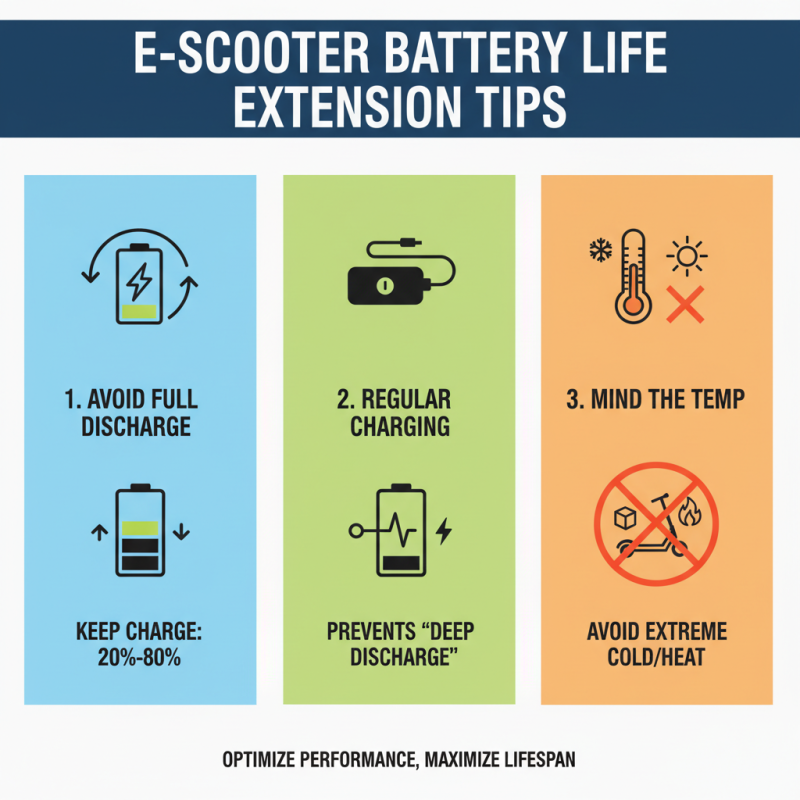
When it comes to extending the life of your e-scooter lithium battery, proper charging practices are essential. One of the best practices is to avoid letting the battery completely discharge. Lithium batteries function best when their charge level stays between 20% and 80%. Regularly charging your battery within this range can help prevent deep discharges and overcharging, both of which can shorten the battery's lifespan. Additionally, avoid using your e-scooter in extremely cold or hot temperatures, as this can impact the battery's performance significantly.
Another key aspect of battery maintenance is utilizing the correct charger. Always use a charger specifically designed for lithium batteries, as using an incorrect charger can lead to overheating or other damage. It’s also advisable to charge your battery in a cool, dry place away from direct sunlight. Keeping an eye on the charging time is crucial; typically, lithium batteries take a few hours to charge fully. Do not leave your battery plugged in for extended periods after it has reached full charge, as this can lead to slow degradation. By following these best practices, you can ensure that your e-scooter battery remains efficient and lasts longer.
Optimal Storage Conditions for Lithium Batteries in E Scooters
When it comes to maintaining and prolonging the lifespan of lithium batteries in e-scooters, optimal storage conditions are crucial. Lithium batteries thrive in environments that are cool and dry. Ideally, they should be stored at temperatures between 20°C to 25°C (68°F to 77°F). High temperatures can cause the battery to degrade faster, while extreme cold can reduce its performance and capacity. Additionally, keeping the battery away from direct sunlight is essential, as prolonged exposure can negatively impact its health.
Humidity is another factor to consider for effective storage. It's important to store the battery in a low-humidity environment, as excessive moisture can lead to corrosion and internal damage. To further protect the battery, consider placing it in a protective case or using silica gel packs to absorb any excess humidity. Regularly checking the battery's charge level during storage is also recommended; keeping it between 40% to 60% charged helps maintain optimal health. By adhering to these storage guidelines, e-scooter users can ensure their lithium batteries remain efficient and have an extended lifespan.
How to Safely Maintain and Extend the Life of Your E Scooter Lithium Battery - Optimal Storage Conditions for Lithium Batteries in E Scooters
| Storage Condition |
Optimal Temperature Range (°C) |
Recommended Charge Level |
Humidity Level (%) |
Location |
| Indoor Storage |
15 - 25 |
40% - 60% |
30 - 50 |
Cool, Dry Area |
| Outdoor Storage |
0 - 30 |
40% - 70% |
20 - 60 |
Shed or Garage |
| Charging Location |
15 - 25 |
50% - 80% |
20 - 50 |
Indoor with Ventilation |
Understanding Battery Life Cycles and Usage for Longevity
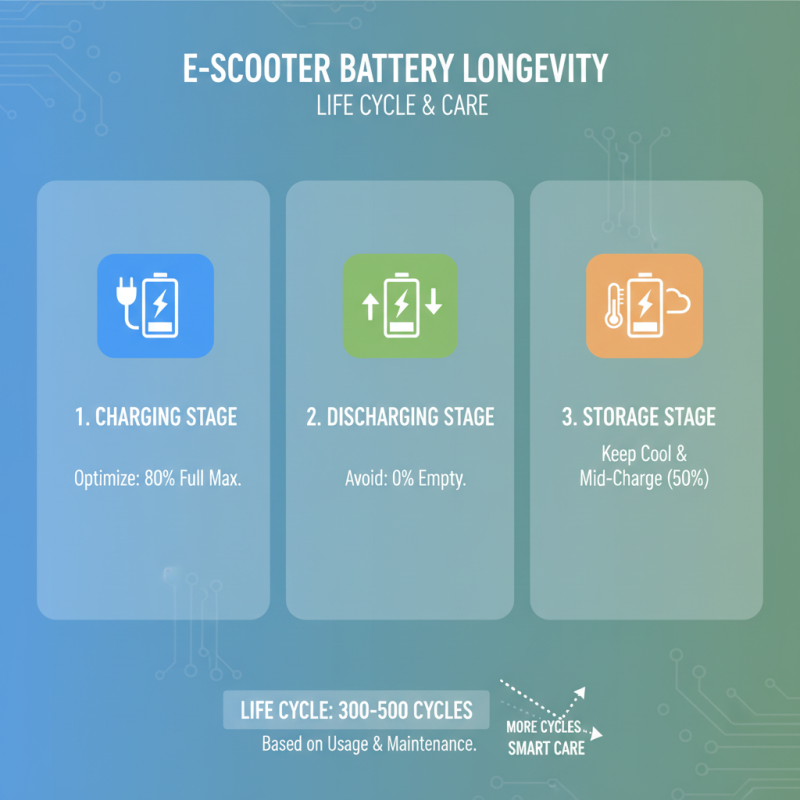
Understanding the life cycle of a lithium battery is crucial for extending the longevity of your e-scooter. Lithium batteries undergo several stages during their lifespan, including charging, discharging, and storage. Each stage affects the battery's overall health and performance. Typically, a lithium battery has a life cycle of 300 to 500 charge-discharge cycles, which can vary based on usage and maintenance. By being mindful of charging and discharging habits, you can significantly enhance the battery's performance over time.
To maximize battery life, consider these tips: First, avoid deep discharging your battery. Keeping it within a 20% to 80% charge range can prevent strain and extend life. Second, charge your battery regularly, but do not keep it plugged in continuously. Once it reaches full charge, unplug it to avoid overcharging, which can lead to damage. Lastly, store your e-scooter in a cool, dry place when not in use; extreme temperatures can degrade battery health.
By understanding these life cycle principles and implementing these practical tips, you can ensure that your e-scooter's lithium battery remains efficient and long-lasting, providing you with a reliable ride for years to come.
Signs of Lithium Battery Degradation and When to Replace
Lithium batteries are fundamental to the operation of e-scooters, providing the necessary power for daily commutes. However, understanding the signs of lithium battery degradation is crucial to ensuring safety and prolonging the lifespan of your device. One primary indicator of battery degradation is a significant drop in range; studies indicate that most lithium batteries will start to show reduced efficiency after approximately 300 to 500 charge cycles. Additionally, if the battery takes longer to charge or overheats during charging, these are red flags signaling that the battery may be nearing the end of its useful life.
Another prominent sign to watch for is physical damage or deformation of the battery casing. According to a report from the International Energy Agency, batteries subjected to extreme temperatures or mechanical stress can experience irreversible damage, leading to a phenomenon known as thermal runaway. Monitoring for swelling or leaks is vital, as these conditions not only affect performance but can also pose safety hazards. If you observe any of these symptoms, it's advisable to consult a professional regarding replacement. Keeping track of these signs ensures that you can safely maintain the e-scooter’s lithium battery, ultimately enhancing both performance and longevity.
Battery Capacity Over Time for E-Scooter Lithium Batteries
This chart illustrates the decline in battery capacity of lithium batteries used in e-scooters over a span of four years. As shown, the battery starts at full capacity but experiences significant degradation over time, indicating the need for proactive maintenance and timely replacement.
Safety Tips for Handling and Maintaining E Scooter Batteries
When it comes to handling and maintaining e-scooter lithium batteries, safety should always be the top priority. First and foremost, avoid exposing the battery to extreme temperatures. High heat can increase the risk of swelling or even thermal runaway, while low temperatures can reduce battery performance. Always store the battery in a cool, dry place, away from direct sunlight and heat sources. Additionally, ensure that the battery terminals are kept clean and free from corrosion, as any buildup can hinder performance and pose safety risks.
When charging your e-scooter battery, it’s essential to use the charger that came with the device, as using a different charger can lead to overcharging or damaging the battery. Never leave the battery charging unattended for extended periods, and unplug it as soon as it’s fully charged. Regularly inspect the battery for any signs of wear, such as cracks or leaks, and if you notice any irregularities, it’s best to replace the battery immediately. By following these safety tips and maintaining a vigilant approach to battery care, you can significantly extend the life of your e-scooter’s lithium battery while ensuring a safe riding experience.