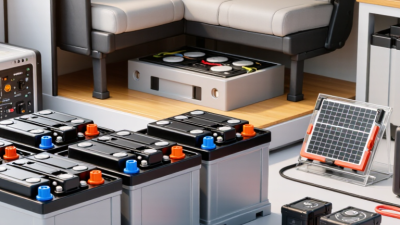
China is a major hub for lithium iron phosphate battery production, but a manufacturer’s location alone says little about product quality. Buyers comparing a Lithium Phosphate Battery Pack should look beyond catalog capacity. Cell traceability, battery management system design, thermal protection, and documented cycle testing all matter. A pack built for an electric bus faces different demands from one installed in a solar-storage cabinet. Details matter.
Battery scientist Dr. Shirley Meng’s research focuses on battery materials and energy storage. A fair paraphrase of the practical lesson from that work is: “Judge a battery by its materials, measured performance, and intended use—not by claims alone.” This is a paraphrase, not a verbatim quotation. It reflects why manufacturer comparisons need evidence, not slogans.
This overview examines Chinese manufacturers through practical questions: Do they disclose cell specifications? Can they explain protection settings and operating limits? Are test reports tied to the model being offered? Buyers should also check warranty terms, production consistency, and after-sales support. A polished sample is not enough. Ask for records. Some supplier information may be incomplete or difficult to compare, so conclusions should remain cautious. The strongest shortlist is built from verifiable documentation, clear technical answers, and a pack matched to its real operating conditions.

Lithium iron phosphate, or LFP, is a rechargeable battery chemistry that uses iron phosphate in its positive electrode. A battery pack connects multiple cells to supply a chosen voltage and capacity. Individual LFP cells typically have a nominal voltage near 3.2 volts; the pack’s voltage depends on how cells are arranged. The chemistry is valued for stable operation and long cycle life, though actual results depend on design and use.
A pack includes more than cells. It may contain busbars, wiring, a protective enclosure, and a battery management system (BMS). The BMS monitors cell voltage and temperature, then helps prevent operation outside set limits. Picture a metal case under a vehicle floor: vibration, heat, and limited airflow all affect how its components must be arranged. Small details matter. LFP cells are generally more thermally stable than some other lithium-ion chemistries, but they still require proper protection and handling.
LFP packs are used in energy storage, electric vehicles, and equipment that needs repeated charging. Their performance can vary with temperature, charging rate, pack construction, and maintenance. A capacity figure on a label does not tell the whole story. It helps to check the operating temperature range, available protection features, and expected cycle conditions for the intended application. Specifications can look reassuring; real-world use is less tidy.
| Dimension | Typical LFP Battery Pack Information | What Buyers Should Check |
|---|---|---|
| Chemistry | Lithium iron phosphate (LiFePO₄, commonly abbreviated LFP) is a lithium-ion battery chemistry using an iron-phosphate cathode. | Confirm the chemistry in the cell and pack documentation; “lithium battery” alone does not identify the cathode chemistry. |
| Nominal cell voltage | An LFP cell is commonly rated at about 3.2 V nominal. The exact operating voltage depends on the cell specification and state of charge. | Check the cell datasheet for its specified charge limit and discharge cutoff rather than relying on nominal voltage alone. |
| Common nominal pack voltages | Examples include 12.8 V (4 cells in series), 25.6 V (8 in series), and 51.2 V (16 in series), based on 3.2 V nominal cells. | Verify the pack’s actual voltage range and compatibility with the inverter, charger, motor controller, or other connected equipment. |
| Charge voltage | A frequently specified upper charging voltage is 3.65 V per cell, but the permitted value varies by cell and pack design. | Use a charger profile approved for the specific pack. Confirm that the BMS protects against overvoltage. |
| Cycle life | LFP products are often designed for long cycle life. Published figures vary substantially with cell design, temperature, charge rate, depth of discharge, and the end-of-life criterion. | Compare cycle-life claims only when test conditions are stated, including temperature, charge/discharge rate, depth of discharge, and remaining-capacity threshold. |
| Thermal and safety characteristics | LFP is generally regarded as having better thermal stability than nickel-rich lithium-ion chemistries, but no lithium-ion battery is risk-free. | Review pack-level protections, enclosure design, installation instructions, and applicable safety test reports. Chemistry alone does not establish pack safety. |
| Operating temperature | Permitted charging and discharging temperatures are product-specific. Many LFP cells restrict charging at low temperatures to reduce the risk of lithium plating. | Check separate charge and discharge temperature limits, and confirm whether low-temperature charge protection or heating is included. |
| Cell formats | LFP packs may use prismatic, cylindrical, or pouch cells. The format affects mechanical layout, thermal management, and service design. | Ask for cell specifications, pack drawings, and details of cell restraint and thermal management. |
| Battery management system (BMS) | A BMS commonly monitors cell or group voltages and pack temperature, and may provide overvoltage, undervoltage, overcurrent, and temperature protection. | Confirm protection limits, balancing method, communications, fault reporting, and compatibility with the intended system. |
| Common applications | LFP packs are used in applications such as stationary energy storage, recreational vehicles, material-handling equipment, and some electric vehicles. | Match the pack’s voltage, continuous and peak current, capacity, enclosure rating, and installation requirements to the application. |
| Transport and product standards | Requirements depend on the product and market. UN 38.3 relates to lithium-battery transport testing; standards such as IEC 62619 or UL 1973 may apply to certain industrial or stationary battery uses. | Request current test summaries or certificates and confirm that the specific pack model and intended application are covered. |
Values and characteristics are general guidance, not a specification for every product. Always use the manufacturer’s datasheet and applicable local requirements when selecting or installing a battery pack.