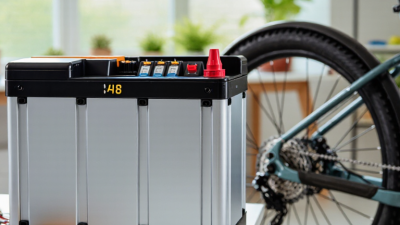
Choosing a Lifepo4 Battery Pack manufacturer is not just a matter of comparing prices. Cell quality, pack design, protection systems, and traceable test data all shape real-world performance. A pack may look impressive on a specification sheet, yet behave differently under heat, vibration, or frequent cycling. Details matter.
Battery researcher Dr. George Crabtree has described energy storage as “the key to a clean energy future.” That idea helps explain the growing attention to lithium iron phosphate technology: it offers a practical balance of service life, thermal stability, and cost for many applications. Still, no chemistry or supplier is ideal for every project. Buyers should check operating limits, warranty terms, certifications, and whether published capacity is measured under comparable conditions.
This Top 10 overview introduces manufacturers serving markets such as energy storage, mobility, and industrial power. It considers product range, manufacturing experience, technical support, and the clarity of available specifications. The list is a starting point, not a universal verdict. A company’s capabilities can vary by factory, product line, and region; even a familiar brand deserves careful review. Some details remain hard to compare. That is worth admitting. Before choosing a supplier, match the pack’s voltage, capacity, discharge rate, and environmental requirements to the actual installation. A good shortlist begins with evidence, not slogans.

LiFePO4 battery packs combine lithium iron phosphate cells with a battery management system, wiring, enclosure, and protective components. The chemistry is valued for thermal stability and long service potential, but pack quality depends on more than the cells. Cell matching, connection resistance, and BMS settings all affect usable capacity. Small details matter.
A pack’s performance also depends on its operating conditions. Repeated high-current loads can create heat, while charging below freezing requires careful control. Installers should check the specified voltage range, continuous and peak current, enclosure rating, and charging limits. A printed cycle-life figure is not a promise; test conditions and depth of discharge can change the result.
The market serves residential storage, commercial backup, mobility, and off-grid systems. Manufacturers worldwide compete on pack design, production consistency, safety testing, and supply-chain resilience. Buyers may compare energy density, warranty terms, service access, and documented test methods—not just price per kilowatt-hour. There is still an evidence gap: published specifications do not always show how a pack performs after years of real use. That deserves scrutiny. Independent test reports and clear operating guidance can make comparisons more reliable.
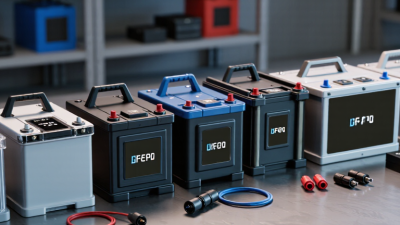
Choosing a leading LiFePO4 battery pack manufacturer starts with the application, not a ranking. Define the required voltage, capacity, peak current, operating temperature, and installation space. A pack for a compact backup system may need different safeguards than one used in a vehicle. Ask how the manufacturer selects cells and tracks batches. Request test records for capacity, temperature behavior, and protection functions. Clear documentation matters.
Review engineering and production controls, not just advertised specifications. A suitable battery management system should monitor cell voltage and temperature, and protect against abnormal conditions. Check whether the pack’s enclosure, connectors, and cooling match your environment. Ask how cycle-life claims were tested; results depend on temperature, depth of discharge, and charging conditions. A polished data sheet is not proof. Sample testing and independent technical review can reveal gaps, though they take time. Warranty terms, replacement procedures, and access to technical support also show how well a supplier handles problems after delivery.
Tips: Compare the same test conditions across suppliers. Request a sample report and inspect the actual labels, wiring, and enclosure. If answers are vague, pause and ask again. Trade-offs are normal; unclear evidence is not reassuring.
The ten manufacturer profiles reflect different strengths in LiFePO4 battery pack production. One specializes in compact packs for portable equipment, where low weight and secure cell spacing matter. Another builds larger systems for solar storage, with clear wiring layouts and accessible service panels. A third focuses on industrial packs, adding reinforced cases for dusty work sites. Details matter.
A fourth manufacturer emphasizes custom voltage and capacity options for equipment makers. A fifth is known for automated assembly, which can improve consistency but still needs careful inspection. A sixth designs packs for marine use, paying close attention to moisture barriers and vibration. A seventh serves mobility applications, where predictable output and a practical charging range are important. Small differences count.
An eighth profile centers on backup power, with attention to monitoring and fault protection. A ninth supports telecommunications installations, where reliable operation and easy maintenance can outweigh a compact footprint. A tenth offers broad customization for specialized projects. Buyers should compare cell traceability, protection-system design, test documentation, and warranty terms. A polished case is not proof of a durable pack. And published specifications may not capture performance under real workloads. The profiles are most useful when paired with direct questions about testing, repair, and operating conditions.
A fair comparison of ten leading LiFePO4 battery pack manufacturers starts with the products, not headline rankings. Residential packs often prioritize compact wall-mounted enclosures, clear state-of-charge displays, and straightforward expansion. Industrial systems may use modular racks, heavier busbars, and controls designed for frequent cycling. Details matter. Check usable energy, continuous discharge power, operating temperature, warranty terms, and compatibility with common inverters. A neat-looking specification sheet can still leave important questions unanswered.
Production capacity also needs context. Some figures describe cell output; others refer to completed packs, so they are not directly comparable. Ask whether stated capacity is installed, recently achieved, or merely planned. A large factory does not automatically mean consistent quality or short delivery times. Batch testing, traceable components, and repeatable assembly processes offer more useful evidence. Global reach depends on more than export volume: regional warehouses, technical support, spare parts, and documentation can affect installation and service. Check which markets a supplier actively serves and whether its product approvals match the intended application. A ranking based only on output would be simpler, but probably misleading. Even experienced buyers can overlook support after the first shipment.
Choosing a LiFePO4 battery pack manufacturer starts with the job the pack must do, not a ranking. A cabin solar system needs dependable cycling and clear cold-weather charging limits. A delivery vehicle may need high discharge current, vibration-resistant mounting, and responsive service support. Backup power calls for reliable standby performance, cell balancing, and realistic reserve capacity. Ask for test data under the temperatures and loads your equipment will actually experience. Check the discharge rate used to measure capacity. Connector placement can decide whether installation takes minutes or requires rewiring. Small details matter.
Request a sample pack or a pilot batch when practical, then check dimensions, wiring, labels, and measured capacity. Ask how the manufacturer handles warranty claims and replacement parts. For mobile equipment, verify that the enclosure and terminals suit expected vibration and moisture exposure. For stationary systems, confirm compatibility with the inverter and charging profile. Fit beats hype. A polished datasheet is useful, but it cannot prove consistent production quality. Ask plainly how each test is performed, and whether the results apply to your intended configuration. If answers are vague, that is worth considering, even when the price looks attractive.
Anonymized comparison of ten common manufacturer capability profiles—not a verified ranking of individual companies. Match the supplier’s documented design and testing capabilities to your application.
| No. | Manufacturer capability profile | Typical application fit | Relevant design considerations | What to verify before choosing |
|---|---|---|---|---|
| 1 | Residential energy-storage pack specialist | Home solar storage and backup power | Many systems use a 16-series-cell configuration: 51.2 V nominal, based on 3.2 V nominal per LiFePO4 cell. Inverter communication and parallel operation may matter. | Confirm inverter compatibility, continuous charge/discharge limits, usable capacity, BMS protections, installation requirements, and warranty conditions. |
| 2 | Telecom backup-power pack specialist | Telecom sites and communications backup systems | Often designed for nominal 48 V equipment systems; a 16S LiFePO4 pack is 51.2 V nominal, so the full operating-voltage range must suit the connected equipment. | Check voltage-window compatibility, alarm and monitoring interfaces, cabinet dimensions, backup runtime, and operation across the site’s temperature range. |
| 3 | RV and marine pack specialist | Recreational vehicles, boats, and auxiliary loads | Common nominal pack voltages include 12.8 V (4 cells in series) and 25.6 V (8 cells in series). Vibration, moisture exposure, and charging-system compatibility can be important. | Ask about enclosure protection, vibration testing, secure mounting, alternator or charger compatibility, and low-temperature charging safeguards. |
| 4 | Industrial traction-battery specialist | Material-handling equipment and industrial vehicles | Pack voltage, current, connector, and enclosure are application-specific. Repeated high-current operation and mechanical integration require careful engineering. | Review measured discharge performance, thermal design, BMS current limits, connector ratings, mechanical drawings, and applicable equipment-level safety requirements. |
| 5 | High-power custom-pack manufacturer | Equipment with high peak loads or demanding power cycles | Cell selection, busbars, interconnects, cooling, and BMS settings must be matched to both peak and continuous loads. A high current rating should be tied to stated test conditions. | Request continuous and peak-current specifications with duration, temperature-rise data, protection behavior, and representative load-test results. |
| 6 | Low-temperature application specialist | Outdoor equipment and cold-climate installations | LiFePO4 cells generally require charging to be restricted below freezing unless the cell maker permits otherwise. Heating features and temperature-based charge control may be needed. | Verify the cell manufacturer’s permitted temperature limits, charge cut-off behavior, heater operation, sensor placement, and capacity performance at the expected temperature. |
| 7 | Modular rack-battery manufacturer | Expandable storage systems and equipment rooms | Rack systems may support parallel expansion, but allowed pack count, cable layout, protection coordination, and communications behavior depend on the system design. | Obtain written limits for parallel operation, commissioning steps, firmware compatibility, communication protocol, and system-level protection. |
| 8 | Portable-power pack manufacturer | Portable power units and mobile equipment | Compact packaging, mass, enclosure durability, connector choice, and clear state-of-charge indication are common priorities. | Check dimensions and weight, usable energy, enclosure rating where relevant, connector ratings, charging method, and protection against misuse. |
| 9 | OEM and custom-integration pack manufacturer | Products needing a non-standard shape, interface, or production process | A complete design typically specifies cell configuration, enclosure, wiring, BMS settings, connectors, and production inspection requirements. | Assess engineering documentation, design-change control, sample validation, traceability, production capacity, and responsibility for system integration. |
| 10 | Standards-focused battery-pack manufacturer | Projects with formal market, transport, or customer compliance requirements | Required evidence depends on the finished product, destination market, and transport route. Cell-level documents do not automatically establish pack- or end-product compliance. | Verify the exact test report or certificate, covered model and configuration, issuing body, and applicable transport and end-product requirements. |
Selection note: Confirm that specifications apply to the complete battery pack and its intended operating conditions. Cell chemistry, nominal voltage, capacity, cycle life, and certifications alone do not establish suitability for a particular system.